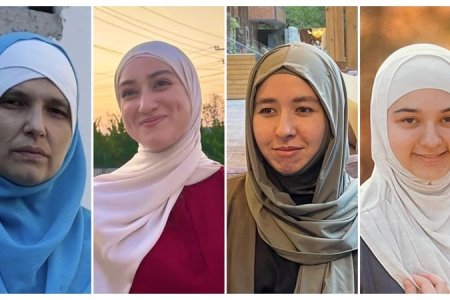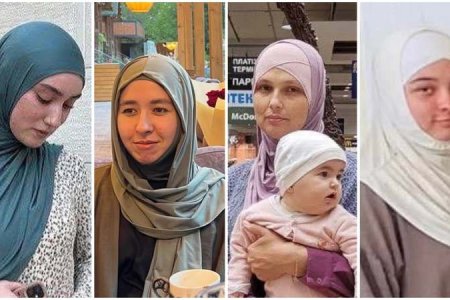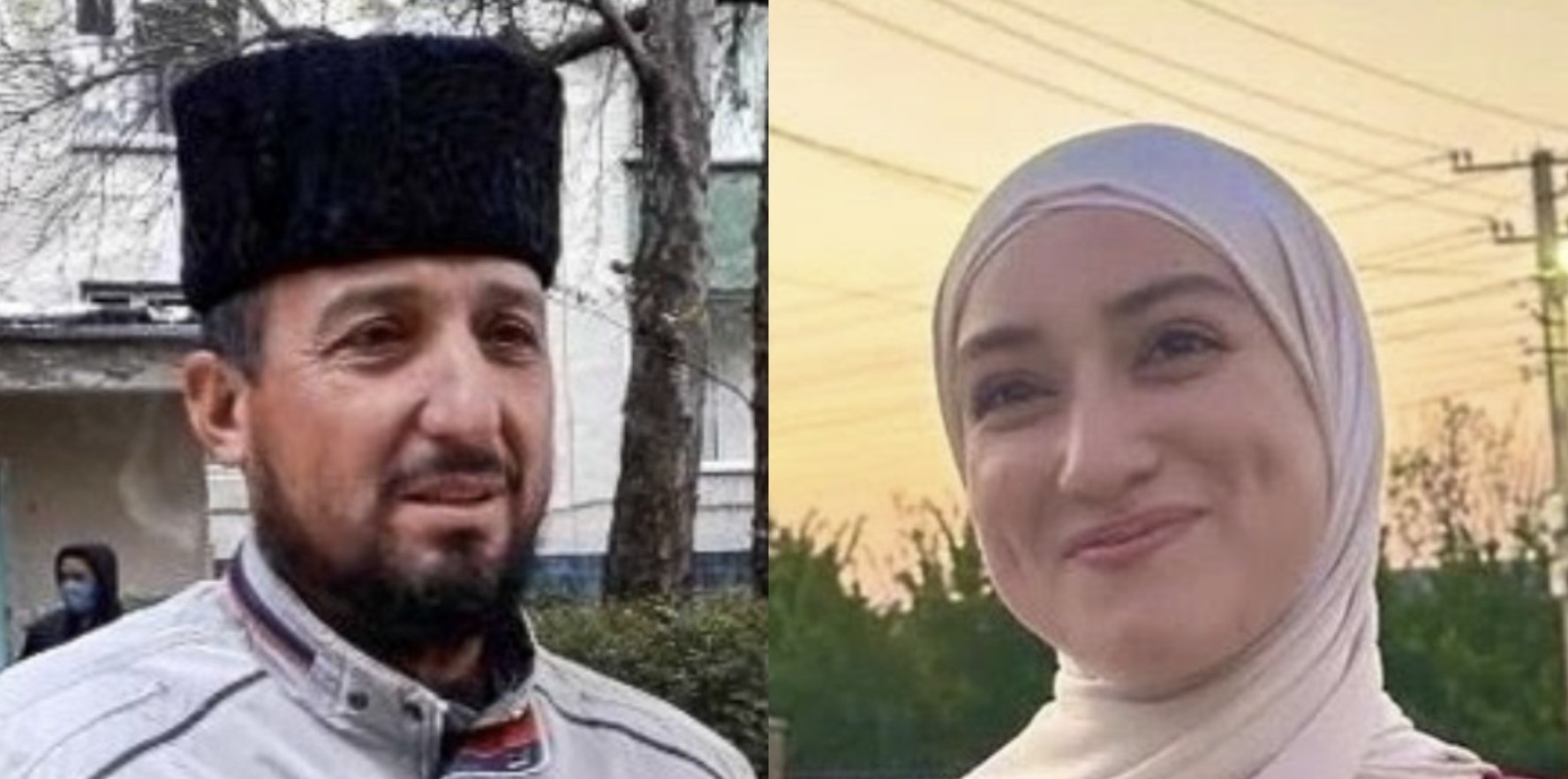
Crimean occupation ‘police’ have charged Sadyk Urinbaev with ‘unlawful missionary activities’ for leading Friday prayers in the village mosque where he has served as Imam since 1994. This is by no means the first such absurd administrative prosecution against Imams in occupied Crimea, but the timing is likely significant, given the very active role Sadyk Urinbaev and his wife Dinara Iiupova have played in protests against the arrests on 15 October 2025 of their daughter, Nasiba Saidova (b. 25.10.2006) and three other women: Esma Nimetulayeva (b. 1985); Elviza Alieva (b. 2005); Fevziye Osmanova (b. 2004). The arrests of the four women marked a frightening new red line that Russia had crossed in its relentless persecution of Crimean Tatars and other Ukrainians for their religious beliefs, as well, in many cases, as their civic activism.
The difference between the fine that Sadyk Urinbaev is likely to get for leading prayers in his own mosque and the sentence of 12-17 years that his daughter is facing is a further indictment. Both cases of persecution are essentially because Russia does not tolerate any religious independence. Moscow sought political loyalty and, unfortunately, found it from Emirali Ablayev, mufti, or head of the Spiritual Directorate of Muslims of Crimea. In a recent analysis, CrimeaSOS reported that, since Russia’s invasion and annexation of Crimea, the Spiritual Directorate under Ablayev has become a body loyal to the Kremlin and effectively supporting the policies of the occupation regime. There have, in fact, long been reports that Ablayev and his people are collaborating with the prosecution in many of the conveyor-belt ‘’trials’ of Crimean Muslims, accused of ‘involvement’ in Hizb ut-Tahrir, an Islamist party which is legal in Ukraine, but which Russia’s supreme court outlawed as ‘terrorist’. It is also collaborating and being rewarded for its collaboration through the measures against religious communities not affiliated with the Spiritual Directorate. Although this is probably mostly about the wish for control over such communities, there are also material interests at play. The persecution of several members of the ‘Alushta’ community, including massive sentences against Lenur Khalilov, the former head of the community, Ruslan Mesutov and Muslim Aliev, and administrative prosecutions for ‘unlawful missionary activities’, had a banal mercenary motive. The Alushta community were the legal occupiers of the historic Yukary Dzhami Mosque in Alushta, with the Spiritual Directorate benefiting from the occupation regime’s forcible liquidation of the community.
In reporting the administrative charge laid against Sadyk Urinbaev, Graty noted that this was the first prosecution he had experienced for leading prayers at the mosque, which he has done since 1994. The charge is under Article 5,26 § 4 of Russia’s code of administrative offences. Occupation police turned up at Urinbaev’s home on 2 September 2026 and handed him a protocol regarding the above administrative charge. It accused him of having, on 5 June, led “compulsory collective prayers”, i.e. Friday prayers, without having a document confirming that he had received certification for this from the Spiritual Directorate. Urinbaev signed the protocol but wrote on it that he disagrees with the document and has done nothing wrong.
A ‘court’ hearing has not yet been set, but, judging by all other cases since Russia seized control, ‘conviction’ is near certain, with it likely that a fine will be imposed. Similar administrative charges have led to fines against other Imams - Diliaver Khalipov and Ismail Yurdamov. Openly absurd charges were used in November 2023 to subject the families of three Crimean Tatars linked with the ‘Alushta’ community to armed searches and to jail Imam Yusuf Ashirov; Zinur Appazov and Villen Useinov for two, five and ten days, respectively. In July 2025, a deliberately crippling 400 thousand rouble fine was imposed against the independent Muslim community Eski Qirim despite clear evidence that the supposedly ‘extremist’ literature ‘found’ in the mosque was planted by representatives of Russia’s so-called ‘centre for combating extremism. The aim of such fines was clear to force the community to cease any activities, with this eventually achieved.
Graty reports that a new form of pressure has been added in 2026 with the addition of several Imams and other members of independent Muslim communities to Russia’s register of so-called ‘foreign agents’. As reported, on 26 June 2026, Russia’s justice ministry labelled the vital Crimean Solidarity human rights movement a so-called ‘foreign agent’, together with eleven lawyers, civic activists and journalists involved in defending and / or reporting on victims of persecution. A month later, on 24 July, an update was published, adding the names of 137 men and women in all, most of them Crimean Tatars. As well as lawyers; human rights defenders, civic activists; and current political prisoners (Lenur Khalilov; Ruslan Mesutov and Edem Smailov), the list was also expanded to include Imams Sadyk Urinbaev; Yusuf Ashirov; Iskander Dzelialov and Izet Saifullin, as well as heads of communities Ruslan Emirvaliev; Abdul Gafarov and Idris Yurdamov.
The scale of repression that Russia has unleashed in occupied Crimea, and its targeting of all lawyers, civic journalists; activists, leaders of religious communities and relatives of political prisoners, make it clear that the occupiers are targeting both religious independence and all those who demonstrate a civic stand. It seems likely that Sadyk Urinbaev has been targeted both because of his religious ‘dissidence’ and because of his active campaigning to secure the release of his daughter. Graty points out that Urinbaev not only took part in the delegation of relatives of the four imprisoned women and lawyers but also helped to gather the six and a half thousand signatures to an appeal addressed to Russia’s human rights ombudsperson. As reported, there were mass arrests on nonsensical pretexts at least four times as the delegation headed for Moscow, but other members refused to be cowered and continued their journey.

Nasiba Saidova; Elviza Alieva; Fevziye Osmanova and ; Esma Nimetulayeva have been imprisoned since 15 October 2025 and are facing tragically predetermined sentences of up to 17 years or more. It was learned early in September that the so-called ‘investigators’ have finished their ‘criminal investigation’ with the women likely to soon go on ‘trial’ at the Southern District Military Court in Rostov (Russia).
There are no grounds for expecting this ‘trial’ to differ in any way from those of other Crimean Muslims, including a very large number of Crimean Solidarity civic journalists and activists. This means that the ‘evidence’ presented in court will include the ‘prohibited religious literature’ planted by the FSB who carried out armed ‘searches’ on 15 October 2025; flawed assessments of illicitly taped conversations carried out by Kremlin-loyal ‘experts’ and the supposed testimony of ‘secret witnesses’ who may not have ever known the women.
The outrage over the arrests of three extremely young women and Esma Nimetulayeva, who was bringing up five children under 18 alone after Russia’s arrest on equally flawed charges of her husband, Remzi Nimetulayev prompted the FSB to use propaganda lies and hate speech against their victims. Russian and occupation media claimed that the women were members of ‘a terrorist cell’. The fiction is maintained in the surreal charges with Esma Nimetulayeva accused of the more serious charge, of ‘organizing’ a Hizb ut-Tahrir group under Article 205.5 § 1 of Russia’s criminal code. Elviza Alieva; Fevziye Osmanova; and Nasiba Saidova are accused of ‘involvement’ in such a fictitious ‘group’ (Article 205.5 § 2). All four are also charged with ‘planning to violently seize power’, under Article 278.
All are listed as imprisoned for their religious beliefs and association by the US Commission on International Religious Freedom and by the Memorial Support for Political Prisoners Project.
Esma Nimetulayeva (b. 9 January 1986) is a confectioner who had, since August 2023, been the sole parent bringing up her and political prisoner Remzi Nimetulayev’s five daughters, all of whom are under 18.
Elviza Alieva (b. 29 May 2005) was a fourth-year student at the occupation Vernadsky federal university, specializing in management. She had also been working as a sales assistant in a Simferopol bakery.
Fevziye Osmanova (b. 24 May 2004) is from Orlivka, just outside Sevastopol and worked in a local shop.
Nasiba Saidova, who was born on 25 October 2026, is the youngest victim of Russia’s Crimean conveyor-belt ‘Hizb ut-Tahrir trials’ and Sadyk Urinbaev’s daughter. She was studying at a teacher-training college and also worked at a nursery.