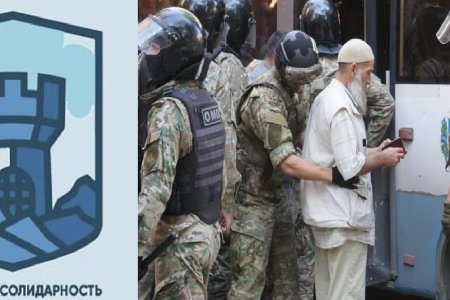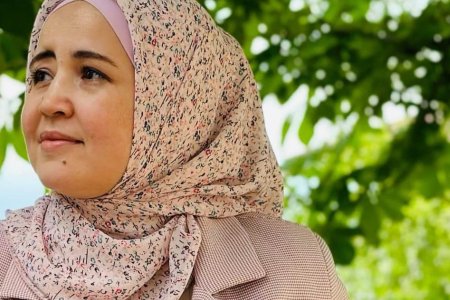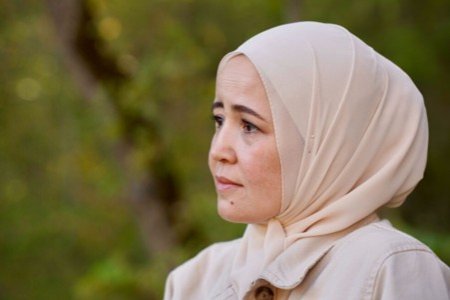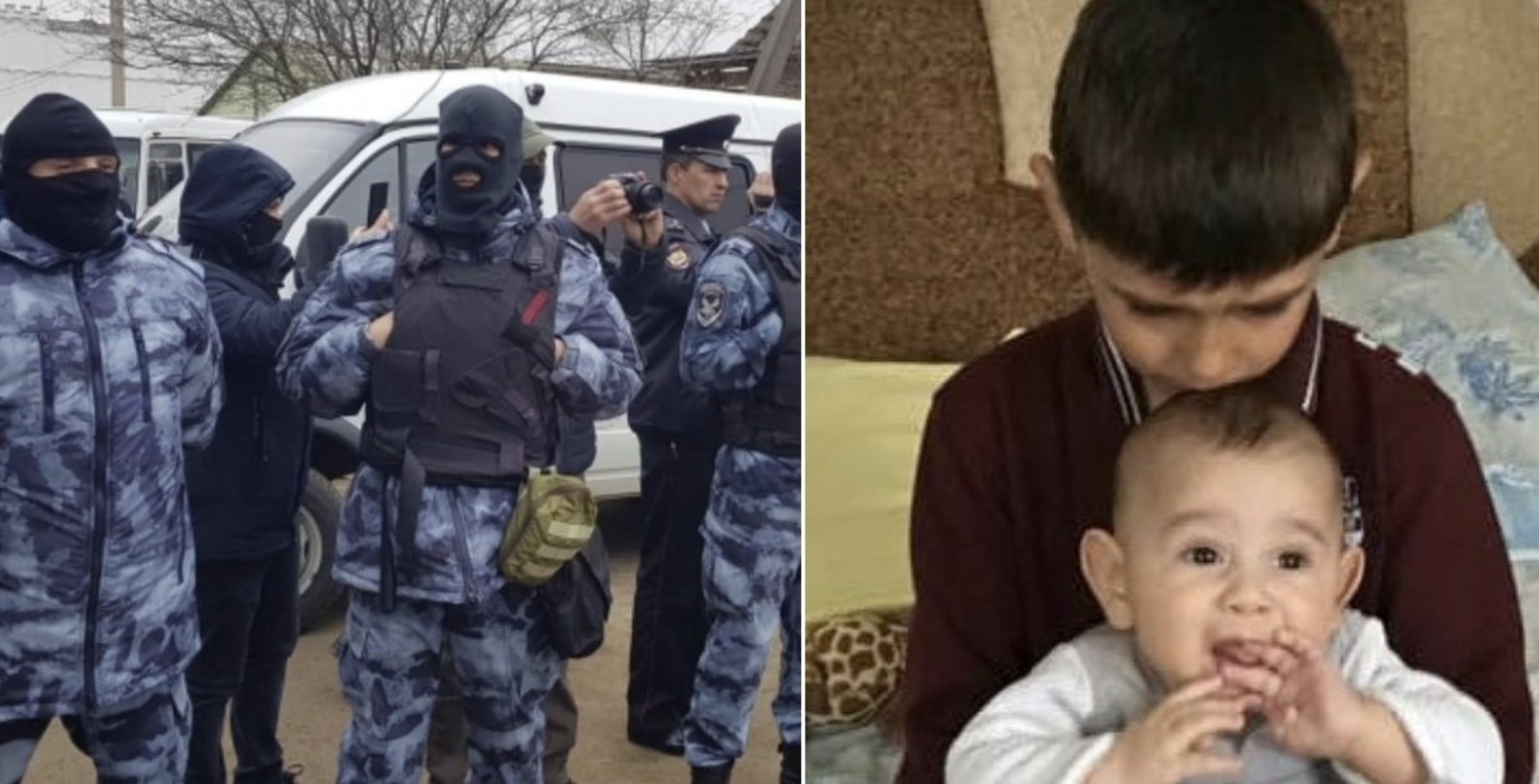
A month after Russia effectively outlawed the critically important Crimean Solidarity human rights movement by adding it to the so-called ‘register of foreign agents’, the Russian justice ministry has massively increased the number of people, most of them Crimean Tatars, directly targeted in its attack as ‘participants in Crimean Solidarity’. If, initially, it specifically named eleven people, including three lawyers defending political prisoners, the register, as of the update published on 24 July, now contains the names of 137 men and women. These are human rights defenders, civic activists, current political prisoners; closer relatives of political prisoners and virtually all lawyers representing political prisoners. In a few cases, the people were added posthumously, however the basic message behind the offensive could not be clearer. Defend or show solidarity with victims of Russian repression, including in your professional capacity, and you too will become a victim of repression
Although those whom the justice ministry has labelled ‘participants in Crimean Solidarity’ have not themselves automatically turned into so-called ‘foreign agents’, they do have to preface any material they publish or post on social media with information about their inclusion in the list, etc. The lack of such leads to administrative liability in the first instance but can result in criminal charges with a supposed ‘repeat offence’. It is extremely difficult to foresee places where something was earlier posted, and there are no grounds at all for assuming that the decision to add a person in 2026 will not be applied retroactively to cover social media posts from 2022, or even 2015.
Russia really has introduced mass persecution for Crimean Solidarity, with very many of the people added to the register as ‘participants’ literally persecuted for trying to attend political trials or the armed searches which Russia has brought to occupied Crimea.
It is also including all of those who, as lawyers, have provided political prisoners with the legal representation to which they are entitled. Russia’s persecution of particular lawyers began long ago, with several having been subjected to absurd administrative charges or even jailed for up to 12 days. Persecution against Emil Kurbedinov began back in 2017, and has continued, as has that against his colleague, Edem Semedlyaev. The third person added to the register back on 26 March 2026 is Lilia Hemedzhy. She was stripped of her licence to practise as a defence lawyer in August 2022, together with two other lawyers defending political prisoners - her husband Rustem Kyamilev and Nazim Sheikhmambetov. They have now been added to the register of ‘foreign agents’ as involved in Crimean Solidarity. So too have other lawyers who have ensured that political prisoners whom Russia has deprived of all other elements of a fair trial, at least had access to independent lawyers, defending their interests. The vast majority are Crimean Tatars, some of whom were not defence lawyers, but came forward because of the mounting number of political prisoners. Emine Avamileva and Aider Azamatov have also faced persecution, as has one of the Russian lawyers who have represented victims of repression - Alexei Ladin. (see below for all names).
At present the lawyers will continue representing political prisoners in their individual capacity. How realistic this is long term, remains to be seen, even from a practical point of view. The lawyers themselves have families to care for, and it remains unclear how broadly the occupation enforcement bodies will interpret the requirements of the profoundly flawed law when it comes to ‘participants’ in Crimean Solidarity. The aim of including all, or virtually all, lawyers is brutally clear, and the regime now has an additional weapon to use against those lawyers who continue to properly defend victims of repression.
Even before 2022 there was a far greater level of lawlessness in occupied Crimea and Donbas, than in Russia, but there still seemed some red lines that the regime was hesitant to cross. Since Russia launched its full-scale invasion of Ukraine, all red lines seem to have disappeared.
The decision announced by Crimean Solidarity on 21 July 2026 to terminate all activities as, or on behalf of, the civic organization was a difficult one, taken because the use of ‘foreign agent’ legislation left them with no other alternative. All of the claims made by the justice ministry to try to justify labelling a truly vital human rights organization ‘a foreign agent’ were false. Crimean Solidarity sought to ensure that the truth was told about political trials and repression in occupied Crimea, and did not, as asserted, “circulate false information about decisions taken by the public authorities of the Russian Federation and the policies they carry out.”. The same false claims will inevitably be applied against lawyers who, often in interviews to Crimean Solidarity, demonstrated the flawed nature of the charges against the men and women they were representing and the gross irregularities in their trials.
As well as lawyers, the justice ministry has targeted civic journalists, including some, like Server Mustafayev and Remzi Bekirov, who have long been imprisoned for their civic courage and journalist.
Renowned human rights defender Lutfiye Zudiyeva was added to the original list on 26 June 2026. She had, however, earlier been labelled a ‘foreign agent’ because of her human rights and journalist work and was swiftly subjected to her first administrative prosecution. Now her father has also been added.
The justice ministry have also added Crimean Tatar human rights defender Abdureshit Dzhepparov to its list, as though he and his family had not suffered enough under Russian occupation, and not just harassment and prosecution for supposedly ‘discrediting Russia’s armed forces’. On 27 September 2014, Dzhepparov’s elder son Islyam Dzhepparov, who was just 19, and his 23-year-old cousin Dzhavdet Islyamov were seized by masked men wearing black uniforms, forced into their Volkswagen minivan and taken away. Despite the testimony of witnesses and the fact that even the registration number was known, the occupation authorities made little or no effort to find either the two young men, or their abductors.
No less shocking is the inclusion in this list of a huge number of members of the families of political prisoners, who are now facing the real threat of persecution for showing support for their own sons, husbands or children.
On 24 July 2026, for example, the justice ministry added Abdulmedzhit Seitumerov (b. 1999) to the list as a ‘participant in Crimean Solidarity’, in effective acknowledgement that his civic activism was the reason he was arrested on 24 August 2023. The young man whose first child was just two months old is the youngest of Crimean Tatar historian Shukri Seitumerov’s three sons. His elder brothers Seitumer Seitumerov (1988) and Osman Seitumerov (b. 1992) were arrested on 11 March 2020, together with their uncle Rustem Seitmemetov (b. 1973) and gravely ill Crimean Solidarity civic journalist Amet Suleimanov (b. 1984). All of the sons are recognized political prisoners. Now Shukri Seitumerov and the brothers’ uncle, 74-year-old Enver Seitmemetov have also been added to the register. So too has Reshat Emiruseinov, the elderly father of Rustem Emiruseinov (b. 1979), undoubtedly targeted in February 2019 for his Crimean Solidarity civic activism, and is now serving a horrific 17-year sentence. In many cases, several members of the families of political prisoners are now on the register. Nor, in fact, is it clear that this is the end, with the new weapon effectively available for use against even more targets. Care about your own children, other family members, friends or just respected members of your community, point to the injustice of their imprisonment and you could be next.
Lawyers
As mentioned, the vast majority are Crimean Tatars living in Crimea
Emine Avamileva
Aider Azamatov
Marlen Khalikov
Emil Kurbedinov
Siyar Panich
Edem Semedlyaev
Elvina Semedlyaeva
Safiye Shabanova
Dzhemil Temishev
Refat Yunus
Russian lawyers
Maria Eismont
Mark Feigin
Alexei Ladin
Nikolai Polozov
See Crimean Solidarity’s full statement on 21 July 2026 here: Vital Crimean Solidarity human rights movement forced to terminate activities after Russia labels it a ‘foreign agent’