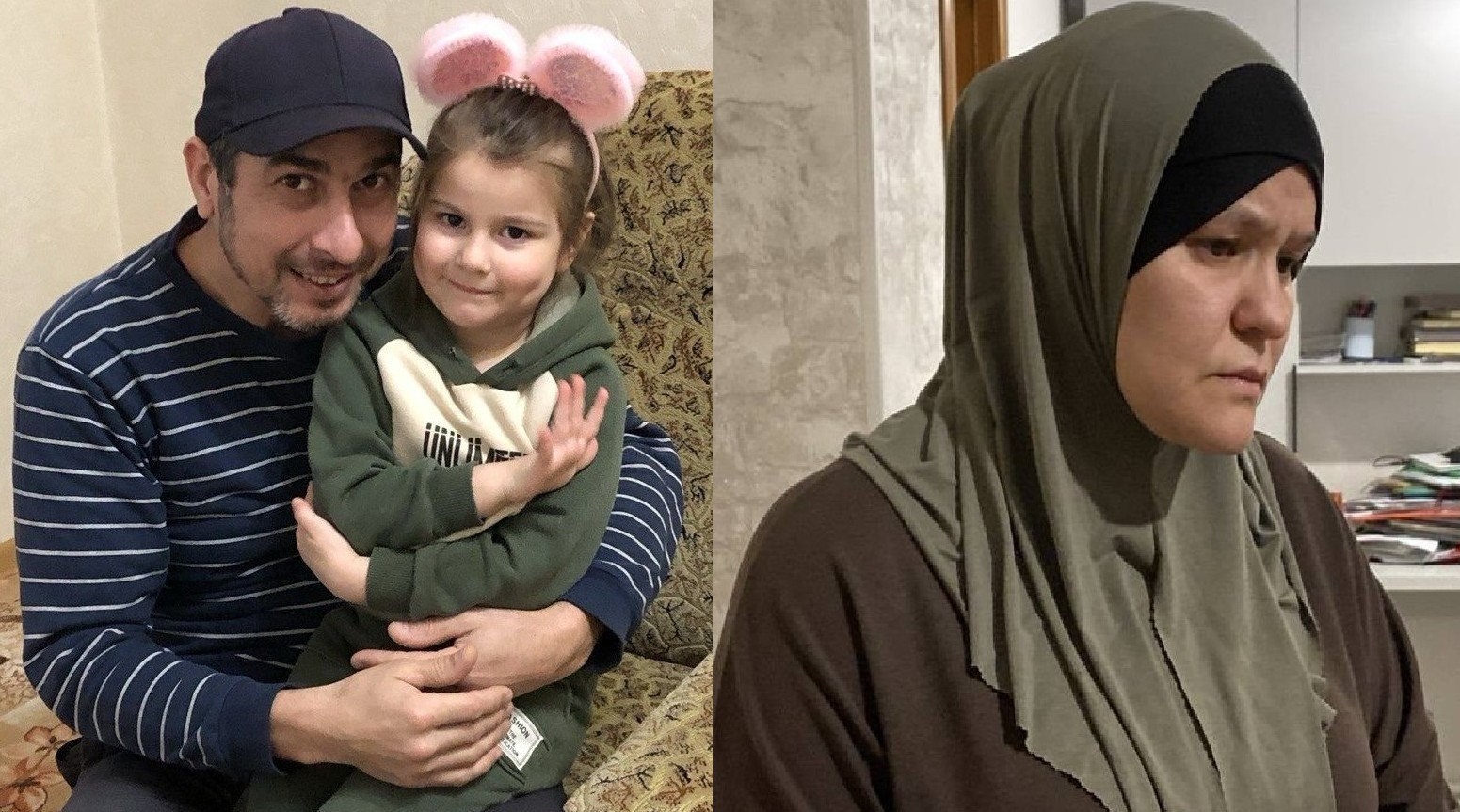
Nariman Seitaliev’s two smallest children have been left deeply traumatized after around ten men, most in masks and brandishing machine guns, burst into the family home and forced the 42-year-old Crimean Tatar to the ground. This was no arrest of a suspected criminal, as demonstrated by the ‘search’ of the family home, during which the Russian enforcement officers made no pretence of looking for anything but ‘prohibited religious literature. As the ‘search’ was coming to an end, with nothing ‘incriminating’, an officer claimed to have ‘found prohibited material’ in a bedroom in which an officer had been left while the other rooms were searched.
The armed ‘operation’ began at exactly 4 a.m. on 12 February 2026 at the family’s home in a village (Hlybokiy Yar) in the Bakhchysarai raion. The men burst in after Nariman Seitaliev opened the door and forced him to the floor, putting entirely redundant handcuffs on him in front of his five-year-old daughter and nine-year-old son. His three other children are older, but were still devastated, as was his wife Zarema, whose blood pressure shot up so high that an ambulance needed to be called.
Zarema later described the ‘search’ which had found nothing, until the officers arrived at the last, empty, bedroom, in which one of the men had disappeared while the others were ‘searching’ the rest of the house. When the man most actively rummaging around claimed to have ‘found’ two ‘prohibited’ books with red covers, Zarema immediately said that they were not their books and demanded an answer as to why the officer had been in there. She was told and treated with the contempt the answer deserved, that this was “out of concern for security”. Russia’s FSB have become notorious for their use of planted ‘prohibited literature’ during armed searches which lawyers are standardly prevented from attending. The only difference here was that the men did not place books in places (such as near a toilet or dog kennel) where no devout Muslim would keep religious material. Zarema was also prevented from calling a lawyer, and was told, illegally, that she could only phone after the search was over.
The armed men had brought a warrant with them, which they showed Seitaliev. At the end, they even demonstrated a modicum of decency which showed at the same time that they fully understood that this was no arrest of a ‘terrorist’. They gave Seitaliev 15 minutes to say goodbye to his wife and children, and even heeded Zarema’s plea that they remove his handcuffs so that this was not how children saw their father for the last time.
Seitaliev was then taken away with it tragically likely that everything from now on will follow the same conveyor-belt steps from detention to predetermined sentences that Russia has brought to occupied Crimea. Crimean Solidarity reported that there was a ‘court’ hearing at 4 p.m. on 12 February, with this usually at the occupation ‘Kievsky district court’ in Simferopol. As is invariably the case, Seitaliev was remanded in custody, with the fact that this was only until 11 April a mere formality, as the detention is always extended.
This is to be the latest of Russia’s profoundly flawed and politically motivated ‘Hizb ut-Tahrir’ trials, based solely on unproven allegations that a person is somehow involved in Hizb ut-Tahrir, a peaceful, if controversial, transnational Muslim organization. The organization is legal in Ukraine and is not known to have committed any acts of terrorism, yet Russia is using a supreme court ruling, passed in secret, in 2003 and declaring Hizb ut-Tahrir ‘terrorist’ as weapon against Crimean Muslims, especially civic activists and journalists of the Crimean Tatar human rights movement. A ruling which has been superseded by Russia’s own law on countering terrorism from 2006 is now used to bring ‘terrorism’ charges against people who are not accused of any recognizable crime. Crimean Solidarity reports that Seitaliev is charged with the more serious ‘organizing a Hizb ut-Tahrir group’ under Article 205.5 § 1 of Russia’s criminal code, with this typically resulting in sentences of at least 17 years.
There were, in fact, two armed searches in the morning of 12 February, with a Crimean Solidarity correspondent from Bakhchysarai reporting that another Crimean Tatar, Yunus Suleimanov (b. 1988) had also been targeted. It is ominous that nothing has been heard of his whereabouts since he was taken away by the FSB after the search.
The new arrest, or arrests, come a day after the tenth anniversary of the first major operation against a Crimean Tatar human rights activist and five other men, all recognized as political prisoners and Amnesty International prisoners of conscience.