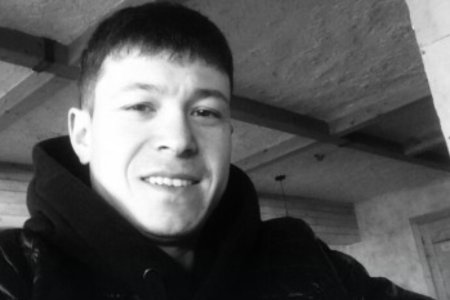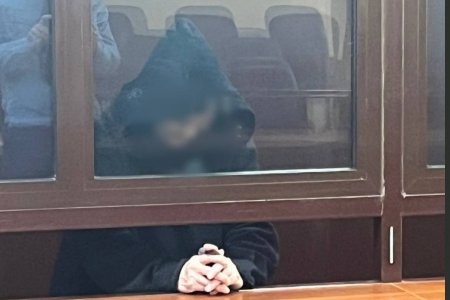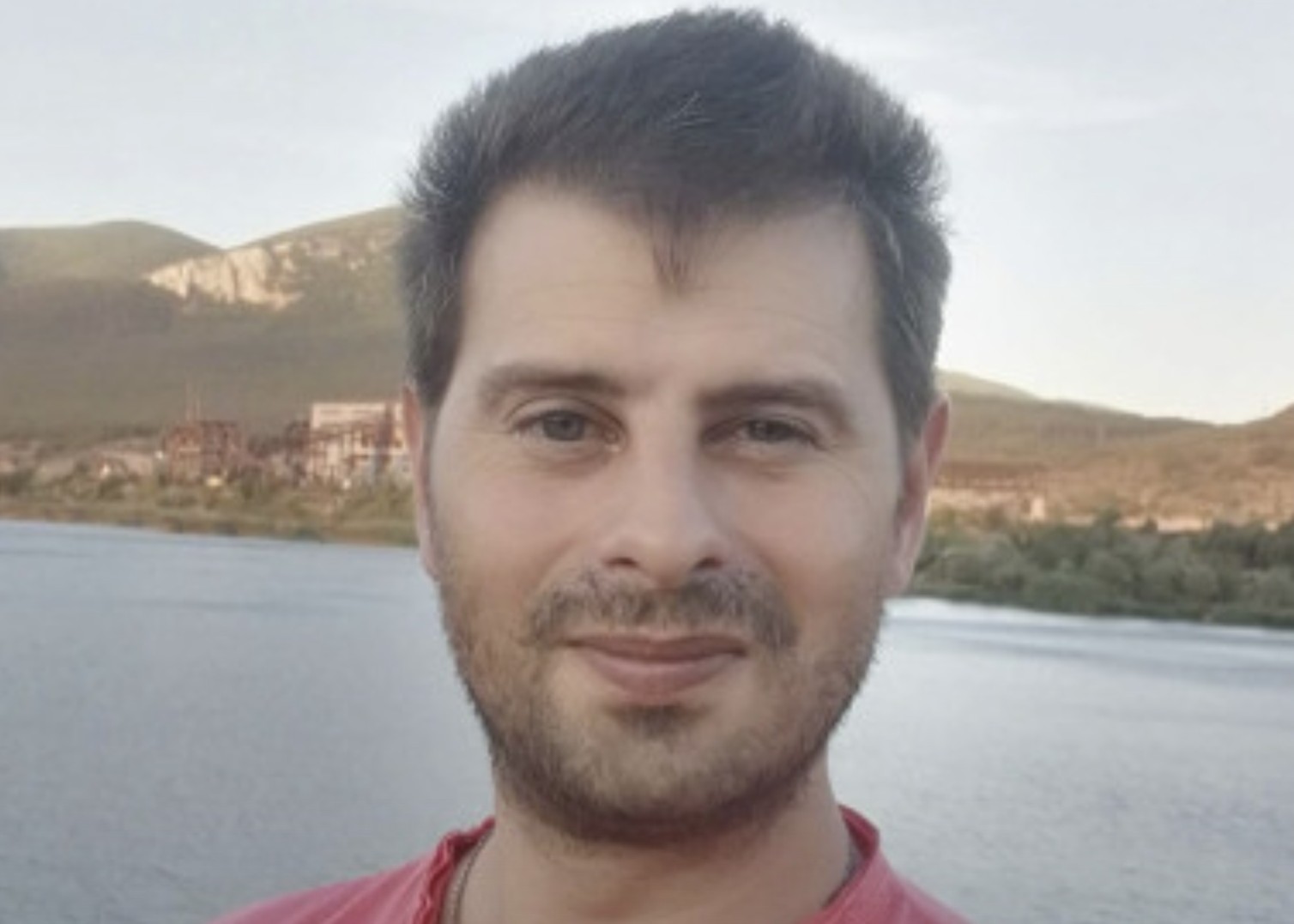
Russia’s full-scale invasion of Ukraine brought a sharp increase in the number of ‘treason’ trials on all occupied territory, together with a grave reduction in the amount of information available about most of the cases. It is mainly thanks to the authoritative Memorial Support for Political Prisoners Project, which has recognized Ihor Bunin as a political prisoner, that details are known about his ‘trial’ and horrific sentence.
We still know very little about Ihor Bunin (b. 13.01.1979) except that he is married and was born in Crimea. As well as Ukrainian citizenship, he holds an Israeli passport and would also have been essentially forced to take Russian citizenship after Russia’s invasion of Crimea in 2014.
Officially, Bunin was detained on 30 January 2023, however it is possible that this was simply the date on which his actual detention was formally acknowledged. The prosecution claimed that he had, in November 2022, sent information about the flight of a missile or plane over Sevastopol to the Telegram chat-bot STOP Russian war. Following this, they alleged, Bunin had been contacted by an employee of Ukraine’s Security Service [SBU] and that over the next week and a half, Bunin had passed him the exact coordinates of Russian military units and sites linked with the Russian fleet in Sevastopol. While Memorial states only that “it cannot be excluded that Bunin was, in fact, corresponding with a provocateur from the FSB”, this does seem by far the most likely explanation. Assuming, of course, that the alleged correspondence did actually take place.
Given the customary secrecy around such ‘trials’, it is probably telling that so much of the information allegedly passed on by Bunin was seemingly included in the verdict. There was, essentially, no reason to conceal it as the information could easily be checked on Google Maps and geolocated, with it acknowledged that the geolocation was via an app on Bunin’s phone.
Although it was claimed in the sentence that Bunin admitted to the factual circumstances around the allegations, he did insist that the screenshots of military units supposedly found on his computer had been falsified. Caution is always warranted over any such alleged admissions. The FSB in occupied Crimea standardly hold people incommunicado for long periods before bringing any charges and very often use such periods to extract ‘confessions’ through torture and other forms of duress.
During the ‘trial’, Bunin did himself state that the information he had sent was publicly available and said that he did not know that the person with whom he was corresponding was (allegedly) from the SBU. He could not have passed him any secret information, he added, as he did not have the special technology and the knowledge for this. He did, however, also assert that he had been promised in return for information, prior warning of any planned attacks on military targets so that he could warn other civilians.
The indictment included the assertion, as though an aggravating circumstance, that Bunin had a hostile attitude to the Russian Federation and to the latter’s so-called ‘special military operation’ (i.e. its full-scale invasion of Ukraine. His actions were, therefore, claimed to have been motivated by “political hatred”.
There were all of three ‘hearings’ before the occupation ‘Sevastopol city court’, all of them held behind closed doors. On 7 February 2024, Bunin was convicted of ‘treason’ under Article 275 of Russia’s criminal code and sentenced by Igor Vladimirovich Kozhevnikov (presiding); Danil Sergeevich Zemlyukov and Gennady Vladimirovich Nikitin to 15 years’ maximum-security imprisonment, with a further two years of restricted liberty. A fine of 200 thousand roubles was also imposed. At least Kozhevnikov and Zemlyukov have taken part in many other political trials.
The prosecution was represented by ‘deputy Sevastopol prosecutor’ Anatoliy Aleksandrovich Abramenko and Yekaterina Vladimirovna Sbytova.
On 8 October 2024, Bunin’s appeal against the sentence was rejected by ‘judges’ Yelena Yevgenievna Kalorina (presiding); Yelena Valentinovna Urod and Anna Anatolievna Novskovaya from Russia’s Third court of appeal under general jurisdiction. The prosecution there was represented by Yelena Yurievna Barsukova.
A cassation chamber of Russia’s supreme court rejected the defence’s cassation appeal on 7 July 2025.
All of those individuals and Russia’s supposedly highest court were implicated in passing a 15-year sentence in the harshest of Russia’s penal institutions for sharing information that was on open access and that in no way constituted a state secret, as demonstrated by the fact that it was listed in the sentence.
Memorial points out in addition that in a situation where Russia is waging war against Ukraine, any sites of Russia’s defence ministry, let alone those on occupied territory, “are legitimate targets for Ukrainian strikes, and exact coordinates could minimise losses among the civilian population.”
Russia’s use of ‘treason’ charges is also grotesque given that Bunin only has Russian citizenship because Russia invaded his homeland and proceeded to make it impossible to live and work under occupation without a Russian passport. Nor should it be forgotten that Russia, as an occupying state, is prohibited by international law from applying its legislation on occupied territory.
Please write to Ihor Bunin, if you can. Letters show him, and Moscow, that he is not forgotten. They do, unfortunately, have to be in Russian, and on ‘safe’ subjects.
Российская Федерация, 618545б, Пермский край, Соликамск, ул. Карналлитовая, д. 98, ФКУ ИК-1 ОУХД ГУФСИН России по Пермскому краю, Бунину Игорю Яковлевичу 1979 г. р.