The European Union has added two members of Russia’s Academy of Sciences and two other officials to its latest sanctions package over their role in facilitating Russia’s illegal excavations in occupied Crimea. The move comes a month after a court in Warsaw gave its consent for Poland’s extradition of Russian archaeologist Alexander Butyagin to Ukraine to face trial over similar crimes.
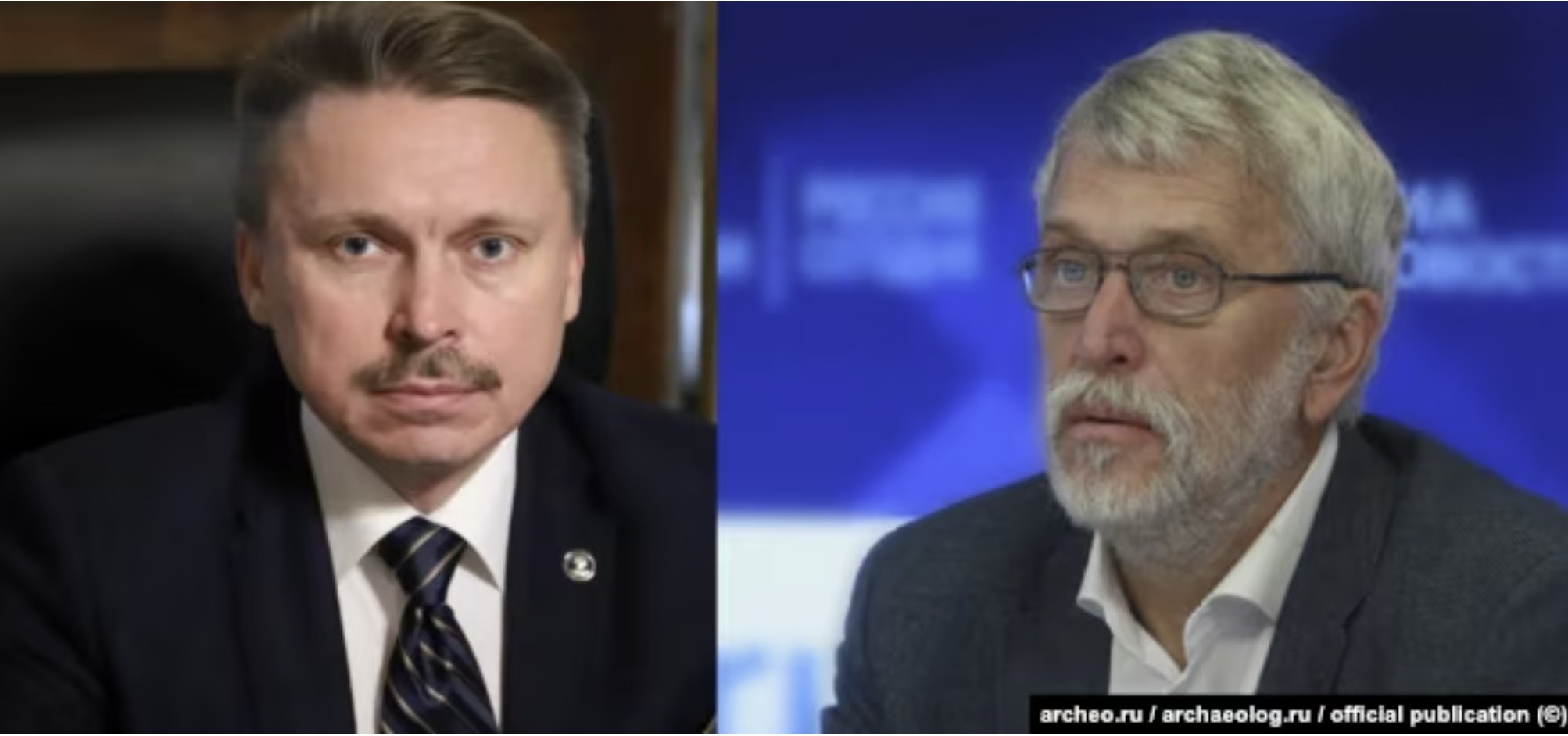
Andrey Vladimirovich Polyakov (b. 1974) is the Director of the Russian Academy of Sciences Institute for the History of Material Science which, under his leadership between 2014 and 2023 “systematically engaged in archaeological excavations across the Russian-occupied territory of Crimea”, which are, obviously, carried out without Ukraine’s consent. Polyakov has publicly supported the Institute’s continuing role in Chersonese and other parts of Crimea.
Russia’s so-called ‘work’ at Chersonese, or the Ancient City of Tauric Chersonese and its Chora, has almost totally destroyed this UNESCO World Heritage site on the outskirts of Sevastopol. There has been similarly barbaric destruction of the Khan’s Palace or Hansaray in Bakhchysarai, a monument of enormous historical and cultural significance for Crimean Tatars and for Ukraine.
In an interview to the Russian state TASS news agency at the beginning of April, Polyakov called Butyagin’s arrest in Poland and possible extradition to Ukraine “outrageous” and “simply international terrorism, intimidation of specialists who carry out their work.”
The EU is of a different opinion, both with respect to Polyakov, and regarding other major figures facilitating Russia’s illegal excavations.
Nikolay Andreevich Makarov (b. 1955) is the Director of the Russian Academy of Sciences Institute of Archaeology and the Vice-President of the Russian Academy of Sciences. According to the sanctions list, under Makarov’s leadership, his institute “has become a central actor in Russia’s state-directed archaeological exploitation of the occupied Crimean Peninsula. Therefore, Nikolai Makarov is supporting and implementing actions and policies which undermine or threaten the territorial integrity, sovereignty and independence of Ukraine.”
Makarov was just as disingenuous, or downright dishonest, in his comments to TASS. He called Butyagin’s arrest and the charges against him “absurd” and claimed that nothing had changed in Butyagin’s work after what Makarov called Crimea’s “return to Russia”.
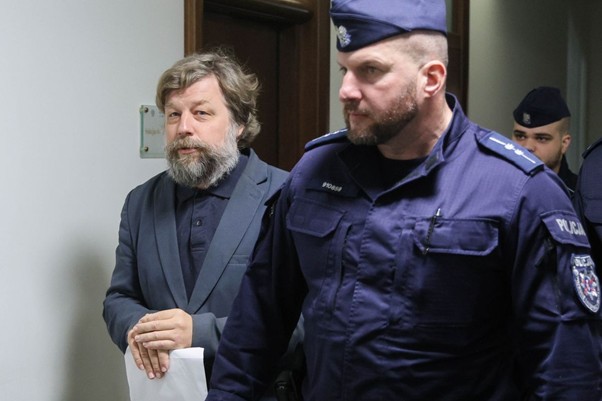
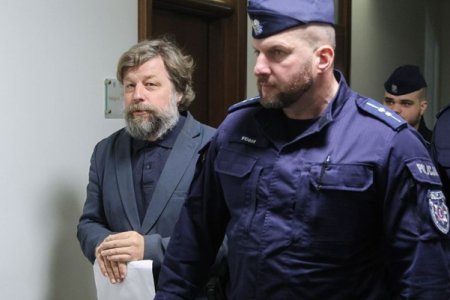
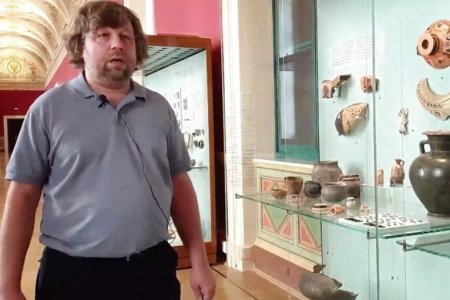
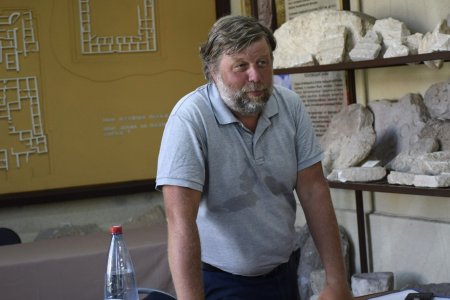
The charges against Alexander Butyagin (b. 1971) are over excavation work on a site of Ukrainian cultural heritage, namely Myrmēkion, an ancient Greek colony founded in the first half of the sixth century in what is now Kerch in Crimea. Butyagin is accused of carrying out excavations without the required permission, in breach of Article 298 § 4 of Ukraine’s Criminal Code, and of causing its partial destruction. The notice of war sanctions, imposed by Ukraine points out that in 2022 he led an expedition which discovered and illegally seized for the Russian Federation thirty gold coins, of which 26 were inscribed with the name of Alexander the Great and 4 were minted during the reign of his brother Philip ΙΙΙ Arridaeus. Russia, as illegally occupying state, is in violation of Ukrainian and international law by plundering Ukrainian artefacts, and Butyagin was complicit in this.
Butyagin was detained in Warsaw in early December and has been in detention ever since. On 18 March the Warsaw Circuit Court ruled that there was no legal impediment to his extradition to Ukraine, with the decision as to whether he will be extradited ultimately up to Poland’s Minister of Justice. Butyagin’s lawyers reported on 23 April that they had filed an appeal against the 18 March ruling with the Warsaw Court of Appeal.
The new, 20th, EU sanctions package also targets two other Russian ‘cultural’ figures. Mikhail Borisovich Piotrovsky (b. 1944) is Director of the State Hermitage Museum where Butyagin heads the Department of Northern Black Sea region archaeology. Piotrovsky is described as a close association of Russian leader Vladimir Putin and “publicly endorsed Russia’s war of aggression against Ukraine. He has “backed legislation enabling the incorporation of cultural items from Ukrainian museums into Russia’s State Museum Fund. Under his leadership, the Hermitage has conducted unauthorised archaeological excavations in occupied Crimea, including the destruction of protected Ukrainian heritage sites, thereby serving the Kremlin’s goal of legitimising its territorial claims under the guise of academic work.”
Sergei Obryvalin is first Russian deputy culture ministry and “oversees key departments within the culture ministry, including the Department of State Protection of Cultural Heritage, museum oversight, and the Russian Military Historical Society. These departments are directly involved in the seizure of Ukrainian cultural property and its reclassification as Russian.
It was reported back in January 2026 that academics were being advised by Russia’s ministry of science and higher education to carefully assess whether they should travel to what the current Russian regime views as ‘unfriendly countries’. The new sanctions may well increase apprehension about possible arrest abroad, and should also make other western countries as willingly to react to warranted ‘wanted’ notices as Poland proved to be in December 2025.