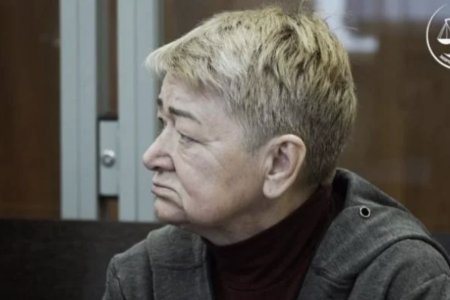
![Суд над херсонцями. Фото: Медіазона [Херсонська дев’ятка]](https://khpg.org/files/img/1608825953.jpg)
At the beginning of this year, the Southern District Military Court in Rostov-on-Don delivered verdicts to the so-called “Kherson Nine”—residents of the occupied Ukrainian city who were abducted by Russians in the summer of 2022, held incommunicado for several months in an unofficial place of detention, subjected to torture, and then transferred to Crimea, where their arrests were formalized under Russian law. After that came Moscow’s Lefortovo prison, Rostov-on-Don, and eventually the trial.
At the trial, people who had previously been forced under torture and intimidation to “confess” to everything began to speak—about beatings, about “material evidence” planted on them, and about the death of one of them.
Journalists from the outlet “Mediazona” analyzed court materials and gained access to the diary of one of the prisoners who was held in the same basement as “Kherson Nine” (his name is not disclosed for security reasons; the papers were secretly smuggled out with personal belongings). This revealed the circumstances of the death of Vasyl Stetsenko, chief specialist of the environmental control department of the State Environmental Inspectorate of Kherson region.
Circumstances of the “case”
In August 2022, a propaganda video aired on the Russian TV channel “Russia 1”: the FSB is shown detaining a “group of Ukrainian saboteurs” on camera—confused and exhausted. In reality, the men had been taken out of a torture chamber for the filming, where they had been brutally beaten for weeks. They later described this “feature film” in court.
They were abducted between approximately July 19 and August 6. The Russians labeled as “terrorists” an auto mechanic Serhii Heidt, sales managers Kostiantyn Reznik and Serhii Ofitserov, his nephew (a farmer and veteran) Serhii Kovalskyi, entrepreneurs Serhii Kabakov and Denys Lialka, Red Cross volunteer Yurii Kaiov, deputy head of the Kherson-port customs post Yurii Tavozhnianskyi, former deputy head of a department of the Kherson City Council Oleh Bohdanov, and environmental officer Vasyl Stetsenko.
All of them were thrown into the basement of the Main Directorate of the National Police building in Kherson region on what used to be Kirov Street (now Lutheranska Street).
“I was taken to Kirov Street, brought into a room they called the ‘torture room,’ thrown to the floor, electrodes attached to my arm and leg, tortured with electric current, asked about weapons and caches, beaten,” Denys Lialka testified in court.
There they were beaten, tortured, threatened that their families would be abducted, and deprived of food and water.
“I asked for water—they replied, ‘You’ll get a drink now,’ wrapped my head and began submerging it in a container of water. I choked, vomited… They hung me on a grate by my hands for several hours,” testified Kostiantyn Reznik.
The diary author also described the horrors in the basement:
“Yesterday I heard a child’s voice in one of the cells. I thought I imagined it. But they captured a child! He sounded about 10–12 years old. This is f***ed up! A soldier took him out, said they would ‘talk’ and take him home today. But after that, he was returned to the cell. The boy’s voice was trembling.”
Another excerpt:
“Kolya was taken from the cell at 7:30 in the morning. Yesterday he said he was passing blood instead of stool. At night, I saw a large wet bloodstain on his gray sweatpants. We advised him to tell the operatives. But… he is still standing handcuffed to the bars and will remain like that at least until tomorrow.”
The men were accused of allegedly planning to kill officials of the occupation administration. In September, after two months of torture, they were forced to sign confessions. None of them even read the documents—officers simply covered the text with another sheet.
Yurii Kaiov said he was too weak from hunger to read anything. Meanwhile, Russian forces also began blackmailing them with their relatives. None of them had any real choice.
Serhii Heidt said that during one interrogation, an investigator made a video call—on the screen, he saw his wife and daughter standing next to armed men. Kostiantyn Reznik was shown his pregnant daughter.
“They told me, ‘Choose’… So I chose to sign everything.”
The entire case was later built on these “confessions.”
On October 5, the group was taken to Simferopol (with Reznik, Kabakov, and Lialka transported in a car trunk), and the next day all nine were officially arrested. The tenth, Vasyl Stetsenko, was no longer with them—he had died from torture back in August.
Vasyl Stetsenko
Vasyl Stetsenko was 39 years old. Before the full-scale invasion, he worked in the environmental control department of the State Environmental Inspectorate in Kherson.
According to Serhii Heidt, Stetsenko was abducted in July for refusing to cooperate with the occupation authorities.
Serhii Kabakov met him in the torture chamber on July 21:
“On the first day… they hung me on the bars, and he was immediately taken into the ‘procedure room.’ We were switched places several times. We didn’t see each other—I had a hat over my head, he had a plastic bag taped over his. The first night I was in the cell with him, I saw him beaten.”
Kostiantyn Reznik recalled that after torture, Stetsenko was in terrible condition—his body had turned black from beatings, he was desperately thirsty, and at night, he began drinking his own urine.
According to Serhii Heidt, Stetsenko died in his arms on August 3.
Denys Lialka later recalled seeing the body in a bag:
“I learned about Stetsenko in the basement—it was a corpse… When I was brought in, there was a body in a bag lying in front of the basement and torture room. Later, they told me it was Vasyl. The staff also mentioned some Vasyl—‘There were supposed to be ten of you, but one is already dead. This Vasya—we don’t know what to do with him.’”
That was August 3.
On January 30 this year, Kostiantyn Reznik and Serhii Kabakov were sentenced to 20 years in a high-security penal colony. Yurii Tavozhnianskyi and Oleh Bohdanov received 18 years. Serhii Heidt, Serhii Kovalskyi, and Serhii Ofitserov were sentenced to 17 years, while Yurii Kaiov and Denys Lialka received 14 years.
The whereabouts of Vasyl Stetsenko’s body remain unknown.
The human rights project “Support for Political Prisoners. Memorial,” applying international criteria, considers the nine Kherson residents to be political prisoners. Their prosecution violates their right to a fair trial and the norms of the Geneva Convention, human rights defenders say.
“Memorial” demands an investigation into their abduction and unlawful detention, the torture allegations, the circumstances of Stetsenko’s death, and accountability for those responsible.
The Kherson residents were accused of preparing acts of international terrorism “to disrupt the peaceful coexistence of states and peoples,” though such “peaceful coexistence” is questionable given Russia’s aggressive war.
Testimony was obtained under torture and psychological pressure, evidence was fabricated, and the men were held for a long time without legal status, contact with relatives, or legal defense in an unofficial prison.
Moreover, Article 76 of the Geneva Convention states that protected persons accused of crimes must be held and, if convicted, serve their sentences within the occupied territory. Instead, in violation of these norms, the residents of Kherson were transferred to Moscow and then to Rostov-on-Don.