Scroll down for information about the 16-year sentence passed on 15 July against Serhiy Piskun
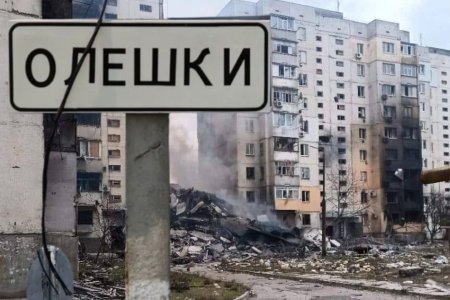
Instead of making efforts to resolve the humanitarian disaster which it has created in occupied Oleshky (Kherson oblast), Russia is simply ramping up the same repressive measures it has brought to all territory under occupation. The latest victim from Oleshky is 50-year-old Oleh Doroshenko who has been sentenced to six years for defending Ukraine back in 2015. While the sentence is not as shockingly long as those in very many other politically motivated cases, it is of shocking lawlessness and demonstrates the type of methods which Russia is increasingly using to try to rewrite the facts about its invasion of Ukraine.
The Russian invaders began abducting Ukrainian civilians on all territory they seized in 2022, with former Ukrainian defenders or the relatives of serving soldiers among the many groups at risk. Oleh Doroshenko (b. 5 October 1975) would have been in danger from the beginning but appears to have only been seized in April 2025, almost exactly ten years after he allegedly took part in Ukraine’s ‘Anti-terrorist operation’ or ATO, the military action against the Russian-initiated seizure of parts of Donetsk and Luhansk oblasts.
An aggressor state, which used missiles, tanks and terror to seize invaded territory, has since actively applied a flawed and baseless ruling by the Russian supreme court from 2 August 2022 as a mechanism for persecuting those soldiers who defended Ukraine. The ruling declared the Azov Regiment, which is part of Ukraine’s Armed Forces, a ‘terrorist organization’. The ruling was mainly intended to provide a pretext for Russia to bring insane ‘terrorism’ charges against the many members of the Azov Regiment who were taken prisoner while defending Mariupol in the first months of Russia’s full-scale invasion of Ukraine. It is, however, increasingly used also against ATO veterans and against civilians who have donated money to, or in any way, shown support for the Azov Regiment or specific members of it.
Under the current regime, Russia’s supreme court has churned out the rulings demanded of it, with literally no more required to convict men and women under ‘terrorism’ legislation. Fundamental principles of law, such as that the law is not retroactive, are also flouted, with Oleh Doroshenko convicted of taking part in a ‘terrorist organization’ seven years before the supreme court issued its ruling.
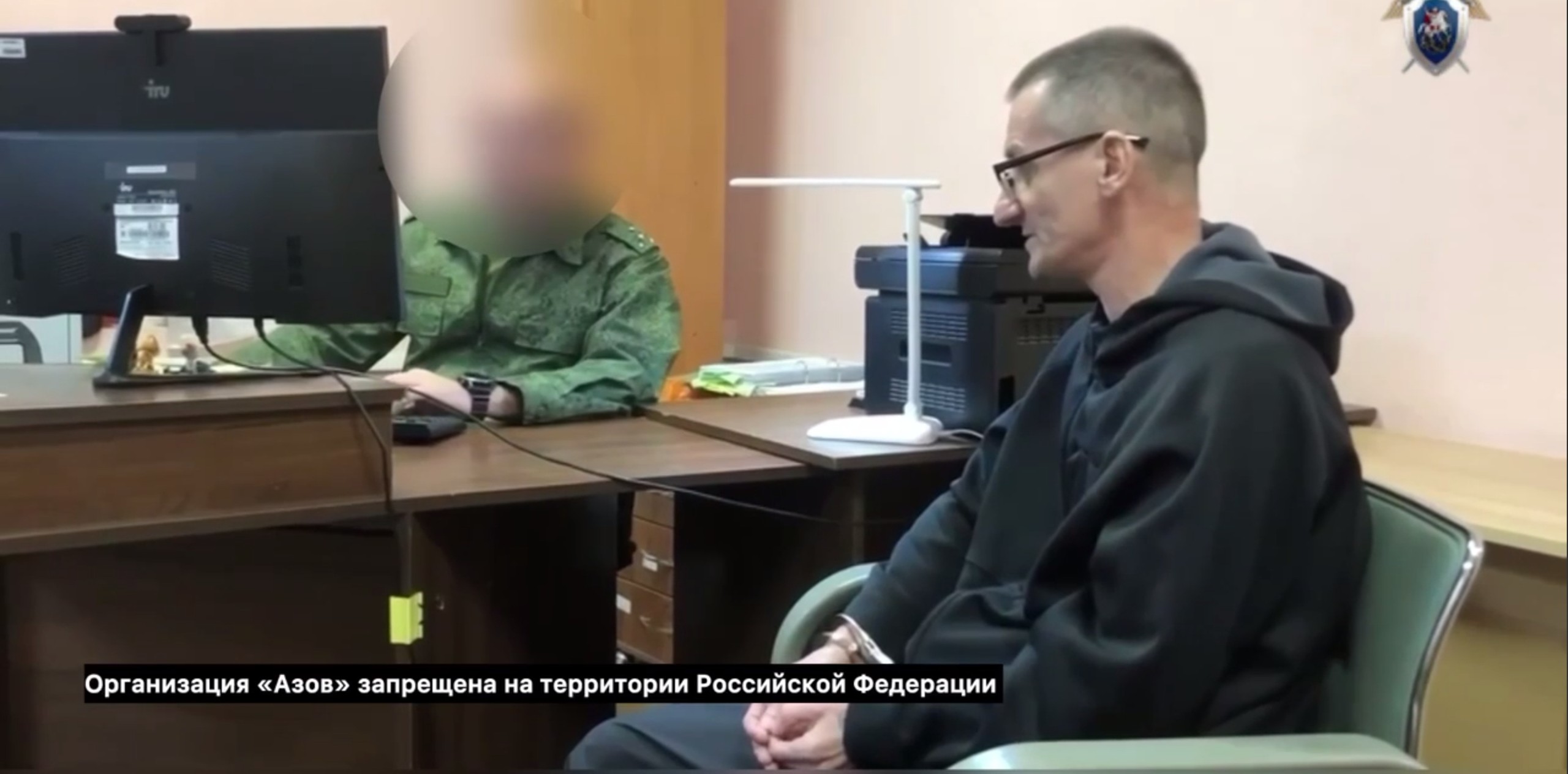
All of this enabled the Russian Investigative Committee’ to report on 9 July that “a Ukrainian citizen has been found guilty of taking part in a terrorist organization”, with the charge illegally under Article 205.4 § 2 of Russia’s criminal code. He was supposed to have voluntarily joined and taken part in ‘Azov’, which had originated as a volunteer battalion, but was already part of Ukraine’s Armed Forces and not, as claimed “the Azov nationalist battalion”. The charge and the 6-year sentence would appear to be over his serving in Azov, as a mechanic and driver, from the middle of May to the end of August 2015. The report then goes on to claim, without any example or explanation, that Doroshenko “took part in carrying out violent crimes against the civilian population of the Donetsk people’s republic in order to destabilize the local authorities” [sic].
Doroshenko’s military service finished at the end of August 2015 after he was injured, which the report, of course, claims was while he was “carrying out unlawful movements”.
“Living in Oleshky, Kherson oblast, the man carefully concealed his involvement in the Battalion under the given unlawful behaviour was stopped [sic] by members of the Kherson oblast FSB.”
While it is claimed that Doroshenko ‘admitted’ the charges, on the video he is heard merely confirming the beginning of his military service and the fact that he was a mechanic and driver.
It is not even stated who passed the appalling 6-year sentence in a medium-security prison colony, although it is likely that this was in Russia’s occupation ‘Kherson regional court’.
Just over a year after the supreme court ruling on the Azov Regiment, Russia used the notorious Southern District Military Court in Rostov to issue analogous rulings, declaring several other units of Ukraine’s Armed Forces, which had originally begun as volunteer battalions, ‘terrorist’. All of these rulings, including that against the Donbas Battalion, now the Ukrainian Armed Forces 46th Separate Assault Battalion ‘Donbas’, are being used to churn out multiple illegal sentences against Ukrainian prisoners of war for defending their country and against civilians for former military service or for supporting those defending their homeland.
Serhiy Piskun
On 15 July 2026, the same Southern District Military Court which declared units of Ukraine’s Armed Forces ‘terrorist’ sentenced Serhiy Piskun to 16 years’ maximum-security imprisonment for serving in the Ukrainian Armed Forces 46th Separate Assault Battalion ‘Donbas’ seven years ago.
44-year-old Piskun was supposed to have volunteered in 2016 and been appointed the commander of an assault platoon which was active in Luhansk oblast. He served there only one year, resigning in the summer of 2019.
It is not clear where he was living when taken prisoner, nor how the occupiers found out about his military service. It is equally a mystery why, in this case, Piskun, who had also served only one year and had long been a civilian, was ‘tried’ at the Southern District Military Court in Russia, not by an occupation ‘court’. Russia has begun concealing even the names of defendants on the Southern District Military Court’s website, but it is harder to conceal all information than on occupied territory.
He appears to have been charged with the two standard charges in these cases: ‘involvement in a terrorist organization’ (Article 205.4 § 2 of Russia’s criminal code) and ‘training in terrorist activities’ (Article 205.3). Judging by the scant information on the court website, there were essentially no hearings, only the announcement of the sentence, with this, seemingly, passed by Danil Nikolaevich Kostenkov.