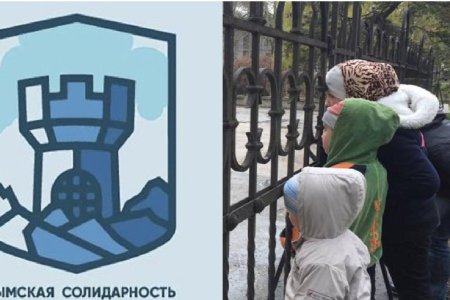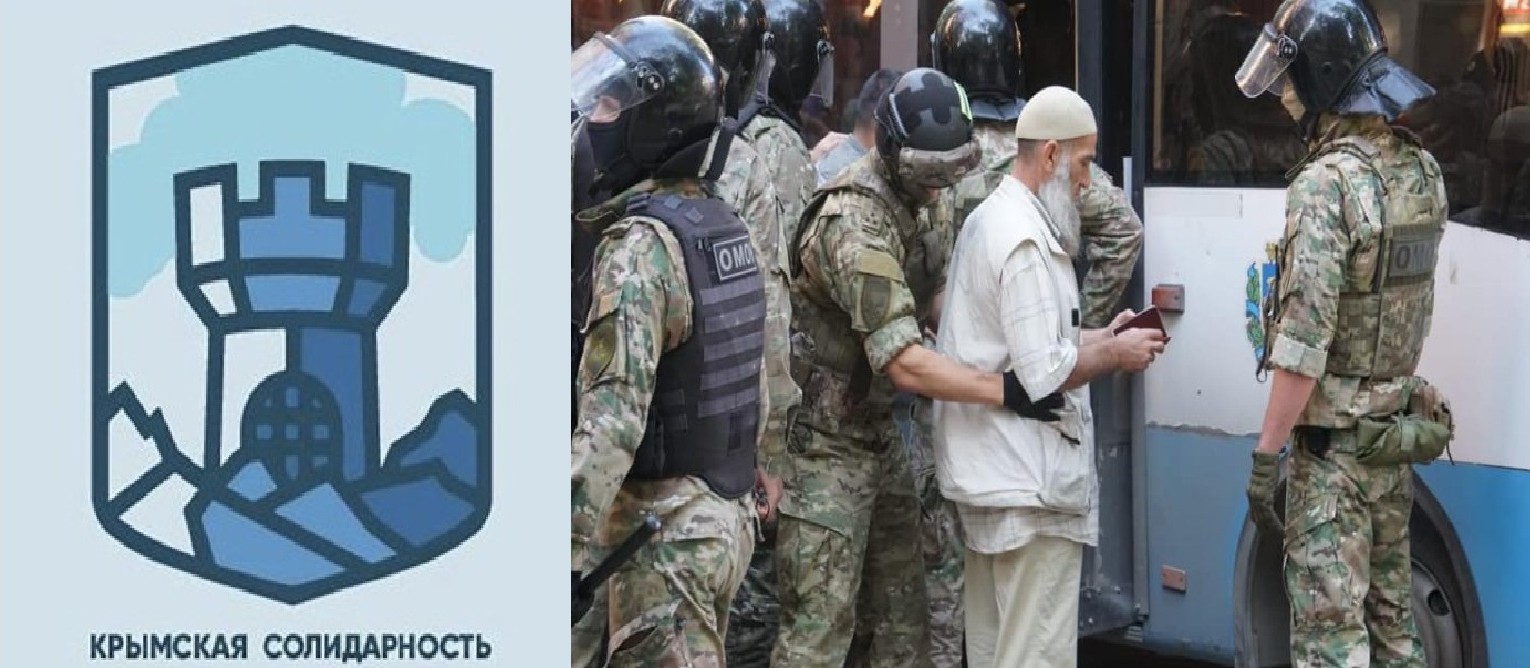
For over ten years, Crimean Solidarity ensured that the world learned about the mounting political and religious persecution in occupied Crimea and that the victims of repression and their families knew that they were not alone. Very many Crimean Solidarity journalists and activists have paid a huge price for their courage and are serving sentences of up to 20 years in Russian prisons. A month ago, Russia’s justice ministry added Crimean Solidarity, as well as several prominent Crimean Tatar human rights defenders and / or lawyers, to its notorious register of ‘foreign agents’. By so doing. Russia has effectively removed any restraints on its repression, with anybody in any way connected with Crimean Solidarity at risk. Under such circumstances, Crimean Solidarity announced on 21 July 2026 that it sees no alternative but to terminate its activities as a civic movement.
As their statement (translated in full below) makes clear, the Crimean Solidarity website and social media pages will no longer be updated, and all activities as a movement are now terminated.
Has Russia then won? That depends on us. Crimean Solidarity has provided an example of courage and commitment, of solidarity with all victims of repression. It was that which made the Russian FSB target human rights lawyers, civic journalists and activists from soon after the movement arose in 2016, and quite openly seek to terrorize all those who dared to show solidarity. It failed for over ten years and has only succeeded now because Moscow has dropped any pretence of compliance with international law since it launched its full-scale invasion of Ukraine.
Russia will win if, by escalating terror against those on occupied territory whom it can abduct, torture, imprison or kill, the world goes silence on its appalling repression. It will continue to fail if we treat this as a challenge and ensure that the information continues to be passed to the world and voices continue to sound in defence of Crimean political prisoners and other victims of repression.
The information is there and will continue coming, albeit with more difficulty, but it needs to be circulated and brought to the attention of the international community. This could, and should, include, for example, the members of the International Olympic Committee who are seriously planning to allow Russia to participate in the next Olympics.
Crimean Solidarity first arose in 2016, following horrifically brutal armed raids on a number of mainly Crimean Tatar families, and the arrests of Crimean Tatar human rights defender Emir-Usein Kuku and three other men (see: From savage Russian repression to Crimean Solidarity ). By 2017, the Russian FSB were fairly openly targeting Crimean Solidarity civic journalists and activists, with 25 men arrested on 27 March 2019. At least until 2022, Moscow tried to terrorize Crimean Tatars and other Ukrainians into silence or into fleeing Crimea and only resorted to arrests and huge sentences after initial administrative prosecutions, terrorization etc. failed to silence its targets. This was the case, for example, with civic journalists Remzi Bekirov; Osman Arifmemetov; Rustem Sheikhaliev; Ruslan Suleimanov; Seiran Saliyev; Server Mustafayev; Ernes Ametov and many others.
In February 2019, armed Russian enforcement bodies came for Ruslan Emiruseinov, Arsen Abkhairov and Eskender Abdulganiev. When Ruslan’s wife, Aliye Emiruseinova was asked by Crimean Realities if her husband was involved in Crimean Solidarity, Aliye replied: “Can you tell me how it is possible in Crimea to not be involved in Crimean Solidarity if you have a conscience?”
People with a conscience are clearly a problem to the occupying state, as is the truthful information they provide about Russia’s repression in occupied Crimea
This, of course, is not how the regime tries to present their actions. The Russian justice ministry’s statement on 26 June 2026 claimed that the ‘foreign agent’ label was justified because “the Crimean Solidarity civic organization circulated false information about decisions taken by the public authorities of the Russian Federation and the policies they carry out. It took part in circulating notifications and material of a foreign agent to an unlimited number of people. It cooperated with members of international terrorist organizations, as well as with Ukrainian state bodies.”
The claim about cooperation with “international terrorist organizations” is both sinister and false. The ministry is probably trying to link Crimean Solidarity with the organization ‘Hizb ut-Tahrir’, which is legal in Ukraine but which Russia’s supreme court in 2003 unwarrantedly, in behind closed doors, declared ‘a terrorist organization’. That ruling has been used for Russia’s ‘trials’ and massive sentences against Crimean Solidarity civic journalists and activists.
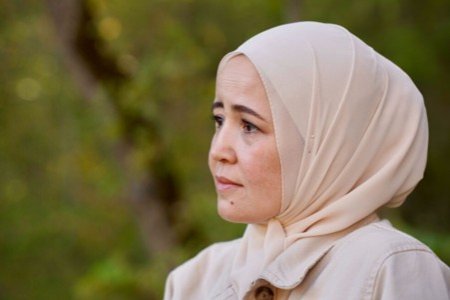
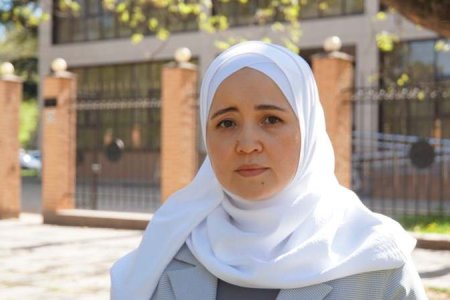
The list of eleven people specifically named by the ministry includes Lutfiye Zudiyeva, a renowned journalist and human rights defender, who was first labelled a ‘foreign agent’ on 16 May 2025 for her journalist work and the interviews she has given international media and NGOs. The others are: political prisoner Server Mustafayev, renowned lawyers Emil Kurbedinov; Edem Semedlyaev; Lilia Hemedzhy; civic activists Dilyaver Memetov; Server Cholakchyk and Mustafa Seidaliev; civic journalists Zedin Adzhikeliamov and Ruslan Paralamov; and Mumine Saliyeva. Mumine is a well-known human rights defender and coordinator of the Crimean Childhood project. She is married to Crimean Solidarity civic journalist and political prisoner Seiran Saliyev and who has faced administrative detentions and prosecution herself.
The Crimean Solidarity Statement from 21 July 2026
Crimean Solidarity has been declared ‘a foreign agent’. What next?
On 26 June 2026, Russia’s justice ministry included our civic movement on its register of foreign agents.
This statement is our first, and at once our last, public announcement after the publishing of that decision on the justice ministry’s website and in the media.
We view that decision as a political act of pressure – a label with which they are trying to isolate and discredit our activities, as well as to intensify pressure on an independent civic, truly people’s, movement. For many years, we have defended people in Crimea, provided help for the families of political prisoners and have provided coverage of what was happening on the peninsula.
Our initiative marked its tenth anniversary this year, with these years full of daily communication, support for people in conditions of pressure, searches, arrests and losses, as well as retaining solidarity where there were systematic attempts to crush it.
Through all those years, we documented the stories of people in Crimea who were being subjected to persecution, supported the families of those detained and under arrest, ; helped with legal defence; and circulated information which was often beyond the confines of the official narrative.
Many of us who helped victims of political repression were ourselves subjected to fines, administrative arrests or criminal prosecution. Our colleagues and friends – human rights defenders; journalists and volunteers – are currently held in places of imprisonment.
It was precisely these activities that the authorities have labelled the activities of ‘a foreign agent’ and it was this that prompted such a decision.
Crimean Solidarity was not created as a political organization. It arose as a mutual support initiative of ordinary people, Crimean Tatars and representatives of other nationalities. who had faced repression, so that no one was left to face their misfortune alone.
People of very different professions and views gradually joined our movement, with each bringing their contribution to our common cause – defending the right of each resident of Crimea to justice and support.
When the relatives, friends of the detained or members of the public in Crimea pointed to and continue to point to possible mistakes in an investigation or trial, they are not speaking out against the law. Quite the contrary, they are seeking thorough and objective examination of all circumstances of a case before a person is sentenced to many years’ imprisonment.
In a law-based state, such appeals should not be viewed as a challenge to the authorities, but as the lawful desire for justice and observance of the principles of law. They should not be grounds for persecution of those who dared to express their views.
Support for the Crimean Tatar people always played a fundamental role in our work. We are convinced that the right to retain one’s culture; language; religion; social links; and to freely express one’s views should be respected by the authorities under any political circumstances. No one should be discriminated against, restricted in his or her rights or persecuted purely of nationality, religion, language or political position.
Our civic activities were not driven by commercial interest, but by human solidarity, respect for the dignity of each person and the belief that each person has the right to defence from arbitrary lawlessness, regardless of their nationality, religion or views.
We do not consider that such activities, based on principles of mutual aid, legal support and an open, informed society, should be treated as grounds for a ‘foreign agent’ label. Any society becomes strong when there is place for free discussion of issues of public importance and for mutual support.
The imposition of ‘foreign status’ does not change our values, principles or goals, however, under the present circumstances, we do not see any possibility for continuing our activities in their earlier format.
What will we do now?
We have closely studied the legislation and have reached a joint decision to terminate the activities of our civic movement.
This was a very difficult decision. In ten years, Crimean Solidarity became more than simply an initiative; it became a community of people, united by mutual support, trust and shared responsibility for each other. However, in the circumstances before us, we believe this step to be necessary.
From today, our site and pages on social media will no longer be updated. The activities of the civic movement are terminated.
We intend to use all legally permitted means of defending our rights and of appealing against decisions of state bodies according to the established procedure.
History shows that civic solidarity is not defined by state registers. It is defined by people’s willingness to support one another, to retain dignity and to remain true to our principles, even in the most difficult times.
People needing help do not disappear with the emergence of new restrictions, and the very need to defend them remains unchanged.
We are sincerely grateful to every person who, not only at this time, but over many years, has spoken out in support for the political prisoners of Crimea.
[Any material, social media, etc. must be prefaced by the words in capitals* below (which on occupied territory must be above the text). This also serves as a weapon, enabling first administrative and then criminal charges against those labelled ‘foreign agents’ and anyone who reposts their material, as it is difficult to even remember where something may have been posted.
[18+
THIS MATERIAL (INFORMATION) IS PRODUCED AND (OR) CIRCULATED BY A FOREIGN AGENT THE CIVIC MOVEMENT ‘CRIMEAN SOLIDARITY’, OR CONCERNS THE ACTIONS OF THE FOREIGN AGENT THE CIVIC MOVEMENT ‘CRIMEAN SOLIDARITY’]