The Russian invaders have killed yet another Ukrainian prisoner of war, with the crime especially shocking as the unarmed soldier had first been interrogated before one of the Russians ordered his execution.
The Donetsk Regional Prosecutor’s Office reported on 24 July 2026 that it had launched a war crimes investigation over the killing of the soldier near the village of Yalta in the Komar Hromada. According to their information, the Ukrainian soldier was taken prisoner in the afternoon of 13 July. He had been interrogated, one of the Russians ordered that he be executed, with another shooting and killing him. The criminal investigation is under Article 438 § 2 – war crimes linked with homicide.
Any soldier who has laid down his weapons is protected under international law. That is an absolute, but one that Russia is systematically flouting, through its executions of unarmed soldiers and through the torture and ill-treatment of prisoners of war in Russian prisons which has also led to a huge number of deaths. While unclear who the Russian was in this case who ordered the execution, in all three trials held in person of Russians accused, and convicted, of killing Ukrainian prisoners of war, the defendants have said that the order to kill came from their commander.
In its latest report Attacks against Ukraine’s energy infrastructure and update on the human rights situation in Ukraine, 1 December 2025 – 31 May 2026, OHCHR stated that, since February 2022, it had verified that Russian armed forces executed 129 Ukrainian POWs and persons hors de combat. They recorded “credible allegations about the execution of 37 Ukrainian servicemen in 18 incidents between the middle of November 2025 and January 2026, and called this a significant spike.
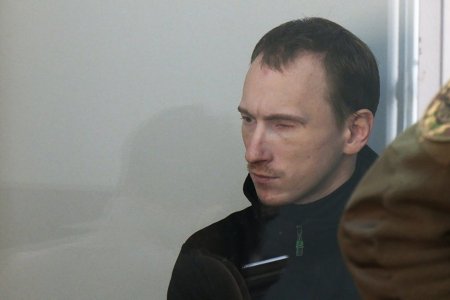
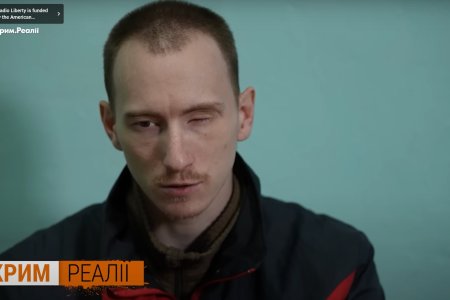
On 23 January 2026, Ukraine’s Security Service [SBU] posted the account given by a captured Russian soldier Sergei Skobolyev of how he and his men took a group of nine Ukrainian soldiers prisoner in Kursk oblast. He stated that they had forced the men to undress and to lie on the ground. To prevent their trying to show resistance, he said, they had told the Ukrainians that they would be released in a prisoner exchange. Instead, on an order from their commander, Sobolyev (who was himself in charge of an assault group) and the other Russians shot and killed the nine men, before taking their mobile telephones and two-way radios.
Sobolyev was himself taken prisoner a week later. He originally denied any involvement in the killing. The SBU assert, however, that they presented damning proof, following which he admitted to the crime.
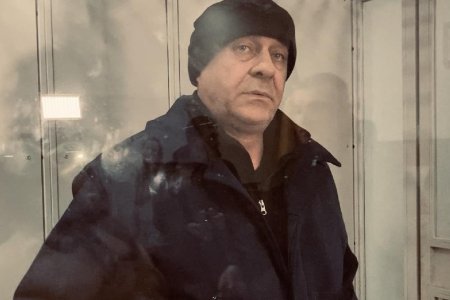
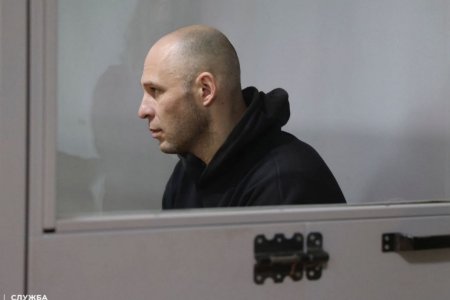
It should be acknowledged that such videoed confessions, where it is unclear who else is in the room, and whether the person has access to a lawyer, could be of concern. We know from countless witnesses of the torture methods used by Russia’s Investigative Committee and FSB to extract such ‘confessions’. The difference here, however, is that, unlike Russia, Ukraine is fully cooperating with international monitors and investigators. They can, and do, visit and speak with all Russian POWs, including, obviously, any accused of such crimes. The men’s trials in such cases are also closely monitored and reported on by human rights groups. This too is in sharp contrast to Russia’s ‘trials’ which are generally reported post-fact, with any hearings typically on occupied territory and / or behind closed doors. Details can be found here about the trials and life sentences for killing Ukrainian POWs passed against Vladimir Ivanov; Sergei Tuzhilov and Dmitry Kurashov.
See also:
Russia returns the bodies of 375 POWs and civilian hostages tortured to death or denied medical care