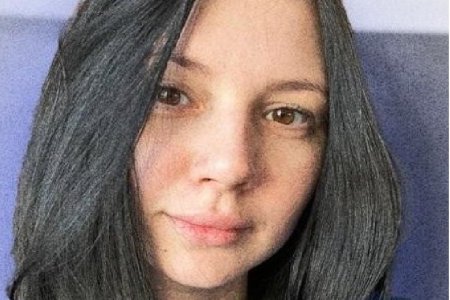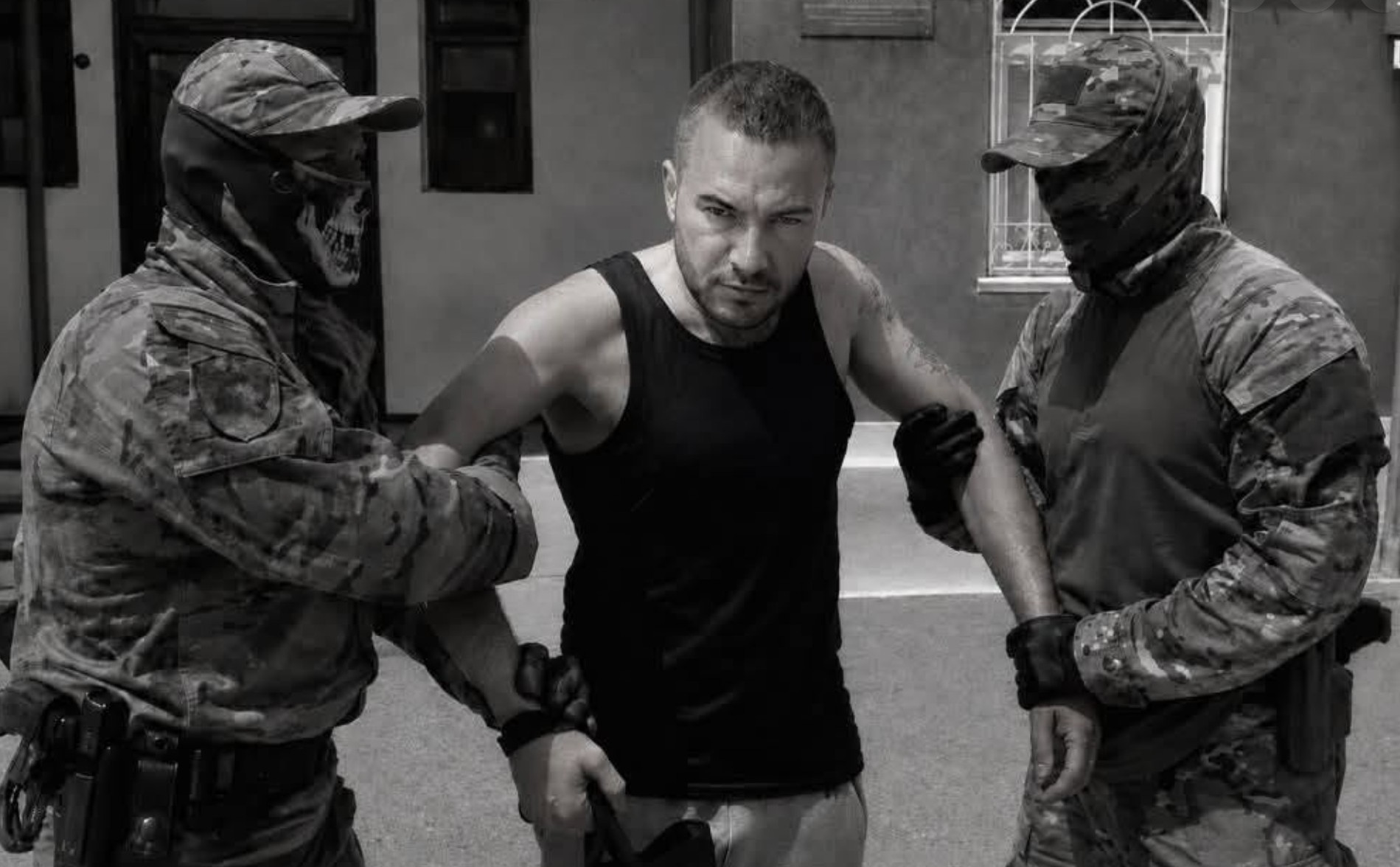
Russia has brought ‘treason’ charges against Yevhen Shved, a political prisoner from occupied Crimea. Presumably the 2.5 and 4-year sentences he has already received for social media posts expressing support for Ukraine and opposition to Russian occupation were not deemed long enough. Treason charges, on the other hand, carry an effectively guaranteed sentence of up to 20 years, with the added advantage that everything takes place behind closed doors.
The scant information thus far available about the new charge has come from former political prisoner Vladyslav Yesypenko, who says that the ‘investigation’ into ‘treason’ charges under Article 275 of Russia’s criminal code is likely to continue for at least a year. Ominously, Shved is imprisoned in SIZO No. 2, a remand prison believed to be under the control of the FSB and to be used exclusively for holding political prisoners and civilian hostages. In very many cases, this includes men and women whom the FSB abduct and hold incommunicado for months, or longer, while fabricating ‘evidence’ and/or using torture, threats, often against a person’s family, to extract ‘confessions’.
It is not clear as yet on what the charge of ‘state treason’ is to be based, but the FSB are aware that any indictment, however absurd, will be accepted, without the ‘court’ asking inconvenient questions and without public scrutiny. Russia has already based several new ‘trials’ of political prisoners on supposed conversations they are alleged to have had with cellmates. The latter are themselves in a vulnerable position and can be very easily forced to provide such ‘witness testimony’
‘Disrespect for Russia's military glory'
Yevhen Shved (31.12.1992) is a car mechanic from Dzhankoi in northern Crimea. His ‘arrest’ was reported on 20 July 2023 by the Telegram channel Astra, although people had reported on his Telegram channel that there had been no contact with him since 19 June 2023.
There had been a menacing report on the Russian propaganda website Politnavigator on 16 June 2023, with this calling Shved a ‘zhdun’, the term used by supporters of Russia’s aggression against Ukraine about Ukrainian patriots who are waiting for the Ukrainian Armed Forces to liberate their occupied territory. The text claimed that Shved could be sentenced to 15 years “for crimes against state security” over his circulation of his views in social media. In video clips, Shved had expressed opposition to Russia’s war against Ukraine, had condemned the lies told, etc. and had predicted Ukraine’s victory within six months. It is quite possible that, by 16 June 2023, Shved had been denounced by Oleksandr Talipov’s notorious ‘Crimean SMERSH’ vigilantes and was being “worked on” by Russia’s so-called ‘centre for countering extremism’. Although physical torture may also have been applied, the video on which Shved is shown ‘apologising’ could also have been due to the threat of at least four criminal charges “against state security”.
The ‘repentance’ had undoubtedly been learned by heart and contained terms that Shved would not have used without coercion (‘special military operation’, ‘Kyiv regime’, etc.). Nor would he have voluntarily expressed support for those fighting Russia’s war against Ukraine, nor ‘thanked’ Russian leader Vladimir Putin.
Shved was then charged with so-called ‘rehabilitation of Nazism’, under Article 354.1 § 4 of Russia’s criminal code. Russia’s law on ‘rehabilitation of Nazism’, introducing this new criminal charge, was signed into force on 5 May, 2014 and has proven as open to abuse as feared from the outset. The norm has been used, for example, to prosecute Vladimir Luzgin for reposting a text which stated, quite correctly, that both Nazi Germany and the USSR invaded Poland in September 1939. In September 2023, a Russian court convicted architect Sergei Volkov of the same purported ‘rehabilitation of Nazism on the Internet’ for his accurate account of the collaboration between the USSR and Nazi Germany for the first two years of World War II, and his criticism of Soviet dictator Joseph Stalin in connection with the Siege of Leningrad. According to Crimean Process which reported the sentence on 27 February 2024, Shved was claimed to have “circulated knowingly false information about the activities of the USSR during the years of WWII, as well as circulating information about days of military glory expressing overt disrespect for society.”
Shved had called 9 May a “foul, scummish and perverted pseudo holiday” and spoke of the hypocrisy, of War veterans abandoned to live out their days in abject poverty in his apartment block. “Heroes of the fatherland”, not needed by anybody, forgotten, discarded like second-class material”.
On 27 February 2024, Natalia Kulinskaya, who is notorious for her part in the persecution of other political prisoners, sentenced Shved to two and a half years’ imprisonment and also banned him from administering websites for four years.
Shved appears to have been ‘released’ on 30 July 2025, only to be immediately seized by masked men, with the FSB having scoured his social media pages and come up with a new charge.
Shved was sentenced in December 2025 by the Western District Military Court to four years’ medium-security imprisonment over two videos and a photograph posted on the day of the attack on Russia’s illegal Crimean Bridge on 8 October 2022. Russia insists on calling this attack on a perfectly legitimate military target, used to transport military personnel, hardware and weapons, a ‘terrorist act’. It claimed that the comments under these social media posts “contained the linguistic indicators of justification for this act of terrorism’.
Shved was still serving this second, politically motivated sentence. and has been in Russian captivity since June 2023. Any ‘treason’ charges must, therefore, either be based on other social media posts or on the supposed ‘testimony’ of other prisoners.