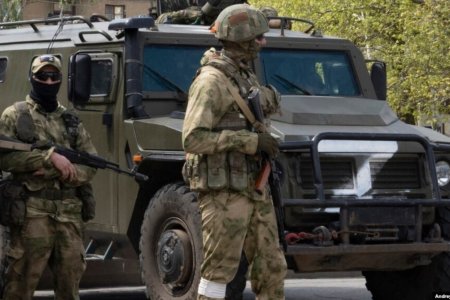
Ukraine has initiated a war crimes investigation into the believed killing in cold blood of two Ukrainian soldiers who had surrendered and were, effectively, prisoners of war. This is the latest of very many such executions which seem, even on the admission of Russian prisoners of war, to be carried out with encouragement and / or on the direct orders from the Russian invaders’ commanders.
The Donetsk Regional Prosecutor reported the execution on 11 September 2026, posting what appears to be drone footage from 2 September. On that day, two soldiers from Ukraine’s National Guard were captured by Russians while on a combat mission in a forest area near Dobropillia in Donetsk oblast. The men had already been captured, and were, under international law, prisoners of war, with protected status. The Russians used their automatic rifles and shot both of them dead. The criminal investigation, which will be carried out by Ukraine’s Security Service for the Donetsk and Luhansk oblasts, is under Article 438 § 2 of Ukraine’s Criminal Code – war crimes linked with homicide.
On 6 August, the same Donetsk Regional Prosecutor reported the killing of another Ukrainian prisoner of war by the Russians in Volnovakha raion. The Ukrainian defender had been seized and executed in cold blood on 22 July.
That execution was just days after another, near the village of Yalta. As reported, the killing of the Ukrainian prisoner of war on 13 July near Yalta in the Komar Hromada was particularly shocking as the soldier had first been interrogated, before one of the Russians ordered his execution, with this criminal order carried out by another of the invaders.
In all of these cases, the criminal investigation is under Article 438 § 2. The investigators aim to at least establish which Russian units were in their area and would have been responsible. There is less chance of bringing individual Russian fighters to account, unless they are taken prisoner.
In three cases over the past year, Russians have been tried in their presence on charges of killing Ukrainian prisoners of war, with life sentences passed in each case. There are grounds for believing that the order to kill came from their commander in all cases.
On 20 February 2026, Vladimir Ivanov was sentenced to life for shooting and killing Ivan Kondratiuk and Victor Liapota from the 241st Separate Brigade of Ukraine’s Territorial Defence Forces who had come under siege and had laid down their weapons and surrendered. Four Russians were involved in the killing, which apparently followed an order from their commander. Ivanov did not actually hear the order but presumably acted with the other men. He initially denied the charges but later changed his plea to guilty.
On 13 January 2026, a court in Kharkiv sentenced 36-year-old Sergei Tuzhilov to life imprisonment on war crimes over the killing in cold blood of one captured Ukrainian soldier and Tuzhilov’s role in the killing of other prisoners of war. The court did not take into account Tuzhilov’s claim that he had carried out orders from his command.
On 5 November 2025, Dmitry Kurashov was sentenced to life imprisonment for shooting dead Vitaly Hodniuk, a 41-year-old Ukrainian soldier, on 6 January 2024. The key witness testimony in the case came from the other members of Kurashov’s own assault unit, with the commander of the unit stating, in addition, that they had been instructed, during training, to not take Ukrainian soldiers prisoner.
While no ‘orders from above’ would absolve a Russian fighter from his own culpability for killing a prisoner of war, the reports of such orders are yet another indication of Russian war crimes at a higher level. It is also significant that at least Kurashov and Tuzhilov were convicted criminals whom Russia’s defence ministry recruited from prison colonies. Aside from the ‘political charges’ used against Ukrainian political prisoners, there are almost no crimes so serious that a prisoner cannot buy his freedom by agreeing to kill Ukrainians, with these the men who are then receiving criminal orders to gun down prisoners of war.
In its report Attacks against Ukraine’s energy infrastructure and update on the human rights situation in Ukraine, 1 December 2025 – 31 May 2026, OHCHR stated that, since February 2022, it had verified that Russian armed forces executed 129 Ukrainian POWs and persons hors de combat. They recorded “credible allegations about the execution of 37 Ukrainian servicemen in 18 incidents between the middle of November 2025 and January 2026 and called this a significant spike.
Although the European Commission openly called the explosion at Olenivka in occupied Donetsk oblast on 28-29 July 2022 the “mass killing of Ukrainian prisoners of war” in its new sanctions list on 14 July 2026, there has still been no international investigation into the deaths of 50 Ukrainian prisoners of war. They died either directly as a result of a horrific explosion which took place after the Russians had selected prisoners for the new barracks, or because the prison staff stood by and refused to provide any treatment for horrific injuries. (see: Only Russia wins if there is no international investigation of its Olenivka mass killing of Ukrainian POWs).