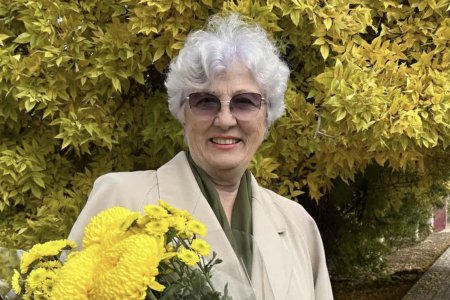
Russia is escalating its attacks on women in occupied Crimea with the latest armed searches of Jehovah’s Witnesses’ homes in Saki resulting in the arrests of two believers: 50-year-old Olena Ivashina and Olha Podlesna (55). Both women are now under house arrest and could face real sentences of six to seven years (or more) merely for studying the Bible and worshiping in accordance with their faith.
The searches were carried out on 12 December 2025, with the women then placed under house arrest by the occupation ‘Kievsky district court’ in Simferopol. According to the Jehovah’s Witnesses’ site, at present it is known only that Olena Ivashina is accused of ‘financing extremist activities’.
There is, in fact, very little variation in Russia’s persecution of Jehovah’s Witnesses. The supposed ‘justification’ for so violating Russia’s own constitution and its commitments under international conventions dates back to 20 April 2017. On that date, Russia’s increasingly subservient supreme court outlawed the Jehovah’s Witnesses, claiming the world faith to be ‘an extremist organization’. Russia’s FSB began illegally using this internationally condemned ruling as excuse for religious persecution in occupied Crimea in 2018. The main distinction is whether a believer is accused of ‘organizing the activities of an extremist organization’ under Article 282.2 § 1 of Russia’s criminal code, or merely of ‘involvement in the activities’ of this purportedly extremist organization, under Article 282.2 § 2. The justification for bringing the more serious ‘organizing’ charge may be extremely arbitrary. In early December 2022, for example, Oleksandr Lytvyniuk (b. 1960) and Oleksandr Dubovenko (b. 1973) were sentenced to six years’ imprisonment, with the charge of ‘organizing’, under Article 282.2 § 1 being because they had organized a Zoom conference. The charge of ‘financing the activities of an extremist organization’ under Article 282.3 § 1 has, at least up till now, been added to the ‘organizing’ charge. What is meant by ‘financing’ may be just as arbitrary and could simply be because the person collected money for photocopying material.
It seems that the prosecution of Olena Ivashina and Olha Podlesna has been separated from the so-called ‘Voronchykhin case’. Oleksandr Voronchykhin (b. 1965); his son-in-law Dmytro Zakharevych (b. 1995); Yekateryna Demidova (b. 1956) and Oleksandr Kopylets (b. 1977) are currently on ‘trial’ before ‘judge’ Aleksandr Serdiuk from the occupation ‘Simferopol district court’. All three male believers are facing the more serious charges of ‘organizing’ (Article 282.2 § 1) and ‘financing’ (Article 282.3 § 1), while Demidova is accused of ‘involvement’ (Article 282.2 § 2).
According to the JW.org site, there are currently 33 Crimean Jehovah’s Witnesses who have either been ‘convicted’ of the above charges or are facing them. In one disturbing case, Victor Stashevsky (b. 1988), who was already serving a shocking 6.5 year sentence for his faith, had his sentence escalated, being moved from a medium-security prison colony to a prison, the harshest of Russia’s penal institutions (see: Ukrainian becomes first Jehovah’s Witness to face escalated persecution in Russian prison ).
Jehovah’s Witnesses persecuted in occupied Crimea
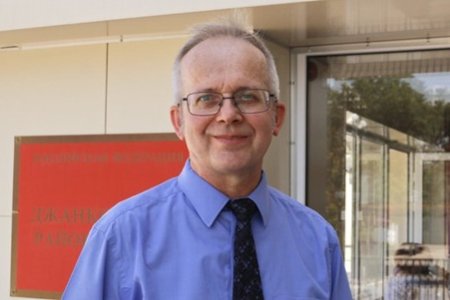
Tamara Bratseva (b. 1955)
Victor Ursu (b. 1965)
Victor Stashevsky (b. 1988)
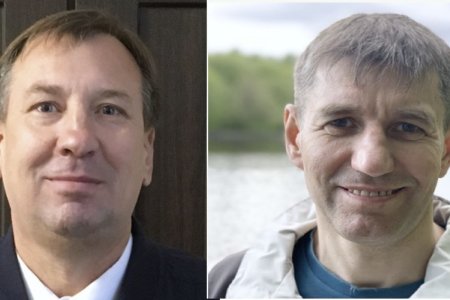
Serhiy Parfenovych (b. 1972) and Yury Herashchenko (b. 1979)
Viktor Kurdinov (b. 1969) and Serhiy Zhyhalov (b. 1971)
Oleksandr Dubovenko (b. 1973) and Oleksandr Lytvyniak (b. 1960)
Yevhen Zhukov; Volodymyr Maladyka and Volodymyr Sakada
Maksym Zinchenko (b. 1992)
Igor Schmidt (b. 1972)
Artem Gerasimov (b. 1985)
Serhiy Filatov (b. 1972)
Artem Shabliy (b. 1990)