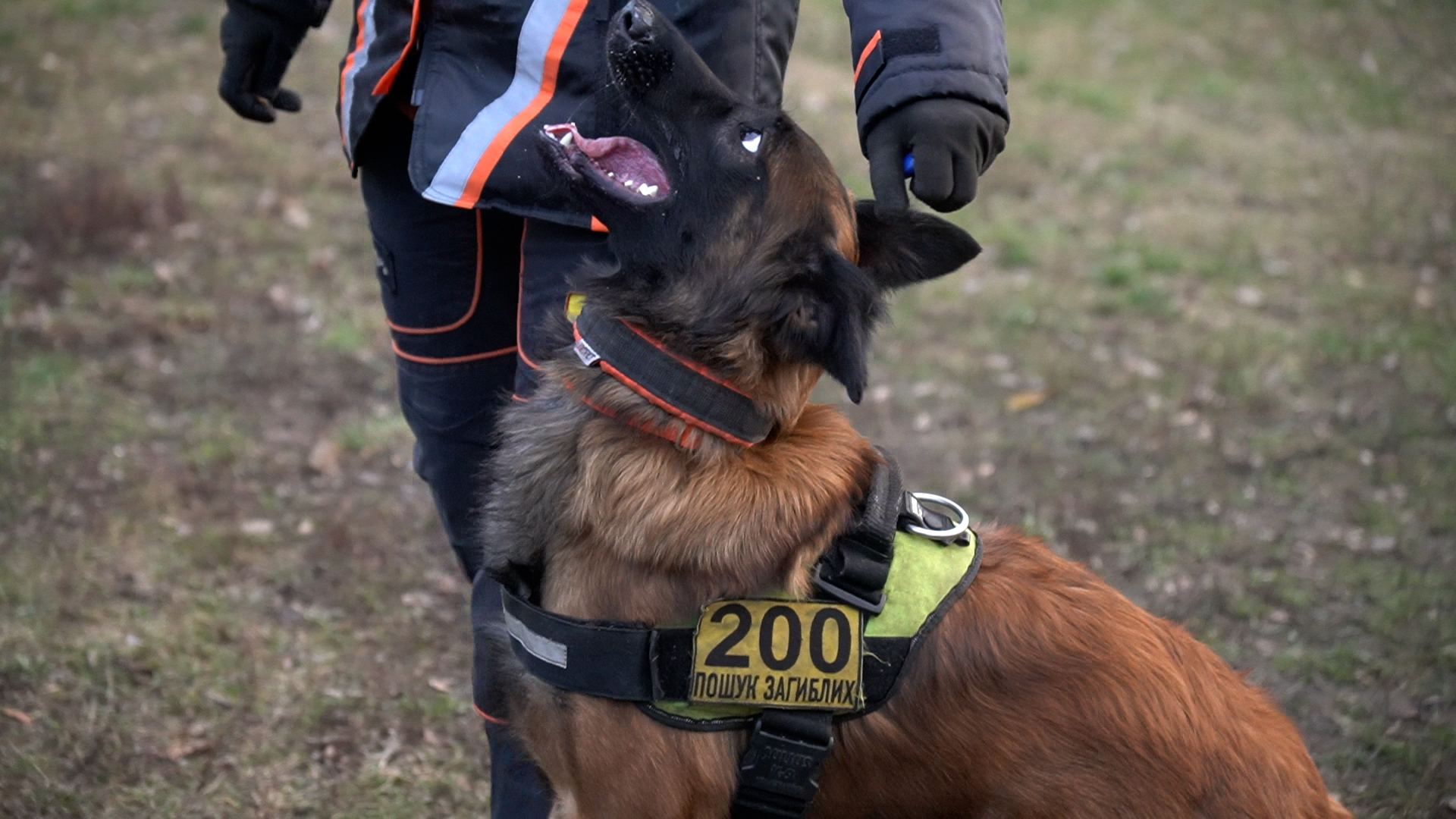
The Pavlohrad search-and-rescue canine unit Antares is known not only in its city but also far beyond Ukraine. The dogs in this unit are multiple participants in the World Championship and have won numerous important awards. In December 2025, one of the dogs in the unit was named “Hero Dog of Ukraine,” and this is not the first “member” of Antares to receive this distinction.
Larysa Borysenko, head of the Pavlohrad Antares unit, cannot immediately say how long she has been working with dogs. The simple answer is that it has been almost her entire life. More precisely, 43 years. It all started at the Soviet cynological club, where Larisa, with her pet, was meeting the sports qualifying standards and learning about the peculiarities of training and interacting with dogs. Everything changed in 2004, when Larisa, already with extensive experience in cynology, was asked to participate in the search for a person considered missing.
“At that time, we did not have certified, professional search dogs. I was honest about this and explained that neither my dogs nor I were experts in this field. But the person who approached me said, We have nothing to lose. Let’s try.’ My dogs performed well athletically at the time, and there is a discipline in the dog sport called ’tracking’. We decided to give it a try. Then, on the one hand, I found myself at the center of a tragedy unfolding in a family searching for a missing person. It was painful to watch. On the other hand, my dog produced results almost instantly: it picked up the trail, showed a direction, and then very persistently indicated that the trail led into the water. Subsequently, divers were called in and found the body,” Larisa recalls.
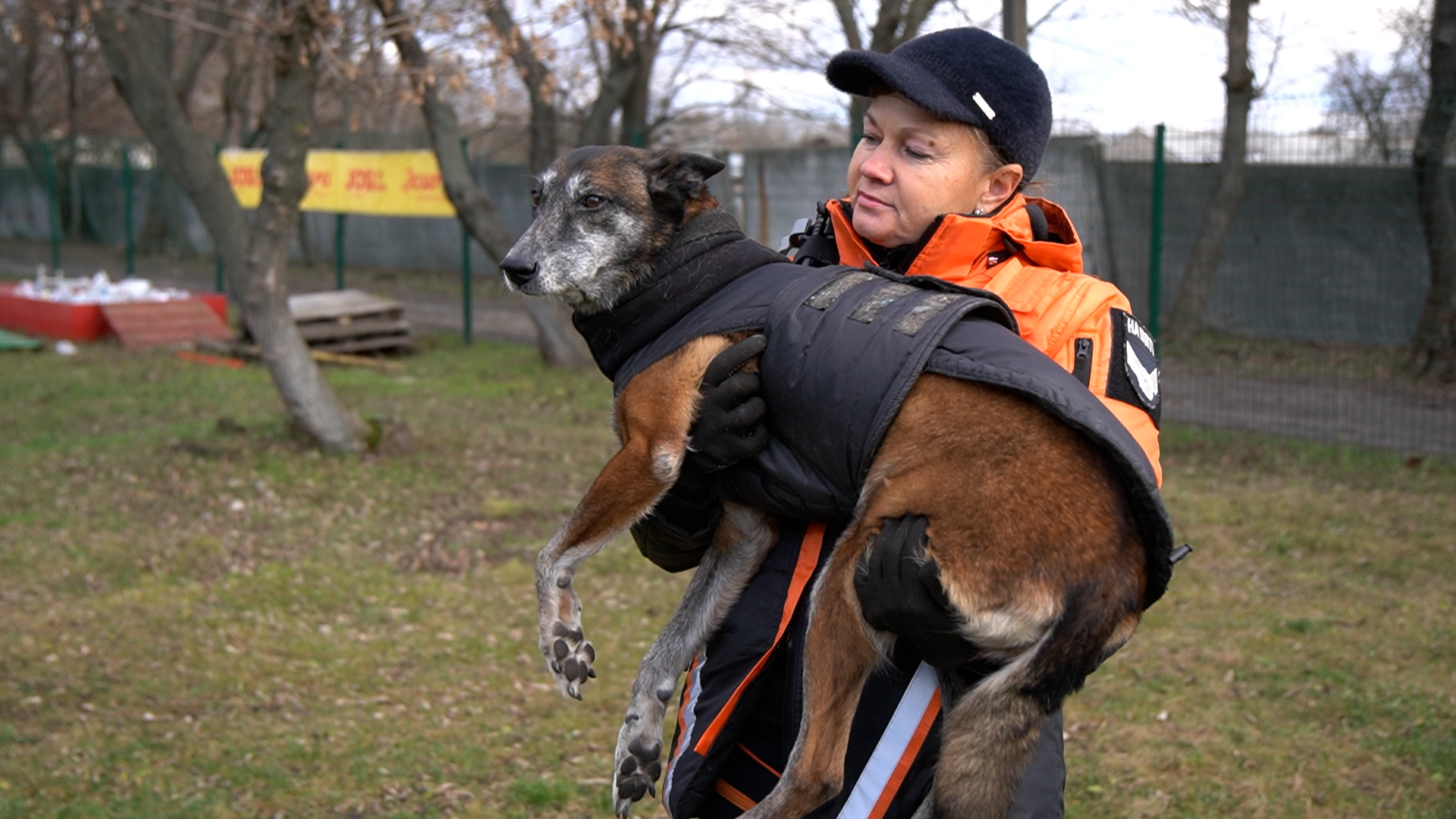
Despite her first experience of this kind being emotionally difficult, the woman realized for the first time that she wanted to take new steps with her dogs, not only in specialized sport but also in search and rescue. She says that she realized that the lack of information and uncertainty might be even worse for relatives than having specific information about the loss of a loved one.
As of 2014, when Russian aggression began, particularly in eastern Ukraine, the Antares team had already made significant progress in search and rescue. In the first weeks and months, a significant number of the team joined the defense of the country on the front lines, and many Antares members had experience participating in the ATO. Later, almost by accident, Larisa met the leader and quickly joined the ’Na Shchiti’ (On the Shield) initiative, which was systematically searching for perished Ukrainian defenders. Even then, Larisa’s dogs achieved considerable success. Larisa describes the situation in which a fallen defender is found as “the return of the soul from oblivion.” She does not say, “Our dogs found the body”; she calls such cases “We managed to return the soul.”
“I stayed because I knew my country needed me” — how the Antares unit responded to a full-scale invasion
On the very first day of the full-scale Russian invasion, Larisa received more than a dozen offers from Western colleagues to evacuate to European countries. At that time, the Antares unit was already well known, and its leader had considerable authority, particularly in authoring training programs and systems for working with dogs. The woman admits that in Europe, the field of cynology is much more developed, and specialists have better working conditions and greater financial security. Larysa could have agreed to leave Ukraine, which would have ensured her rapid career growth, security, and financial advantages. However, both she and the team decided to stay in Ukraine. She says, “I knew my country would need me.”
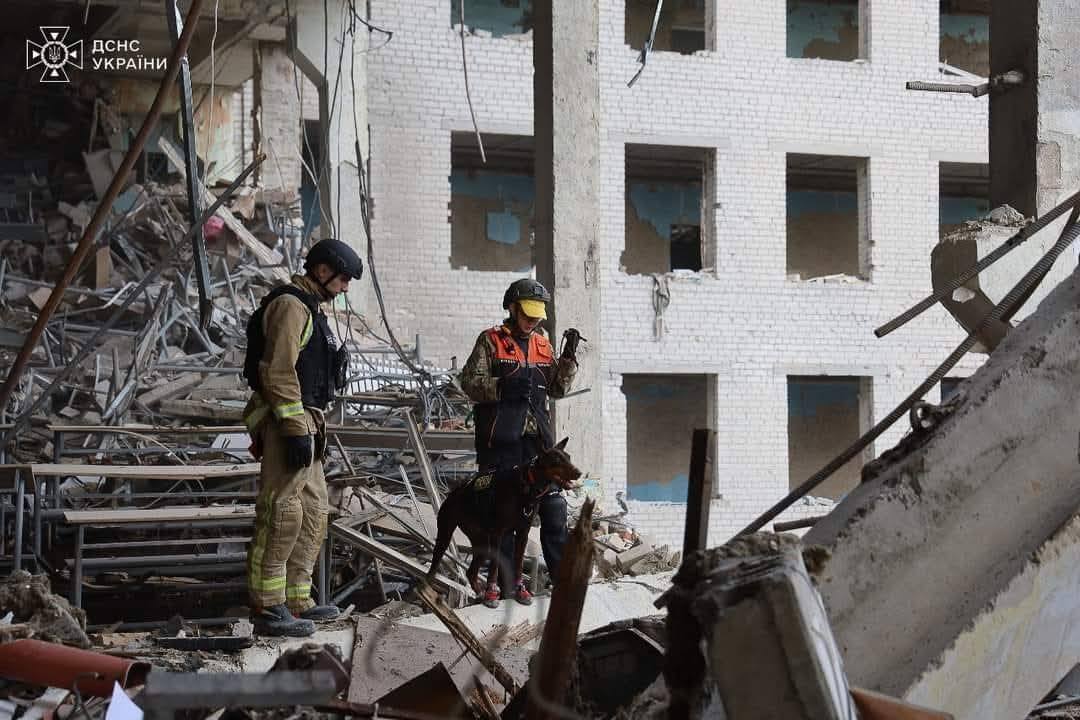
Although the team and the dogs had experience working in the ATO zone, the scale of the tasks and threats they faced in the first weeks of the war was incomparably greater. Larisa recalls her first call-out trip, when the occupiers attacked railway infrastructure in her hometown, Pavlohrad.
“I heard explosions, and it was very scary at the time. Then I saw a call come in, and the phone displayed the name and number of the then-head of the State Emergency Service. I realized we had to go. I knew this moment would come. I stayed for this very reason, but at that moment, I was even afraid to pick up the phone. However, we left at night. It was the first time we saw significant destruction in our hometown, when we didn’t recognize places we had been to dozens, hundreds of times. The first and several subsequent trips took place under such conditions,” recalls Larysa Borysenko.
In addition to working on “arrivals” (locations hit by Russian bombs and rockets), the search-and-rescue unit participated in search operations in the liberated part of the Kyiv Oblast. It is difficult for Larisa to talk about those times. Antares dogs, in particular, searched the home stations of the retreated Russian occupiers and found Ukrainian civilians tortured and killed.
“I had already seen a lot in Donbas, or so I thought. But I couldn’t imagine what we would see in the Kyiv Oblast. We entered when the occupiers’ living conditions were still preserved in many places. We saw places where they ate and slept. Some of their oversized shoes and other belongings are still there, and 5-10 meters from where they lived, we were finding the bodies of those who had been killed. And these bodies had been there for weeks, not just a day or two. By the end of the workday, we couldn’t even talk to each other. Among us was a professional investigator from the Luhansk Oblast who had seen a lot during her work and then joined us. But even she was in shock,” explains the unit leader.
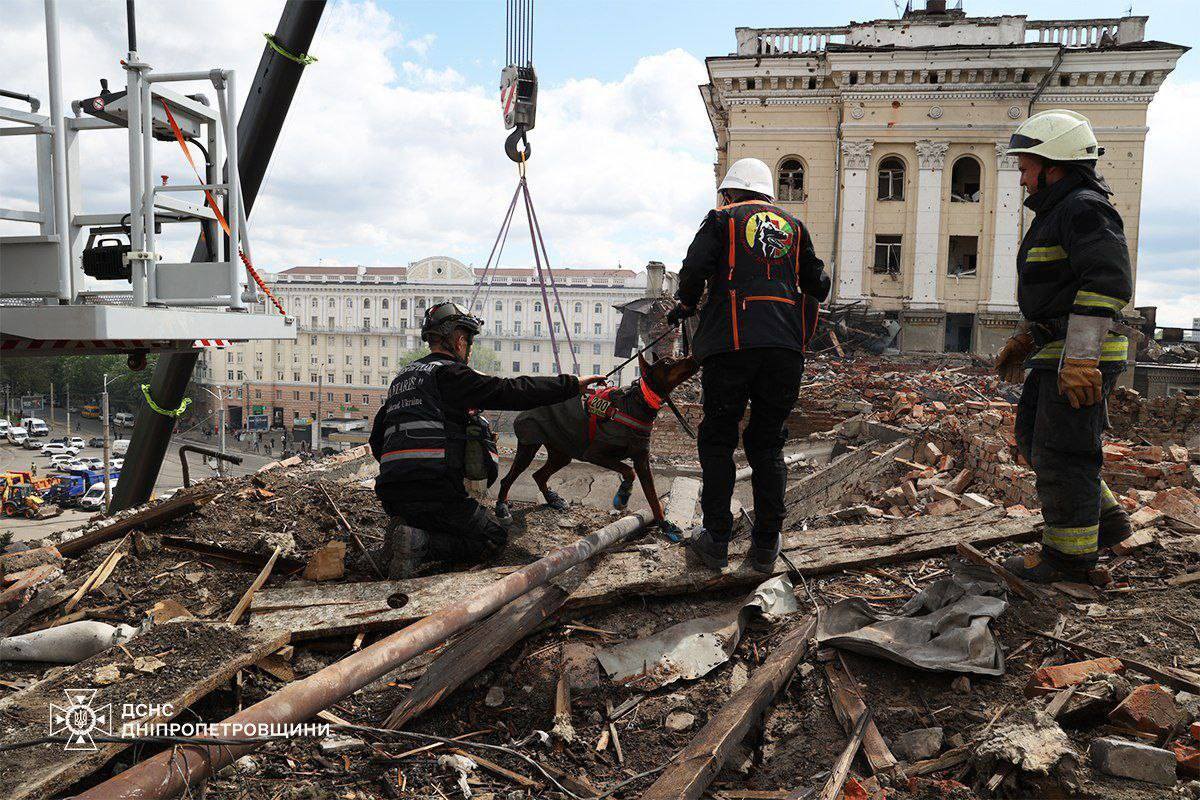
Over time, the unit members’ and even the dogs’ experiences have improved significantly. Now the team works “like clockwork.” In 2023 and 2024, the team covered almost all major “arrivals” in Dnipro and Zaporizhzhia, where Russians hit civilian targets. One such incident occurred on January 14, 2023, when a Russian missile struck a residential apartment building in Dnipro, destroying a whole section of it. The attack killed 46 people, including children. A large number of civilians were injured. It remains one of the bloodiest Russian attacks on civilians during the full-scale invasion, not only in Dnipro but across Ukraine as a whole. The Antares unit worked near the building for about a day, and its dogs marked a large number of locations where bodies and remains of the dead were later found.
"We couldn’t leave then because a need to search a new patch of rubble could arise at any moment. I remember that night very well. I was actually crawling on my knees through this rubble, side by side with my dogs. While one group worked, the other rested nearby on the ground. And then we took turns. But we provided a lot of information to rescuers.”
“For the first few hours, there was no talk of me surviving at all” — how the unit leader, Larysa, was one step from death
Both the dogs and the team members faced considerable risks while working under constant shelling and in areas where previously the enemy had been present or intense fighting had taken place. In March 2023, Larisa Borysenko was seriously injured during a mission to recover the remains of Ukrainian defenders in the Kharkiv Oblast. For several hours, doctors didn’t believe they could save her.
“It was a routine job. We had to check a plot of greenery; other groups had already worked there, so the operation was considered relatively safe. It was definitely not the most difficult or dangerous task we had ever performed; it was more like our standard work. I let the dog go to check a small ditch, which, as it turned out, saved its life. We were simply walking at a distance apart when I heard a strange sound. In fact, I understood almost immediately what it was because we had received the relevant training, and I was familiar with such matters. But somehow, instinctively, I even managed to ask what the sound was,” Larisa recalls.
A few seconds later, an explosion occurred. The unit leader triggered an anti-personnel tripwire left behind by Russian occupiers. She immediately began to lose a lot of blood despite the three tourniquets that colleagues promptly applied to her injured limbs. Other group members tried to evacuate her as quickly as possible.
“They took me to the hospital very quickly. The driver just didn’t stop anywhere. At one point, he saw a car blocking traffic on the road. He was ready to ram it to avoid stopping. And in the end, that’s what saved me. During the first few hours in the hospital, doctors did not even mention my survival. They told my colleagues, ’We will do everything we can, but you must understand that there is almost no chance.’ Only 5-6 hours later did the thought arise that something might work out, but without any certainty.”
After her wound, Larisa Borisenko was treated at several hospitals, intensive care units, and purulent surgery departments. The main injuries were to her legs, which significantly affected her ability to move. For the first few days, she used a wheelchair, and then for several months, she couldn’t walk without a cane, even on a flat surface. For a while, she was convinced that this marked the end of her professional career. However, prolonged rehabilitation and a desire to return to her beloved pets and colleagues brought Larisa back into action.
As of December 2025, Larisa Borysenko continues to work in the search unit, participating in search and even rescue missions despite having a second-group disability. In recent years, Larisa’s dogs have found several hundred dead bodies, many of which could not be “returned from oblivion” for months. The dogs have also saved several lives.