Over the past three and a half years, documentarians from the Kharkiv Human Rights Protection Group have collected many testimonies from Ukrainians who went through the Kupiansk dungeons. Among them were ATO veterans, farmers, people with a pro-Ukrainian stance, and simply residents who somehow displeased the occupiers. We also published the story of Larysa Volodymyrivna’s colleague, the director of the Borova school, Vitaliy Chernov. Larysa Fesenko was thrown into the only women’s cell in the police station. In a room designed for two people, the occupiers held up to twelve female prisoners.
The beginning of the story can be read at the links: the split in the teaching staff, the arrest, and the weeks in captivity.
“We hear — someone is breaking a window in the next cell”
— …On September 7, the “feeding hatch” in our basement room was closed all day. They didn’t give us any food. And all the time something was being dragged along the corridor, someone was moaning, someone was being led by the arm. We could hear equipment moving through Kupiansk. The torture chamber is almost next to the main road. Tanks rumbled, helicopters flew overhead. It started to get dark. Everything fell silent. There was no one around. Such silence, silence… And I hear that in the next cell — some banging, as if someone is breaking down the doors. We didn’t know what was happening — whether they were breaking down the doors or the window... (Although there wasn’t really a window. There were openings at the top covered with iron plates. It was kind of a window, and kind of not... Very little air came through it.)
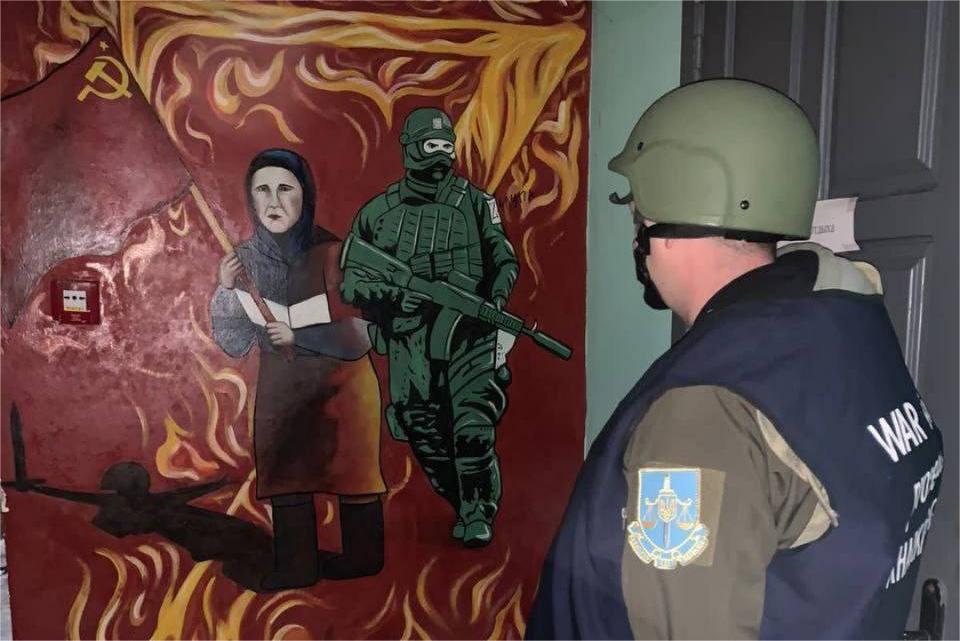
I felt that something was happening somewhere... My God, I thought, what is he doing? The guards will come now, they’ll just shoot him! Nobody will be polite there. What is he doing?! I thought: maybe the man has completely lost his mind? And the knocking repeated — louder and louder! And there were no guards anywhere, nothing. Then I hear someone shouting in the corridor: “Where are the keys? Where are the keys to the cells?” Someone ran, and someone more informed, who perhaps had seen where the keys were kept, said: “They’re in the kitchen!” There was a small room where the guards prepared food, taking the best things from the bags relatives brought to the prisoners... I hear footsteps. Then — the jangling of keys... As if the cells were being opened. I got goosebumps when they reached our cell. And — the cell opens!
Later, I was told — although I don’t know the details — that a young man who had been planning an escape from his cell for a long time managed to get out. And he went through the central entrance, found the keys, and opened his cell. And then, together with his cellmates, he opened all the cells!
Freedom
We were in such a state... We didn’t know what to do: what if we left this room now and they were somewhere?! After all, there were such large ditches dug around the perimeter of the police station, this torture chamber. And there was security. We thought: “Now we’ll go out, and they’ll just shoot us!"
All the people from the cells came out and started running down a narrow corridor towards the room where the Russians kept the evidence. There were passports, phones — everything they had taken from us. Some bags (with Ukrainian symbols, by the way). They were labeled. My cellmate ran up to me and said, “Larisa, I found your passport!” I was so happy; I grabbed the passport and the bag with the food containers and the cell number on the bag. You understand how thrifty I am? I took everything of mine because I believed this superstition: you shouldn’t leave anything behind so you don’t have to come back! So I took everything I had. I should have left that bag, those food containers. I didn’t need them. But then I thought: no, I need to take everything of mine so I don’t have to come back here!
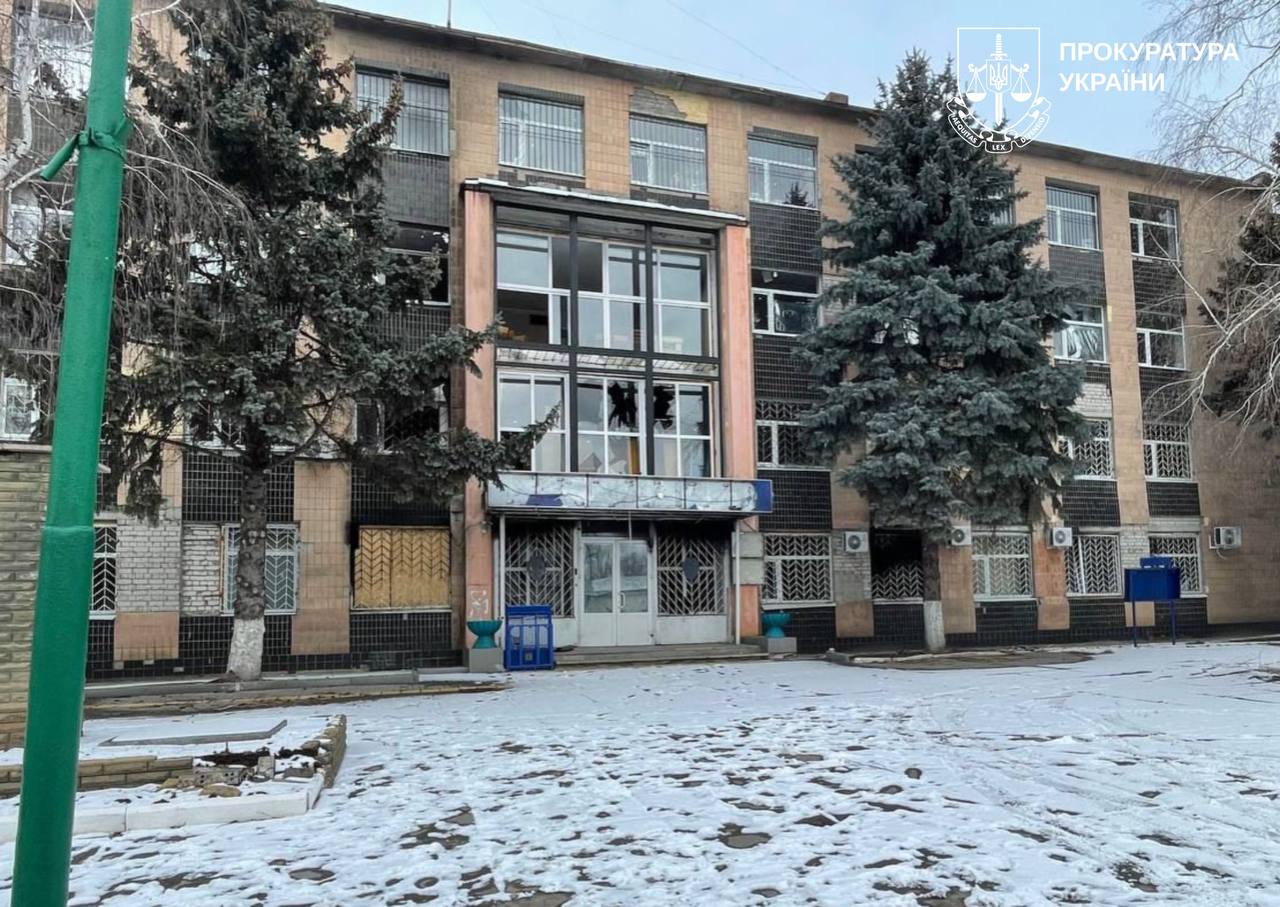
We left the station. It was cold. What were we wearing?... I was terribly cold. And it was hard to walk: we hadn’t moved while in captivity. The cell was tiny, and there was no opportunity to move. My body was so weak, I felt like a tank had just run over me... And I went out, Galina Grigorievna Turbaba was with me, another woman from the Luhansk region, some men...
Galina Turbaba is the head of the Dvurechansk village council and was kidnapped twice by the occupiers for refusing to cooperate with them.
Her fellow villager ran up to Galina Grigorievna. He had also escaped from the torture chamber. Everyone was happy to be free. And I stood there thinking: “What to do?” The girls from Kupiansk went home. And my Lesna Stinka is about 45 km away. Besides, Rashisti hadn’t yet left Kupiansk. It was September 8th. The city’s complete liberation occurred on the 9th.
So I started thinking about how to get home: maybe I’d see a taxi — I’d throw myself at the driver’s feet, begging him to take me, and I’d pay him when I got home... I had nothing on me. But I had to get out somehow. I couldn’t walk: my physical condition was such that I wouldn’t have been able to endure it...
And then Galina Grigorievna Turbaba says to me, “Larisa, my fellow villager, suggests we go to the church.” After all, throughout history, during wartime, people have sought refuge in churches. We went to the church.
“I’m walking and praying...”
The church gates were closed. I understand that it was already operating under the control of the Russian forces. An iron fence surrounded the church. And there was a gatehouse: when, for example, pilgrims came, they had the opportunity to spend the night there. We thought that maybe we could at least wait until morning in that gatehouse.
But climbing over the fence was very difficult. The gates had iron spikes. Then Galina Grigorievna’s fellow villager climbed over first, and then, when we were climbing over, we would stand on his shoulder. Well, we climbed as well as we could... I don’t know where I got the strength to climb over that fence.
We started knocking on the gatehouse door — nobody opened. The people were probably afraid. And then this man, Galina Grigorievna’s colleague, took out sandwiches from his bag and said: “Girls, I’ll give you something to eat now, because we haven’t eaten anything all day!” These sandwiches were most likely brought to him by his family. It was like an emergency supply — a reserve just in case. There was a piece of bread and some meat. It was so delicious!
We ate a little and decided that we needed to find the security guard somehow. He happened to be patrolling the area. We introduced ourselves not as prisoners, but as refugees from Donbas, saying we needed a place to spend the night. Perhaps this man guessed who we really were, because we clearly didn’t look like refugees... Maybe he took pity on us.
He said, “Okay.” And we were terribly cold! It was September, very cold, and we were in summer clothes... He allowed us to stay in the gatehouse until six in the morning and said, “At six in the morning, people will come here, and I’ll be in trouble because of you.” Thank God, he warmed us some tea and fed us. I remember how the warmth enveloped me after we had endured such terrible cold.
Lately, I have been sleeping on the floor. I didn’t even have a proper place to sleep in the cell. It was already cold, and everyone in the cell was suffering from colds.
In the morning, Galina Grigorievna Turbaba, along with people from Dvurechnaya, went towards the train station to see if there was any transport going in their direction. And all I had to do was get to the bus stop... cross the railway tracks and slowly walk towards Lesna Stinka, and then... whatever God wills...
As I was going down to the bus stop, I noticed two armored personnel carriers, and next to them were Russian soldiers checking the documents of everyone moving in that direction. I was simply in shock. I walked along, saying to myself, “Well, that’s it.” I couldn’t get through that area without being noticed. I had to walk between them, prove my identity, and show my documents.
And what did I look like? I was completely gray-haired, thin, in such clothes... And with bag number 12! Everything indicated that I had escaped. And so I walked, mentally appealing to God. I don’t know what helped me. Probably God. I was walking, reciting a prayer, and thinking to myself, “I’ll just walk past here and wait a little until they check documents. Maybe I can quietly slip by unnoticed...” I’m walking, reciting a prayer. He’s checking documents; a man is standing next to him. And he didn’t stop me! He didn’t stop me! I go downstairs, rejoicing that I made it through. I’m not crying, but tears are streaming down my face!
...Near the bus stop, there’s a woman in a wig, in a coat... And she calls out to me: “Larisa, come here!” I think, “I don’t know you. How can I approach you?” And she says, “Do you see who I am?” She lifts her wig — she has a short haircut... “It’s me! You remember, we ran away together!"
She is the owner of the “Three Sisters” shop at the market in Kupiansk! She ended up with us about two or three days before this escape. They took her away because she made a remark to a Russian soldier who was looting the neighboring premises. They just came, grabbed her, and threw her in the basement.
And there she stands, saying to me, “Don’t cry!” But what can I do? How can I get to Lesna Stinka? She says, “I don’t advise you to go to Lesnaya at all. Do you see what’s happening here! They haven’t all left yet. Let me lock you in my shop, and you can sit there. I’ll bring you food."
And I immediately thought of my husband: if he finds out what’s happening in Kupiansk, that everyone has scattered, he’ll look for me! He’ll get into trouble! And I answer her, “I understand, what you’re offering is good, but I’m going home."
And she says, “No, I’ll help you!” And she took some of the earnings from her store and said, “Here, I have money, don’t worry, we’ll stop a car somewhere — I’ll pay whatever the driver asks, and they’ll take you home!"
“I won’t let anyone take you away again!”
...I opened my house’s door and saw my husband. When he saw me, he cried, hugged me: “They let you go, they let you go? I knew you would come back!"
I told him that they hadn’t let me go, that I had escaped, and that they might come for me. He said, “I won’t let anyone take you away again! Whatever happens, I’ll hide you!” And the first thing he did was feed me and turn on the water heater. I was able to wash myself — for the first time in so long.
He said that the Russian soldiers, the guards, were living in the school, which is less than 200 meters from the house. They were there until the very end. That night, when I was already home, they were still there, walking around the building, shining their flashlights. It seemed to me that they would come for me any minute...
Our guys!
I remember this incident. I will probably remember it for the rest of my life. When Lesna Stinka was liberated, a group of Ukrainian soldiers came in. I didn’t know who they were. Some said it was “Kraken.” Others said it was some other military unit.
They came to my yard because, upon entering the village, the villagers told them that a school principal had returned from the basement. They went into the yard and asked my husband to have me come out so they could see me. And I found the strength — I went out...
They thanked me. They thanked me, and I thanked them. They talked about how they had to take revenge on the enemies for all those people, for me, for everyone. And one of them asked me to take a picture with him. I said, “What kind of picture? You see what I look like!” I was wearing three sweaters and three pairs of trousers; it was my home clothes. I was dressed very warmly because I was freezing.
I looked like a little girl next to this strong giant — our Ukrainian Armed Forces soldier! They left, saying that everything would be fine. And only later did I think: why didn’t I ask him to send me that photo to my phone so I could keep it! It’s history!
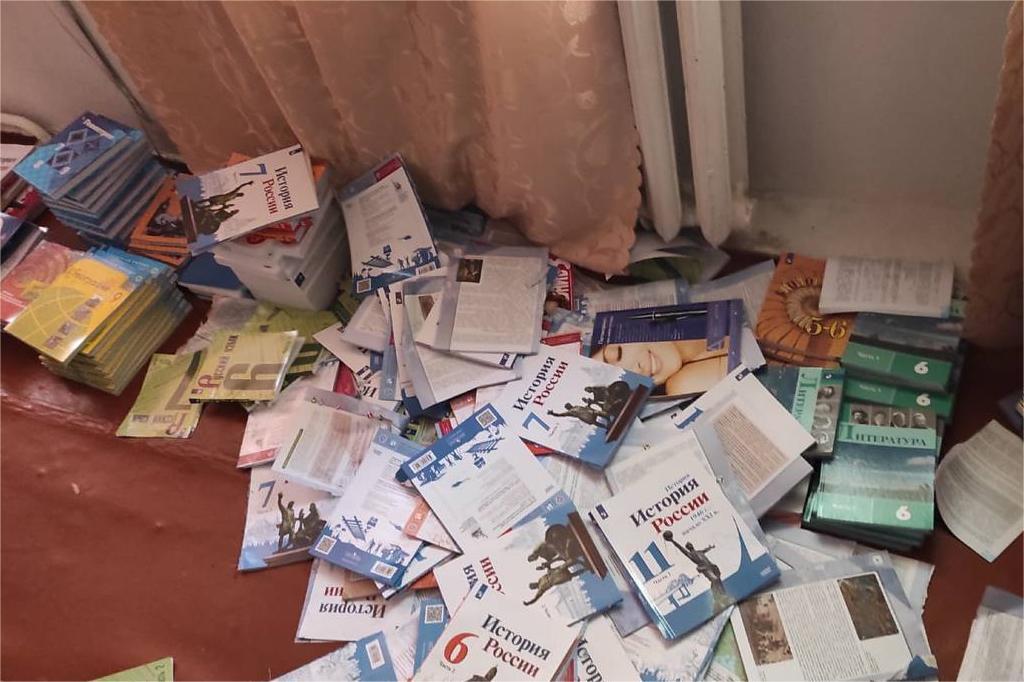
And later, when I was already working as the director of the lyceum and had restored the educational process, I kept dreaming: it must happen that I will find that photo, that soldier. And imagine: in 2024, a documentary film was released about the brigade that liberated the Kupiansk district.
There is an episode with this soldier — he was the commander of that battalion at the time, I don’t remember what it was called... And he talks about meeting the school director who had been in the basement, and that he even has a photograph of him. And he includes this photograph in the film. Can you imagine?
It must have been some divine power that helped this! And I was so happy! People are happy when they receive an award or a salary, but I was delighted to have found this person. He remembered me, our conversation, and that historical photograph. After all, it really is history — my personal history…
***
After captivity, Larysa Fesenko revived the lyceum. She did not work with those who betrayed Ukraine — she found new teachers. For a long time, she did not leave the shelled Kupiansk region, but it became impossible to live there.
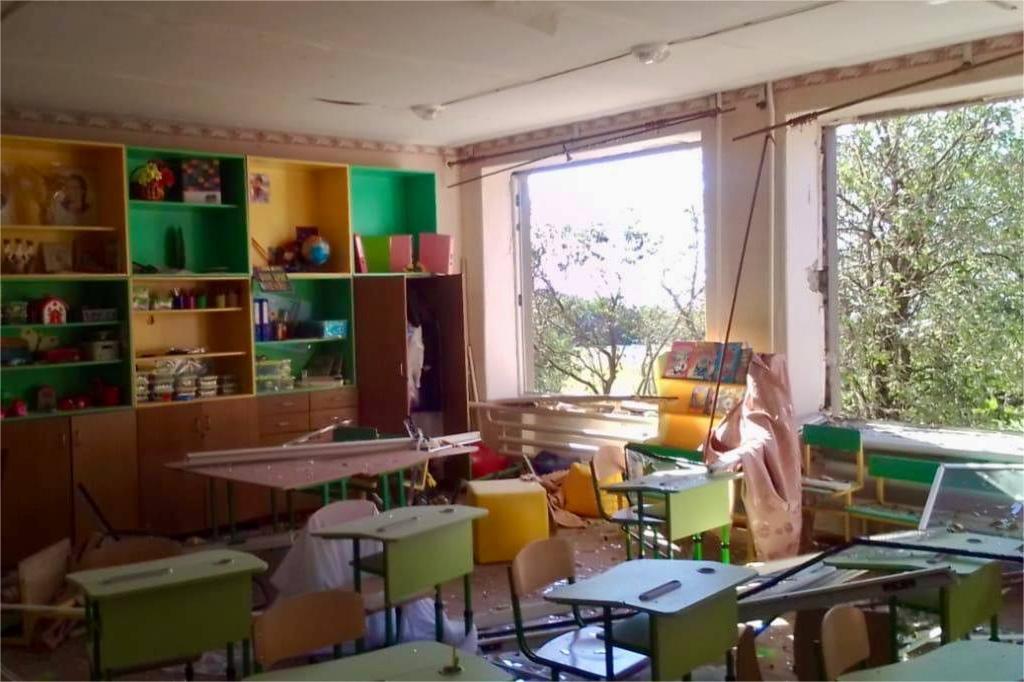
The educational institution successfully operated online — ninety students connected to the lessons: some from Europe, some from Kharkiv dormitories, where many displaced people live today. But since July 2025, the lyceum’s activities have been suspended: of the five lyceums in the Kurilovka community, only one remained — Glushkovsky — “for rational use of budget funds."
Now, Larisa Fesenko teaches English at one of the educational institutions in Kharkiv. A laureate of the Global Teacher Prize Ukraine in the “Unbreakable” nomination and the Anna Lindh International Prize from the Swedish Ministry of Foreign Affairs, a woman who did not break down.