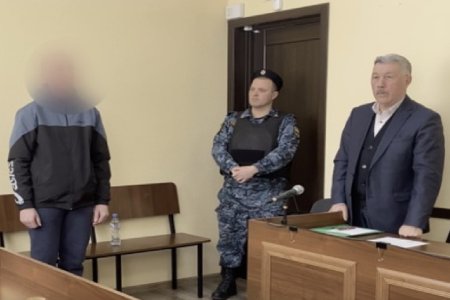
The occupation ‘Crimean high court’ has sentenced Valery Shevchuk to five and a half years’ imprisonment under two charges linked solely with an image on social media back in 2022, as well as comments allegedly ‘offending believers’. The new sentence comes a year after Shevchuk, then 28, received a similar sentence with the occupation regime claiming that his comments about the Russian army constituted ‘calls to extremism’. Russia is increasingly using illegitimate ‘courts’ to pass real sentences on all occupied territory. Although a range of flawed charges are used, in all cases the person has expressed his or her opinion, usually indicating opposition to Russia’s war against Ukraine and / or ‘Russian world’ ideology.
The sentence this time was passed by ‘judge’ Sergei Nikolaevich Pogrebnyak. The latter is wanted in Ukraine on treason charges and has been responsible for multiple politically motivated sentences. The most recent of these were the 18-year sentence against Charaz Akimov and 17-year sentence against Liudmyla Kolesnikova who was seized over a donation for Ukraine’s defenders after returning to Crimea because her mother was dying.
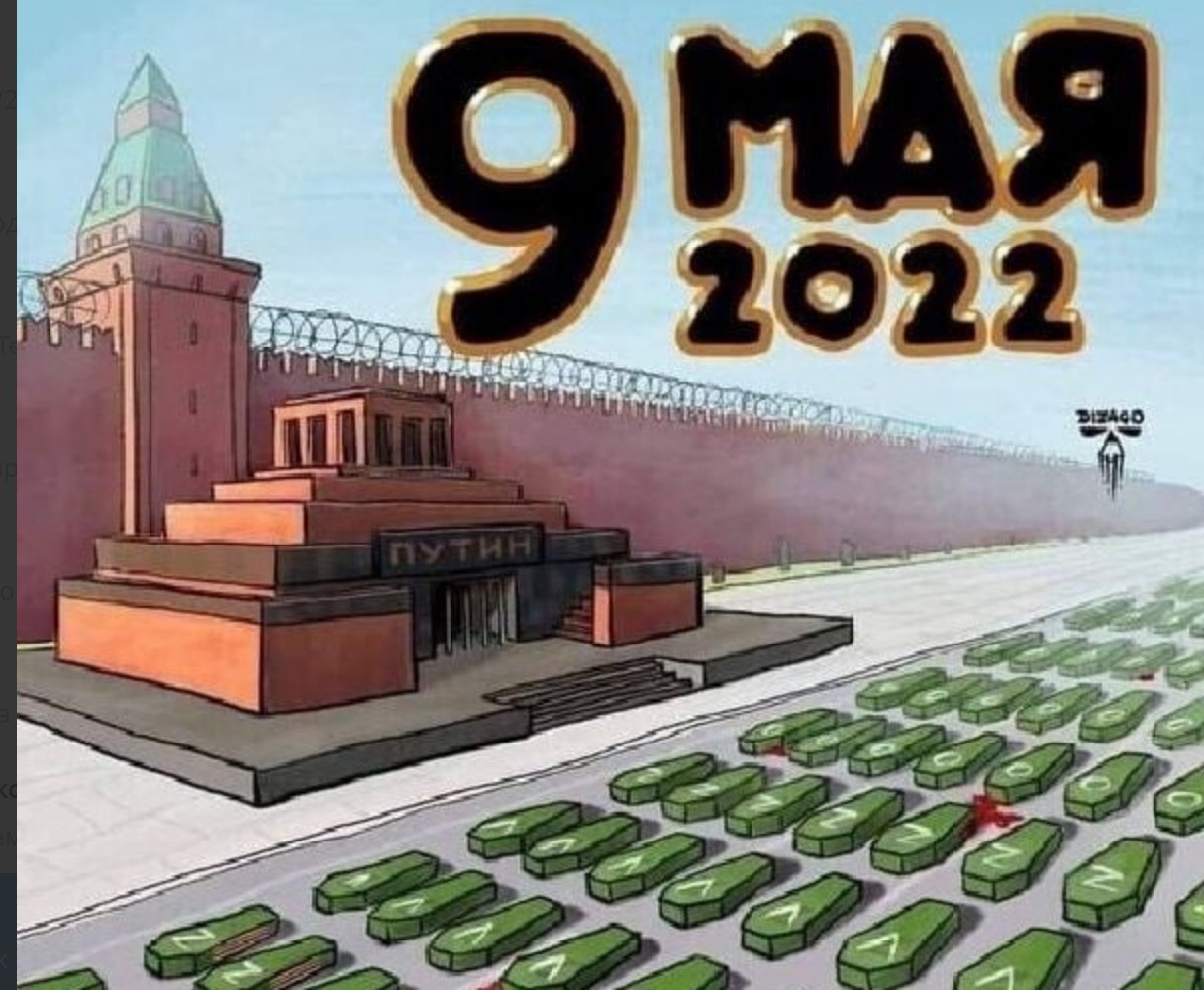
Valery Shevchuk was charged over an image, posted back in 2022, which was claimed to “express disrespect for the celebration of Victory Day.” Under the current Russian regime, especially since 2014, Victory Day on 9 May has been used to ‘rehabilitate’ Joseph Stalin and the Soviet Union, as a demonstration of military power and to claim justification for Russia’s war of aggression against Ukraine. While there is no information about the specific image, it is probably significant that Shevchuk was charged under Article 354.1 § 4 of Russia’s criminal code. The Law on ‘Rehabilitation of Nazism’, introducing this new criminal charge, was signed into force on 5 May 2014. The new article envisaged a sentence of up to three years imprisonment for what was termed ‘public denial or approval of the facts established by the sentence of the Nuremberg Tribunal’. The same norm made it possible to prosecute somebody for “spreading knowingly false information about the activities of the USSR during the years of the Second World War” and for “circulating information demonstrating over disrespect to society about Russia’s days of military glory and remembrance insulting the memory of defenders of the Fatherland”, etc.
Warnings that this charge would be used to stifle historical discussion and freedom of speech have proven justified. The same norm has been used by a court in Perm and upheld by Russia’s Supreme Court, to prosecute Vladimir Luzgin for writing, quite correctly, that both Nazi Germany and the USSR invaded Poland in September 1939. In September 2023, another Russian court used the same norm to impose a massive, 2-million rouble, fine against Sergei Volkov for critical and entirely correct comments about the collaboration between the USSR and Nazi Germany for the first two years of World War II, and about Stalin in connection with the Siege of Leningrad.
In this case, the sentence would appear to have been over the image above with coffins bearing the ‘Z’ which has become a symbol of Russia’s war against Ukraine on Red Square, instead of soldiers marching and tanks
The other chargé was under Article 148 § 1 of Russia’s criminal code for comments claimed to ‘insult people’s faith’.
As well as the 5.5-year sentence in a medium-security prison colony, Pogrebnyak also imposed a 100-thousand rouble fine and a three-year ban on administering websites. The sentence took into account the unserved part of the previous sentence passed in February 2025. The prosecution is particularly chilling given that the social media post(s) date back to 2022, with the FSB able to go back as far as needed to find ‘incriminating’ evidence against a person already serving a politically motivated sentence.
As reported, Shevchuk was convicted on 25 February 2025 of ‘calls to carry out extremist activities’, under Article 280 § 2 of Russia’s criminal code and sentenced to five years and ten days’ imprisonment, also in a medium-security prison colony. The charges were clearly over strongly expressed criticism in comments under material on YouTube about what Russia continues to call its ‘special military operation’, i.e. its full-scale invasion of Ukraine.
This was the first criminal prosecution, but not the first time that Valeriy Shevchuk had been persecuted for opposing Russia’s war against Ukraine.
On 19 June 2024, the same occupation ‘Kirovsky district court’ imposed two fines of 45 thousand roubles each for images of Russian leader Vladimir Putin with the ‘Z’ which has become the symbol of Russia’s war of aggression against Ukraine on his forehead and “an insulting caption”. The first administrative prosecution was under Article 20.1 § 3 of Russia’s administrative code, with this about posting information on the Internet expressed “in indecent form, insulting human dignity and public morality, [expressing] open disrespect for the public, the state, and official state symbols of the Russian Federation.” It is likely that the same image was used for a second charge, under Article 20,3,3 § 1 of the administrative code, of ‘discrediting Russia’s armed forces’. The latter is one of the four administrative and criminal charges rushed into legislation ten days after Russia began its full-scale invasion, and is standardly used in occupied Crimea to prosecute for any pro-Ukrainian and / or anti-war comments. Shevchuk was also jailed for 13 days under Article 20.3 § 1 (public demonstration of prohibited symbols). This was over a photo of Right Sector, a Ukrainian nationalist organization that Russia first heavily demonized, and then banned as ‘extremist’.
There are an ever-increasing number of such sentences on all occupied territory, with more and more, unfortunately, reported without identifying the defendant.
The Crimean Human Rights Group cites Russian media and the Southern District Military Court in reporting two such sentences. A person from Sevastopol was sentenced to four years, with it claimed that he had called for violent acts against Russian soldiers and had ‘encouraged terrorist acts in Belgorod oblast’ (Russia). An occupation ‘court’ in Sudak sentenced a local resident to two years in a low-security colony for supposed ‘calls to extremism’, with this clearly referring to comments on social media against the Russian invaders of Ukraine.
In comparison with the massive sentences passed against Crimean Tatar civic journalists and activists who reported political trials; against pensioners for donations to Ukraine’s Armed Forces, or for acts of protest over Russia’s war against Ukraine, even a five-and-a-half-year sentence may seem ‘small’. It is still part of the repression that Russia brings to all occupied territory, with each such sentence not just a grave violation against one individual, but a weapon against others, aimed at silencing protest.