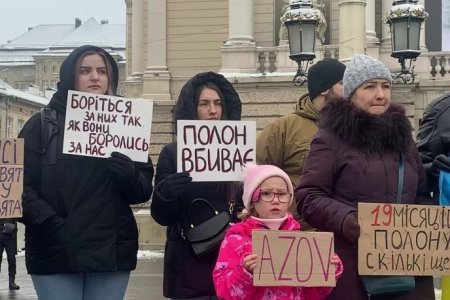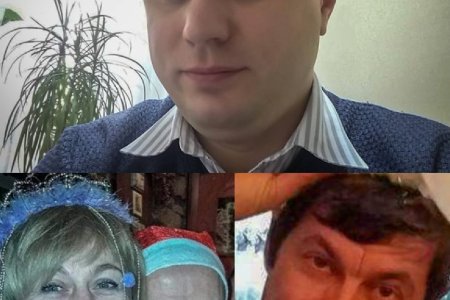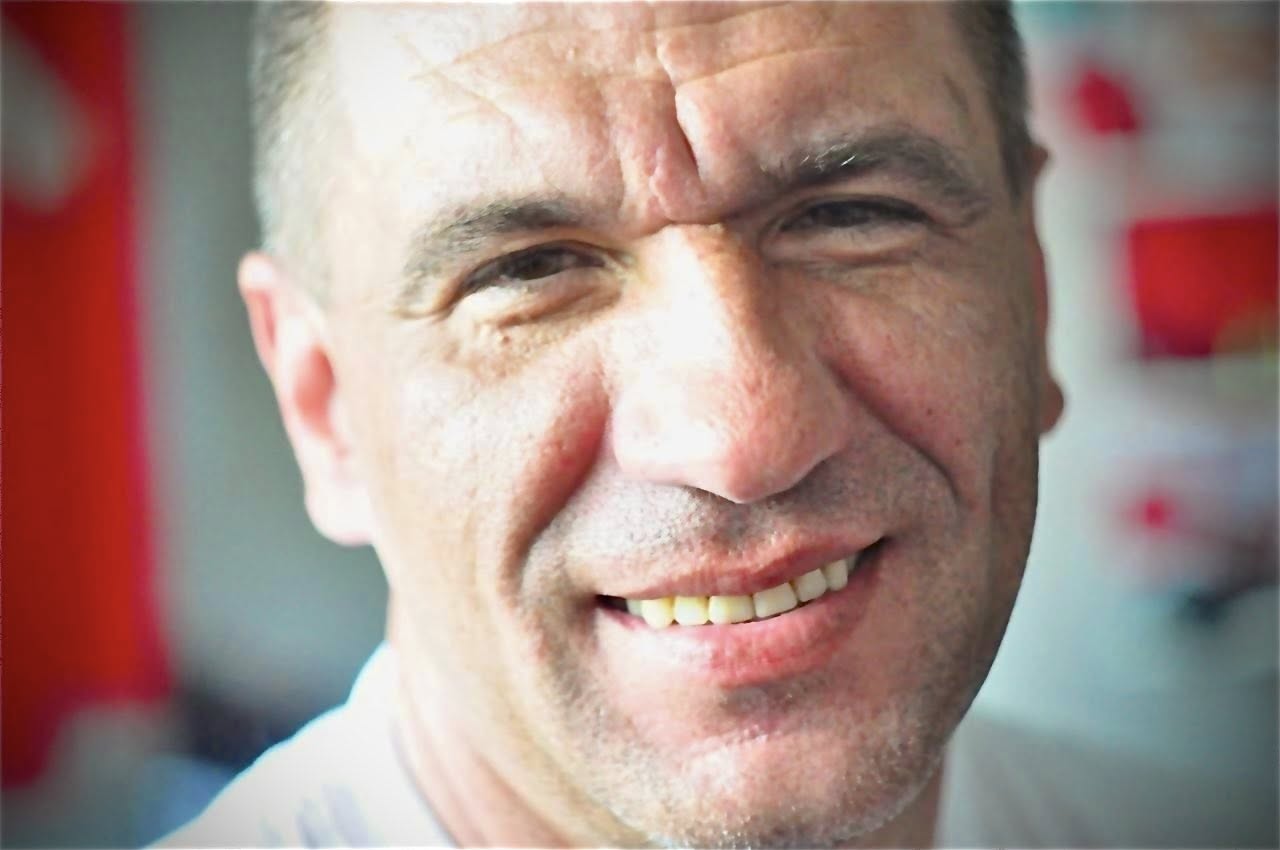
Several hundred Cherkasy residents bid farewell last Sunday to Oleksandr Krokhmaliuk, a medic with Ukraine’s Azov Regiment, who was taken prisoner when the Russian invaders gained control of Mariupol in May 2022. He died of injuries sustained in Russian captivity, almost certainly as the result of torture. According to Andriy Yusov from Ukraine’s Coordination Headquarters for the Treatment of Prisoners of War, at least 406 Ukrainian POWs are known to have died in Russian or occupation prisons, either as the direct result of torture or because of Russia’s failure to provide medical treatment.
Only Oleksandr Krokhmaliuk’s date of birth – 6 February 1969 – is known, with his daughter Sophia’s moving message about his death writing only that he died “in 2025”. The family had only recently learned that he was alive, his daughter wrote.
“They killed you several days / weeks after I finally learned where you were and that you were alive. They took your life here on earth. Buty they cannot take away the fact that you are a part of the history of Ukraine’s becoming strong and independent. That you were true to the end. That you had faith to the end. That you supported other defenders in prisoner to the end, that you saved dozens of lives.”
Azov leader Sviatoslav Palamar reported Oleksandr Krokhmaliuk’s death on 22 May 2026. He explained that his body had been returned in September 2025, with a forensic examination then carried out in Lviv. This, he said, had found that the immediate cause of death were rib fractures and a blunt chest injury.
Krokhmaliuk had joined the Azov Regiment in 2016 and, when taken prisoner, had been the head of the Azov medical service. He was among the defenders of Mariupol who surrendered, on orders from Ukraine’s military command, in May 2022 after it became clear that the Russians would simply kill all the remaining Ukrainian defenders and civilians at the Azovstal Steel Works. According to Palamar, he was imprisoned in the Olenivka ‘concentration camp’ in Donetsk oblast, then later in one of the notorious torture prisons in Taganrog. He was last known to have been held in SIZO [remand prison] No. 2 in Kamyshin
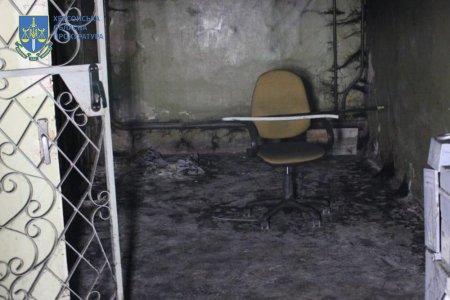
During the ceremony on 24 May, Oleksandr Krokhmaliuk’s friend Chudik spoke of the torture to which all Ukrainian medics had been subjected in Russian captivity. Krokhmaliuk had, he said, organized a hospital from zero at Azovstal through which over a thousand wounded defenders had passed. He added that all Ukrainian military medics captured by the Russians had been subjected to torture while being accused of ill-treating prisoners. The torture included electric currents (passed through wires attached to sensitive parts of the body); being suspended in handcuffs; and constant beatings.
It should be stressed that medics, whether civilian or military, are non-combatants and should be released immediately. Russia was not just in violation of international law through its torture of Oleksandr Krokhmaliuk, but through the fact that he was not simply released as soon as it was learned that he was a medic.
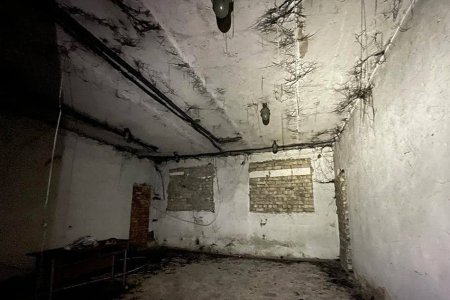
Both Ukrainian and international investigators believe that Russia is torturing 90 or even 95% of Ukrainian prisoners of war, with the methods above standardly used. On 27 May, Yusov took part in an event highlighting Russia’s ‘Genocide behind closed doors’, its degradation of the system of healthcare into a conveyor belt to destroy Ukrainian prisoners of war. According to POWs whom Ukraine has been able to free, 95% of Ukrainian prisoners of war and civilian hostages are subjected to torture, inhuman treatment or the failure to provide medical treatment. The Coordination Headquarters are aware of 406 POWs who have died as a result. The real figure could be much higher given Russia’s flagrant violations of international law. Over four years after its full-scale invasion of Ukraine, Russia has still not opened an official camp for prisoners of war, with this in direct breach of the Geneva Convention. It is, instead, holding Ukrainian defenders in as many as 300 places of imprisonment without any access to international observers. The torture and ill-treatment of both prisoners of war and civilian hostages are, he stresses, part of Russian state policy and of its genocidal war against Ukraine. This was confirmed as early as September 2023 by Dr Alice Edwards, UN Special Rapporteur on Torture. She had spoken with many former prisoners of war and spoke of the recurring forms of torture listed, and of the apparently systematic nature of such treatment. The cases of torture, she was forced to conclude, were not isolated incidents but part of Russian state endorsed policy. This has since been reiterated on a number of occasions by the UN Independent International Commission of Inquiry on Ukraine. In November 2024, the Commission concluded that Russia is pursuing a coordinated state policy of torturing Ukrainian prisoners of war and civilian hostages with this constituting a crime against humanity,