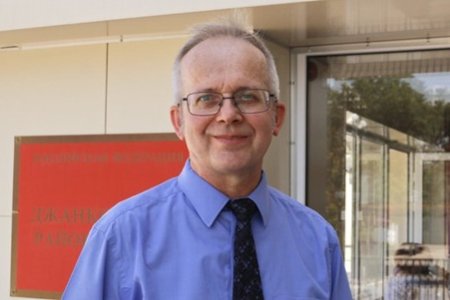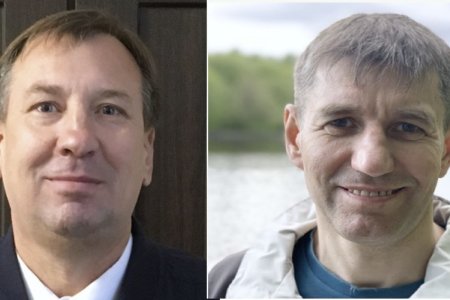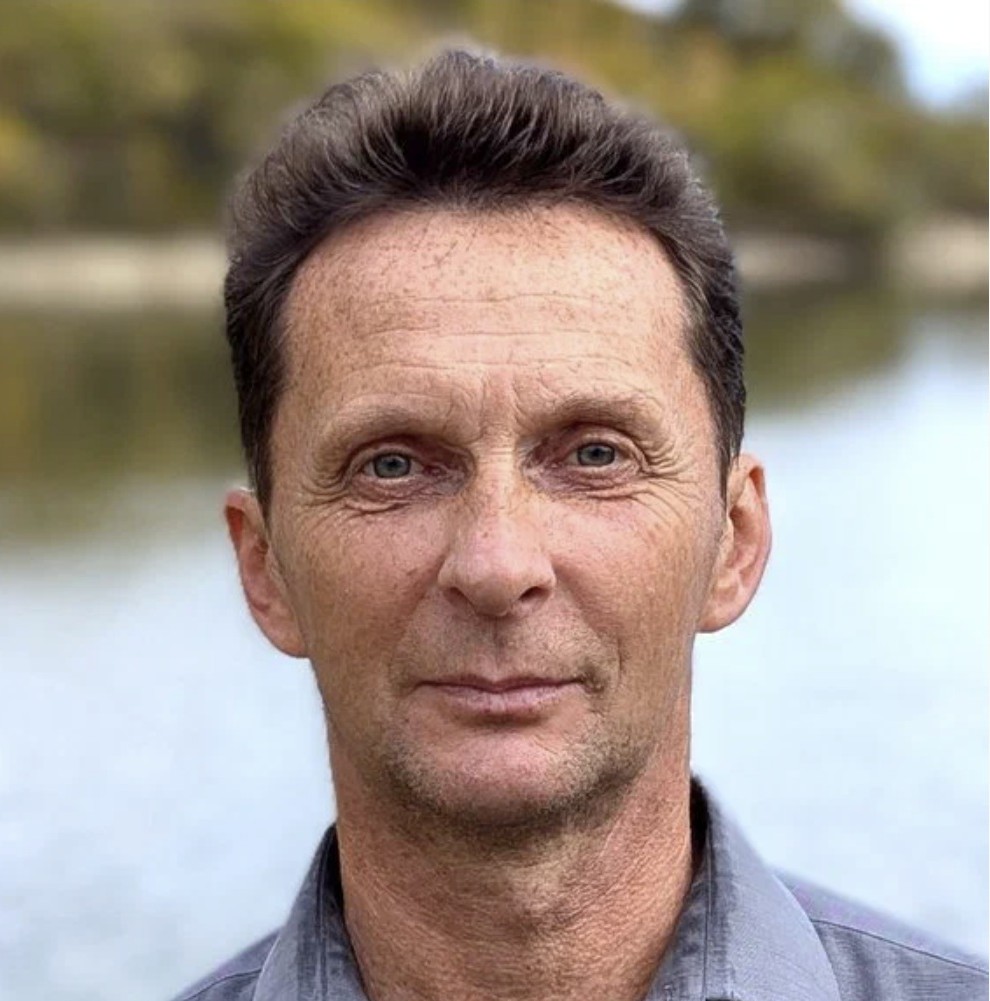
Russia’s so-called Investigative Committee has intensified its persecution of 53-year-old Volodymyr Chertov, a Jehovah’s Witness from Zaprudne in occupied Crimea. It has charged the believer with ‘financing extremist activities, specifically the provision and collection of funds knowingly aimed at ensuring the activities of an extremist organization.’ Despite the verbiage, this charge, under Article 282.3 § 1 of Russia’s criminal code, could mean as little as collecting money to pay for photocopying material or similar. The new charge comes almost a year after Chertov was arrested on the no less surreal charge of ‘organizing the activities of an extremist organization’ (Article 282.2 § 1), with this having already resulted in many sentences of six years or more imprisonment. Two other believers from Zaprudne, identified only by age – one 49, the other 50,, have also been accused of organizing the activities of an extremist organization. The two are claimed to be part of “the higher body of management of the district cell’, although the Jehovah’s Witnesses do not have such bodies.
Although the standard labels (‘an extremist cell’ ‘broken up’ by the FSB, etc) are used to try to justify Russia’s religious persecution, no pretence is actually made that there was some kind of criminal behaviour. Instead, the report simply mentions the ruling of Russia’s supreme court on 20 April 2017 which, it claims, outlawed “the organization the Jehovah’s Witnesses and its regional divisions in connection with its carrying out extremist activities.” No real effort was ever made to explain the supreme court ruling which violates the freedom of conscience supposedly espoused by Russia’s own constitution, as well as international conventions and which received international condemnation. Despite pretence from Russian leader Vladimir Putin, the ruling has, however, been used as the sole basis for a huge number of prosecutions and sentences of up to 7 years’ imprisonment, including on occupied territory.
As reported, Russia carried out armed searches of eleven homes of at least nineteen believers on 27 August 2025, with Volodymyr Chertov, then 52, initially taken into custody. He was subsequently charged with ‘organizing the activities of an extremist organization’, and released, but banned from carrying out certain activities. Some of the searches were led by two individuals from the occupation Investigative Committee: Andrei Kirov, who had initiated the criminal prosecution, and Adel Abzalilov.
The searches were shockingly lawless, with the officers removing personal documents, including those confirming ownership of their homes and car; passports, driving licence and cash. In one case, the Jehovah’s Witnesses’ site states, a family of four were left with 300 roubles (almost nothing). In one case, a family were forced to lie on the floor for 20 minutes. Chertov and his family were subjected to a second search on 11 March 2026, with Chertov threatened with being held in a remand prison if he didn’t agree to ‘cooperate’. He became unwell and needed to be hospitalized.
Volodymyr Chertov (b. 15 October 1972) is originally from Donetsk and is a professional gardener. He has been a Jehovah’s Witness since the early 1990s, with his wife Nelli also a believer. The couple raised Nelly’s two sons from an earlier marriage, their own son and adopted daughter.
Oleksandr Ursu saw three close family members sent to Soviet labour camps for their faith and was himself, aged just nine, herded into a cattle train and deported to Siberia. Almost 80 years later, an illegal Russian occupation regime has sentenced Oleksandr’s 60-year-old son, Victor Ursu to six years’ imprisonment, and has just laid identical criminal charges against Oleksandr himself.
The Jehovah’s Witnesses’ Russian website reports that the latest of several armed searches of the Ursu home in Dzhankoi took place on 28 April 2026. The difference this time was that the criminal charges were initiated against Oleksandr himself. Like his son, Oleksandr Ursu (b. 14.12.1939).is accused of ‘organizing the activities of an extremist organization’ under Article 282.2 § 1 of Russia’s criminal code.
The Russian occupation ‘investigator’ Anna Romanova led the ‘search’ on 28 April, together with a brutally mannered FSB officer who, it turned out, had earlier taken part in the so-called ‘investigative activities’ against Victor Ursu. There were also official ‘witnesses’ who are supposed to be independent, but whom the occupation enforcement bodies almost invariably – and illegally – bring with them.
The FSB took away personal notes; mobile phones; an Internet router and flash drives. They also removed the Oleksandr and his wife’s savings, around 100 thousand roubles (or just over 1100 euros).
This was the third search of the Ursu home since Russia’s invasion and then the Russian supreme court ruling on 20 April 2017 that banned the Jehovah’s Witnesses, claiming them to be ‘an extremist organization’.
During the first major offensive against Ukrainian Jehovah’s Witnesses in occupied Crimea in November 2018, armed searches were carried out of multiple homes in occupied Dzhankoi. In their attempt to present this shameful attack on religious freedom as ‘measures against extremism’, the Russian-controlled Vesti Krym and Russian TV avoided showing 78-year-old Oleksandr Ursu pinned to the wall, falling and being handcuffed for some time. It was not much easier to present Serhiy Filatov, a 46-year-old father of four, as some kind of ‘dangerous extremist’, yet this was, ultimately, what the Russian occupation regime did. Filatov was later sentenced to six years’ imprisonment and was only recently released after serving that sentence to the last day.
On 28 July 2023, armed occupation enforcement officers burst into the home that Oleksandr Ursu and his wife shared with their son Victor and his wife. The officers were intent only on finding ‘prohibited religious material’ and removed all electronic devices and memory drives.
Victor Ursu was taken away and held in a detention centre for two weeks, with his wife prevented, not only from seeing him, but even from passing on vital medication, food and other items. He was supposedly released on 7 August 2023, only to be immediately seized again, taken to the Russian ‘Investigative committee’, and then to the same detention centre. It was then that criminal charges were formally laid under Article 282.2 § 1. He was placed under house arrest on 9 August 2023, with this changed 13 months later, on 9 September 2024, to an undertaking not to leave Dzhankoi.
On 8 September 2025, Victor Ursu (b. 24.06.1965) was sentenced to six years’ imprisonment on the same cynical ‘extremist’ charge as that now laid against his father. The 6-year medium-security prison colony sentence was passed by ‘judge’ Yelena Nikolaeva from the occupation ‘Dzhankoi district court’. The sentence was to be followed by a further year of restricted liberty and also includes a ban on involvement in the leadership or activities of a s ‘civic organization’ for five years. Victor was taken into custody in the courtroom.
The sentence was upheld on 12 March 2026 by the occupation ‘Crimean high court’.
Oleksandr Ursu is now facing the same charges, under Article 282.2 § 1 that Russia used to imprison Victor Ursu. He is not, thankfully, in custody, however the very fact that the charges have been laid is deeply worrying.
It is not Oleksandr Ursu’s age alone that highlights Russia’s brutality and cynical lawlessness. Oleksandr was born into a family of believers. His grandfather, father and uncle were all victims of Soviet repression for their faith, with only Oleksandr’s father, Victor’s grandfather, returning from the labour camps. Oleksandr himself was sent into exile with his family in 1949 and formally ‘rehabilitated’ in 1991. He and his son were able to freely and peacefully practise their faith until Russia invaded Crimea and began exercising religious persecution by calling studying the Bible and worshipping together ‘extremist activities’.
Other Jehovah’s Witnesses persecuted in occupied Crimea
86-year-old Oleksandr Ursu
Victor Ursu (b. 1965)
Halyna Pryvalova and Anna Moroz
Olena Ivashina (b. 1975) and Olha Podlesna (b. 1971)
Tamara Bratseva (b. 1955)
Victor Stashevsky (b. 1988)
Serhiy Parfenovych (b. 1972) and Yury Herashchenko (b. 1979)
Viktor Kurdinov (b. 1969) and Serhiy Zhyhalov (b. 1971)
Oleksandr Dubovenko (b. 1973) and Oleksandr Lytvyniak (b. 1960)
Yevhen Zhukov; Volodymyr Maladyka and Volodymyr Sakada
Maksym Zinchenko (b. 1992)
Igor Schmidt (b. 1972)
Artem Gerasimov (b. 1985)
Serhiy Filatov (b. 1972)
Artem Shabliy (b. 1990)