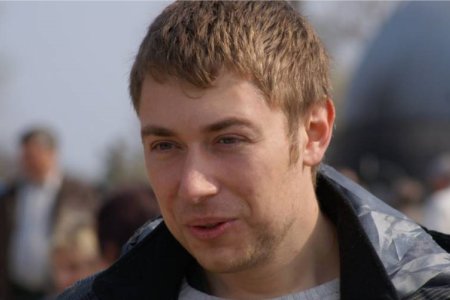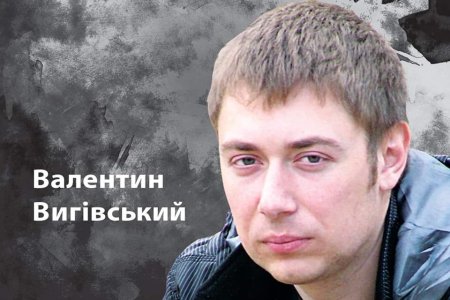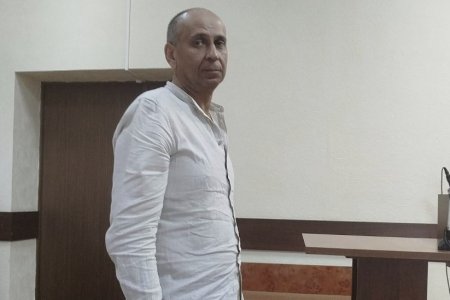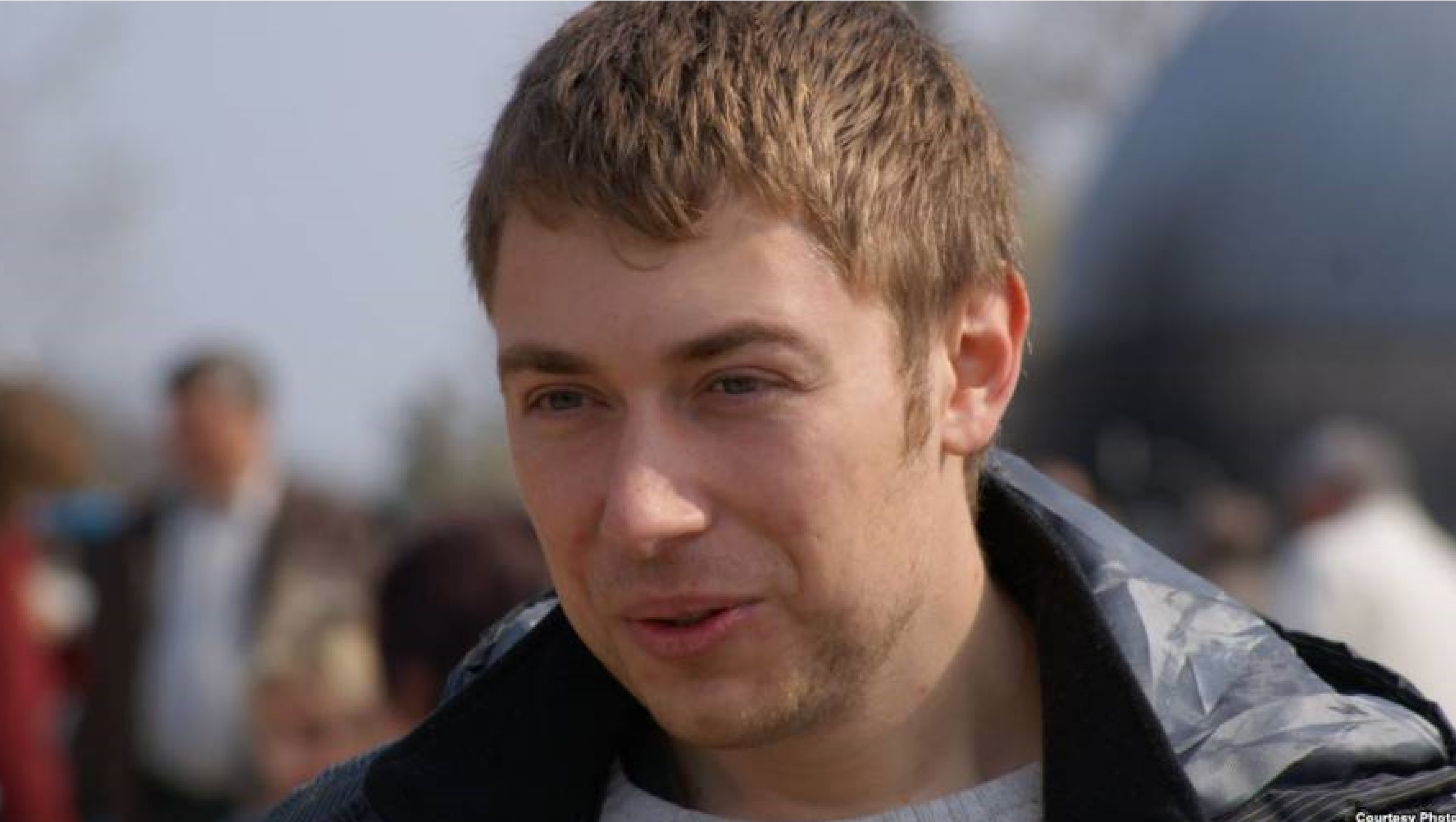
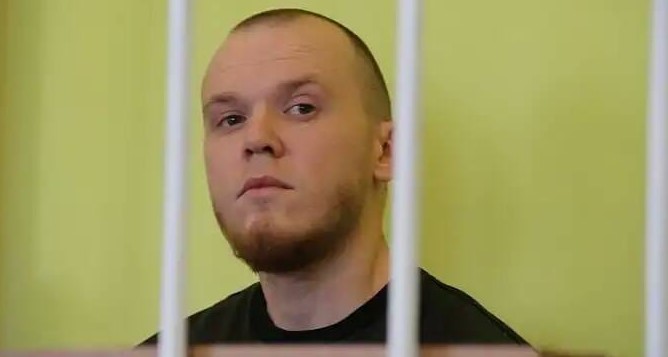
Valentyn Vyhivsky was due to walk free in September 2025 after serving an 11-year sentence passed after Russia abducted him from occupied Crimea, savagely tortured him and held him incommunicado for almost 10 months. Valentyn turned 43 on 3 August 2026, effectively imprisoned in a deportation centre where he was taken from the prison colony. After eleven years in Russian captivity, he does not have valid documents, and Ukraine, for obvious reasons, has had no diplomatic representation in Russia since 2022. It is vital to get him home, both because he, his son who was just 5 when he last saw his father and all his family, have been waiting for 12 years, and because no Ukrainian political prisoner is safe in Russia or occupied territory. In the case of other political prisoners, new charges have been fabricated – either after the first sentence had been served to the end, in the cases of Hennadiy Lymeshko and Serhiy Buhaichuk, or while still imprisoned, as seen earlier with Dmytro Shtyblikov and currently, with 67-year-old Oleh Prykhodko.
Russia has abandoned any last pretence of compliance even with its own legislation where Crimean Tatar and other Ukrainian political prisoners are concerned. Several political prisoners, whose grave medical condition means that, even according to Russian regulations, they should be released, are being left to die in horrific conditions thousands of kilometres from their families.
There seem to be no effective mechanisms for rescuing even those political prisoners who are dying, or those, like Vyhivsky, held in a deportation unit. Prisoner exchanges are extremely infrequent and Moscow has generally only released political prisoners when it needed something. Two Crimean Tatar Mejlis leaders were likely freed in 2018 when Turkey agreed to hand over two Russian state killers in custody. In 2019, Oleh Sentsov and many other political prisoners were freed because the Kremlin needed to get Volodymyr Tsemakh, an important MH17 witness, away from the Dutch prosecutor.
The situation now is much worse and can only deteriorate further. Russia has almost always refused to release political prisoners from occupied territory who had earlier been forced to take Russian citizenship. The number of such cases can only increase since Russia makes it impossible to live, retain ones home, receive medical care, etc. without a Russian passport on all occupied territory. It is also increasing the secrecy around its persecution, both through its unprecedented attack on the Crimean Solidarity human rights movement, and through its mounting secrecy. It is often difficult, or impossible, to even learn the names of people sentenced to 20 years and more on evidently political charges.
Valentyn Vyhivsky
Torment really is the correct word. Valentyn Vyhivsky was almost certainly tricked into travelling in September 2014 from Kyiv to already occupied Simferopol. He was abducted from there and taken to Moscow where he was subjected to horrific torture, while being held incommunicado. It was only thanks to a Russian human rights activist that Valentyn’s family were able to find out where he was being held. They had to give her a kind of code word to use, since Valentyn had been so ill-treated that he distrusted everybody.
Even after being forced to admit that Vyhivsky was in Russian captivity, there remained near total secrecy about the supposed ‘spying’ charges used to sentence him to eleven years in a maximum-security prison colony. During one of a very small number of visits, Valentyn was able to give his mother a glimpse of the scars he still had from the torture to which he was subjected. He spent most of the sentence in a prison colony in Kirov oblast where his grandfather, a World War II veteran, was sent under Soviet dictator Joseph Stalin. Valentyn spent much longer in Russian captivity than his grandfather who was freed after Stalin died. He was held in an information vacuum and largely isolated from other prisoners (more details here).
Although he was not abducted again after being released on 17 September 2025, exactly 11 years after he was seized in Simferopol, he remains effectively imprisoned to this day in a deportation centre for foreign nationals.
Hennadiy Lymeshko (b. 29.12.1992)
Lymeshko is a recognized political prisoner who had served an 8-year sentence to the end and should have been freed in February 2025 and returned to his wife and daughter in Ukraine. Instead he was seized from the deportation centre for foreign nationals where he had been taken and vanished. It was learned in August 2025 that he had been sentenced to a further two years’ imprisonment.
It was claimed that a mystery ‘investigation’ had established that “Hennadiy Lymeshko posted material on his social networks in which he publicly called to violence based on nationality.” He was charged with so-called ‘public calls to carry out extremism via the Internet, under Article 280 § 2 of Russia’s criminal code. No details are provided as to what the alleged posts on social media actually said and when they are claimed to have been posted. This is of obvious importance given that Lymeshko had been in Russian captivity since 2017.
It is still not clear even where he is being held prisoner. See: Ukrainian political prisoner abducted and given a new sentence after 8 years in Russian prison
Serhiy Buhaichuk
Oleh Prykhodko
Dmytro Shtyblikov, Oleksiy Bessarabov and Volodymyr Dudka
Nine years in Russian captivity after Russia’s ‘shoddiest’ show trial and no end in sight?
The list of political prisoners who cannot survive much longer is, almost certainly, longer, but includes:
Tofik Abdulgaziev
Amet Suleimanov
Brutal Russian roulette with the life of gravely ill Crimean Tatar political prisoner
Lenur Khalilov
Crimean Tatar political prisoner returned to die in Russian captivity is in critical condition
and Halyna Dovhopola who is 71 and recently suffered a stroke