The Freedom in the World 2026 report does indeed give Russian-occupied parts of Ukraine a lower rating for political rights and civil liberties lower even than North Korea, the Gaza Strip, Tibet and Afghanistan. The above title is, nonetheless, misleading as Freedom House did so in 2025 as well. The truly dismal overall ranking of -1/100 is, if anything, excessively generous as it has not changed since last year, unlike the rapidly deteriorating human rights situation on all occupied territory. Freedom House was hit by the massive cuts brought in by the new US administration in 2020, and it does acknowledge that the report has been abridged due to ongoing budget constraints.
The ranking alone makes it quite clear why there is every reason to separately consider all areas currently under Russian occupation. The level of freedom is a full 50 points lower than [government-controlled] Ukraine which has a Partly Free rating of 51/100. While Russia is Not Free, with its rating of 12/100, that is still significantly better than the abyss into which it has dragged the Ukrainian territory it illegally seized either in 2014 or in 2022. There is, quite literally, nothing lower, with even Tibet and South Sudan a point higher, at 0/100 and North Korea at 3/100.
it is a telling indicator that most of the questions which Freedom House clearly always asks (in order to be able to compare countries) seem surreal in relation to occupied territory. It is hardly surprising that all of the questions aimed at gauging the level of political pluralism, rule of law, association and organizational rights and civil liberties get score after score of 0/4. The only exception, receiving 1/4, is over choice of marriage partner, size of family, etc.
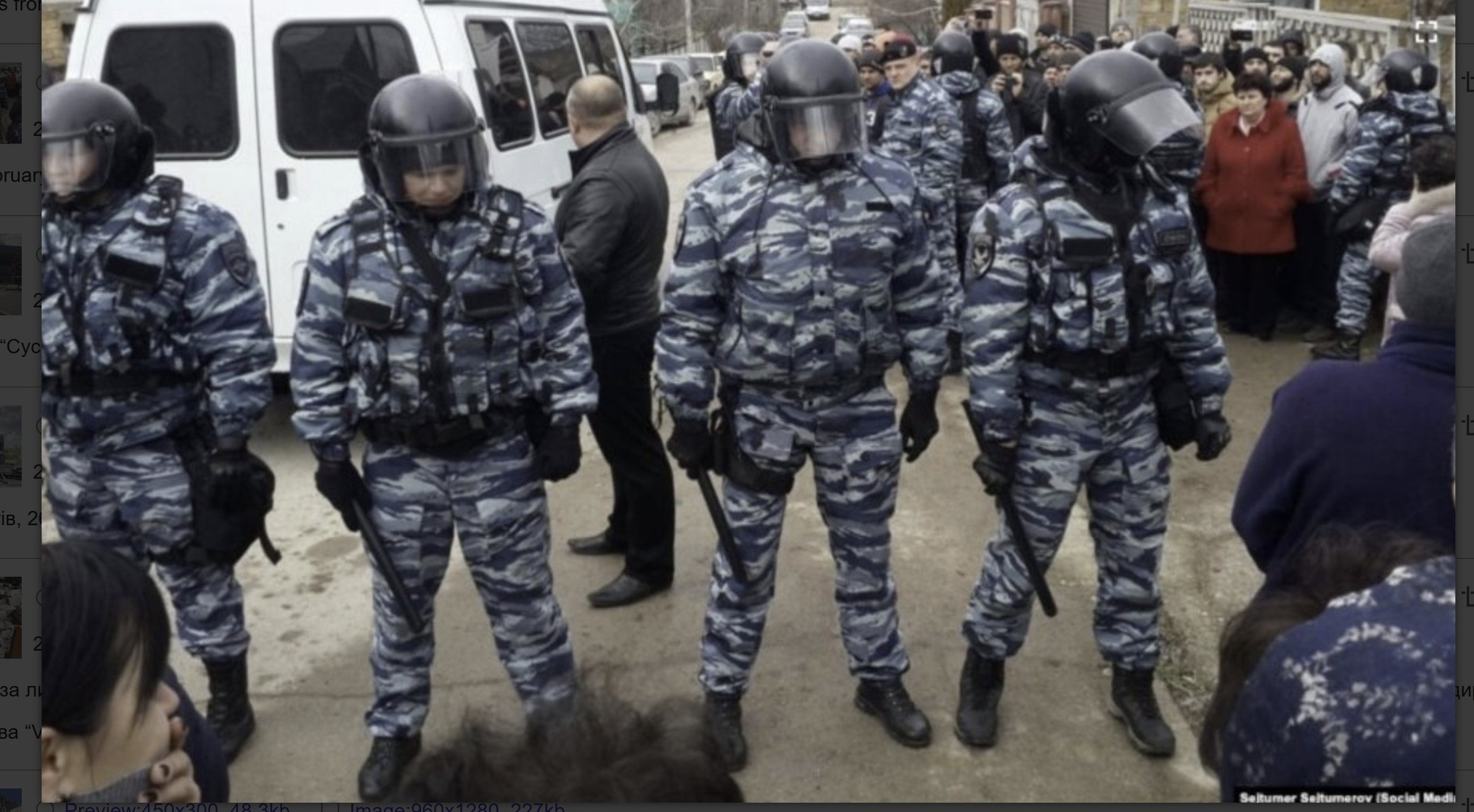
There was an additional question of the greatest relevance to occupied parts of Ukraine. Freedom House asked: “Is the government or occupying power deliberately changing the ethnic composition of a country or territory so as to destroy a culture or tip the political balance in favour of another group? In both years, the rating for this was -2, with details provided in Freedom in the World 2025. This explained that “he Russian government has taken steps to establish ethnic Russian domination and punish expressions of Ukrainian and Crimean Tatar identity in occupied territories. Authorities have taken steps to eliminate the Ukrainian language in schools and have persecuted the Orthodox Church of Ukraine. In Crimea, authorities have forcefully repressed Crimean Tatar communities by banning the Mejlis and persecuting Crimean Tatar activists.”
The report also mentions the forced transfer of people to other occupied territory or to Russia and the coercion used to force people to take Russian citizenship. While Freedom House writes only of deliberate policy resulting in “an influx of hundreds of thousands of people from Russia, including Russian troops, civilian personnel, and their families” with respect to Crimea, it seems likely that the same is happening on at least some other occupied territory.
It is excellent that Freedom House has demonstrated how Russia has dragged occupied Ukrainian territory to a level lower than that in the countries once known as the ‘worst of the worst’.
The situation has, however, deteriorated over the past year and is still getting worse. One of the additional consequences of Russia’s foisting its citizenship on Ukrainians in occupied territory is that it can then accuse Ukrainian citizens of ‘treason’ under Article 275 of Russia’s criminal code. It has been doing so at a terrifying pace, with sentences of up to 20 years reported on a weekly, if not daily, basis. Ukrainians living on Ukrainian territory are imprisoned and given massive sentences for sending money to help Ukraine’s Armed Forces or Ukrainian charities. A huge number have also been convicted of ‘treason’ for supposedly providing information about Russian military personnel and equipment to Ukraine’s Military Intelligence or Security Service. The number of Ukrainians sentenced on ‘terrorism’ charges has also risen dramatically with Russia using politically motivated Russian court rulings to claim justification for trying prisoners of war, as well as former veterans, with ‘terrorism’ for having served their country with specific units of Ukraine’s Armed Forces.
All ‘treason’ trials are behind closed doors, and in the vast majority of cases, the only information about a person comes from Russian or Russian occupation sources. There is often no possibility even of finding out whether there were any ‘hearings’ before the predetermined conviction and sentence. Russia is increasingly hiding all information even about upcoming court hearings, including those on ‘terrorism’ charges at the Southern District Military Court which are not, in theory, closed to the public. Such secrecy makes it near impossible to monitor ‘trials’ until the sentence is announced.
In an ever-increasing number of cases, we do not even learn the names of people who have been sentenced to 18, 20 or even 22 years’ maximum-security imprisonment. In the last week, for example, two women from Zaporizhzhia oblast – ‘K’ (b. 1989) from Tokmak and 56-year-old ‘Ch’ from Berdiansk were sentenced to 12 and 14 years, respectively, for donations to Ukraine’s Armed Forces. Since the women are shown without their faces being blurred, it seems clear that the ‘trials’ and reports of the sentences are aimed at terrorising the population, with lack of names making it difficult even to lobby for a person’s release as part of an exchange.
Although the number of such anonymous cases has increased, they began during Freedom House’s last reporting period. So too did the mounting use of abductions in all occupied territory, including Crimea, where a person can be held incommunicado, without being formally arrested and charged, for months or longer. The FSB and prosecutor typically deny any involvement, and in some cases pretend that the person was seized months after the date of their abduction.
There is almost certainly a similar level of lawlessness on all occupied territory, however the situation until fairly recently was easier to monitor in occupied Crimea. One of the reasons was the courageous work carried out by Crimean Tatar lawyers and civic journalists and activists from the Crimean Solidarity human rights movement. There have been attacks on the latter since 2017, with a significant number of Crimean political prisoners having reported on political trials, armed arrests, etc. for Crimean Solidarity or attended such political hearings and taken part in other acts of solidarity. Russia began attacking specific lawyers who defend political prisoners back in 2017, and has even stripped some of their licences, years ago and has now effectively told all lawyers in occupied Crimea that, if they defend political prisoners, they can expect to be labelled ‘foreign agents’, with all the difficulties that entails.
The situation in some areas under Russian occupation since 2022 has been steadily deteriorating. In parts of Luhansk oblast, whole cities have been deprived of even telephone communications, leaving people without the ability to even call for an ambulance (should one come, since medical services have also been reduced to a minimum). In Oleshky and other occupied parts of Kherson oblast, the Russians are either deliberately creating a humanitarian disaster, or are refusing to take actions that would at least allow people to safely evacuate.
The list can be continued, and will be as long as any Ukrainian territory remains under Russian occupation.