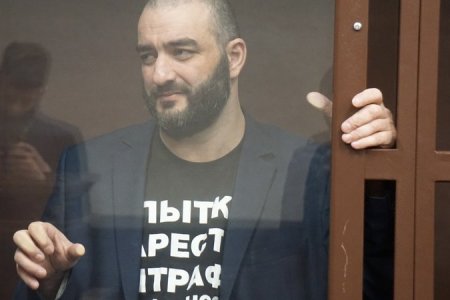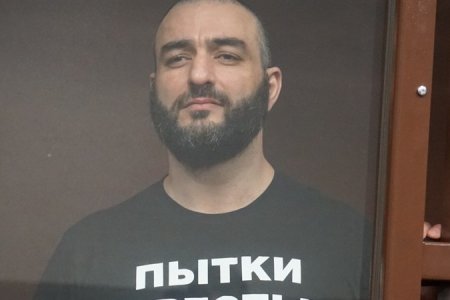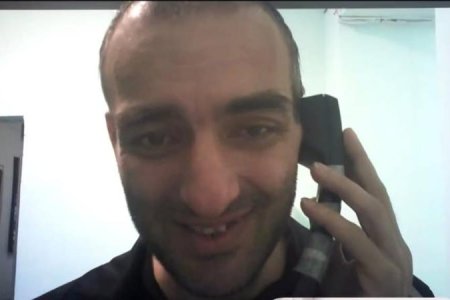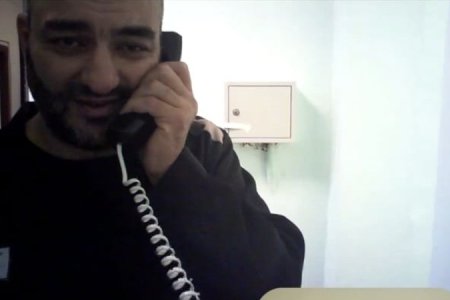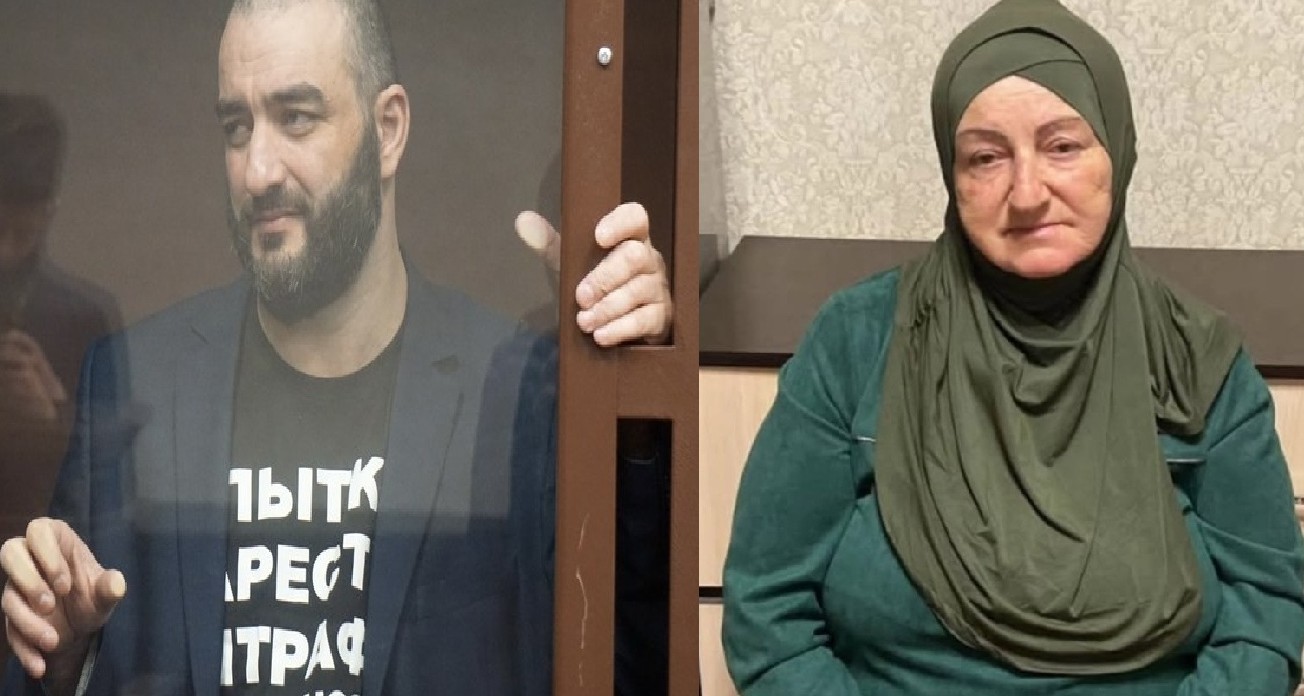
Tofik Abdulgaziev, whom Russia sentenced to 12 years for his Crimean Solidarity human rights activism, has been forced to learn by telephone of his mother’s death and funeral. Rosa Abdulgazieva died on 14 August, having hoped to the end to see her son whom the Russians seized in their worst purge to date of Crimean Solidarity civic journalists and activists in March 2019. This is by no means the first time that Crimean Tatar and other Ukrainian political prisoners have been prevented from being present at the funerals of parents, or children. Yet even amid the brutality and lawlessness which Russian occupation has brought to Crimea, there is something particularly shocking about the torment to which Tofik Abdulgaziev and his family have been subjected.
77-year-old Rosa Abdulgazieva was only taken ill on Thursday evening and died on Friday morning in hospital. She had doubtless been under immense strain because of Russia’s relentless persecution and ongoing torment of her younger son, Tofik Abdulgaziev and was also caring for her elder son, Suleiman, who is bedridden following a debilitating stroke. She suffered herself both from insulin-dependent diabetes and, seemingly, high blood pressure.
It is immensely hard for any parent to know that their son is critically ill. It is impossible to conceive how much worse the pain must be when your son is imprisoned thousands of kilometres away, in the appalling conditions of a Russian prison hospital in Chelyabinsk oblast, where he is not receiving any proper treatment.
Doctors confirmed back in December 2025 that Tofik Abdulgaziev was suffering from a malignant brain tumour. The prognosis was clearly bad, but they did speak of an operation to at least remove part of the tumour.
That appears to have been the last time that Russian medics behaved in keeping with their profession. Since then, prison doctors have colluded with Russian prison staff, prosecutors and the court to ensure that Tofik Abdulgaziev is not released despite a condition which, even according to Russian regulations, precludes imprisonment.
The latest ‘court hearing’ into the application for Tofik’s release on medical grounds took place, only to be adjourned, on 31 July 2026. This was the fourth such postponement in the case of a man suffering from a malignant brain tumour. The first three times, the hearing was adjourned for a month, whereas on 31 July the court saw fit to delay almost two months, with the next hearing scheduled for 22 September. There were two excuses, both as cynical as each other. One was that the ‘judge’ supposedly examining the application was going on holiday. There has been no examination up till now, only a series of postponements, and one judge going on holiday should not make the difference between compliance or failure to comply with the Russian list of illnesses which preclude imprisonment and medical condition. The other excuse is simply surreal, with it claimed that the original diagnosis of a malignant brain tumour is somehow “out of date”.
While Russia may not be to blame for Tofik’s brain tumour, it is certainly true that the tuberculosis and other conditions that left him in a critical condition back in July 2024 are likely to have diminished his ability to fight the cancer. It is in any case impossible to fight it if the Russian prison service’s medical staff are willing to watch Tofik suffer rather than risk ‘annoying’ those behind his persecution by providing proper treatment in accordance with his diagnosed condition.
Russia has twice used medics as accomplices to fake medical assessments and claim that Tofik Abdulgaziev does not have illnesses which are included in the list of illnesses precluding imprisonment.
The first was in the middle of 2024 when the prosecution organized its own supposed expert assessment in order to justify a formal refusal to comply with Russia’s own legislation and free him.
The second falsification and deliberate delay tactics have been over the brain tumour, which is causing Tofik excruciating headaches, dizziness and weakness. The hearing on the application for his release was originally scheduled to take place in January 2026 at a district court in Chelyabinsk, but was postponed for a month, until 27 February.
That hearing did not take place after Tofik expressed indignation at the brazen deceit used to obtain his signature on a document falsely claiming that he was in good health. His wife, Aliye learned that, on the eve of the scheduled hearing, he had been taken to a gathering of prison doctors, attended also by individuals from Russia’s FSB. The court had asked the prison hospital to provide an assessment of Tofik Abdulgaziev’s state of health. Before even pretending to carry out an examination, Olga Anvarovna Angold, chief medical officer of Prison tuberculosis hospital No, 3 in Chelyabinsk, demanded that Tofik sign the document she thrust in front of him. Since the brain tumour has caused a dramatic deterioration in his eyesight, which Angold would have known, he asked that the document be read out to him. Angold refused, saying “sign and then you’ll find out”. He initially refused to sign any document without knowing what it said, however the prison staff began pressurizing him and Angold became far ruder and more aggressive than when he had seen her earlier. He was in an extremely weak state, suffering from appalling headaches, and, after holding out for some time, he finally “decided to end the circus” and signed the document.
He discovered in court the following day that the document claimed that Tofik Abdulgaziev was entirely healthy and that he had no objection or complaints if he was moved back from the prison hospital to a normal cell. Olga Anvarovna Angold and her ‘doctor’ colleagues who, in December 2025, took a CT scan and tests, and found that Tofik Abdulgaziev was suffering from a malignant brain tumour, were now willing, under pressure from the FSB, to write him a ‘clean bill of health’.
Then, on 17 April 2026, Russia’s Investigative Committee announced new criminal charges against Tofik under Article 297 § 2 of Russia’s criminal code (‘contempt of court’) over the indignation he expressed in court on 27 February.
Twp hearings since then, at the end of June, and then July, have been adjourned. The suspicion seems warranted that all those players, including the medical staff, complicit in this medical torture of a man in immense pain and discomfort and very far from his family, are simply waiting for him to die
Russia has now openly attacked Crimean Solidarity and lawyers who have tirelessly defended political prisoners like Tofik Abdulgaziev. It has labelled both the Crimean Solidarity human rights movement and 137 lawyers, civic journalists and activists as ‘foreign agents’ (or participants in an organization labelled a foreign agent with this effectively the same thing). The list included Tofik’s son Amar Abdulgaziev. He is now 21, and was 14 when the FSB came for his father. One of the OMON officers involved in the armed ‘searches’ and arrests that day told the 14-year-old that “your turn will also come. We’ll return for you”. Since then Amar has, like a very large number of other Crimean Tatars, experienced harassment and detentions merely for demonstrating solidarity with victims of repression.
See also:
Monstrous sentences in Russia’s war against Crimean Tatar civic activists and their children