This interview was recorded in early November 2025. Two weeks before our conversation, on October 22, Russian drones struck the building that housed a private kindergarten and the Museum of Childhood. Fire and water damaged some of the exhibits. But Valery Leiko remains optimistic. The main thing, he believes, is that the children weren’t hurt, while the Museum will definitely be restored. Especially since, in its early days in 2009, it was housed in both a garage and an apartment.
— There were off-site lectures and exhibitions... And then, in 2018, we opened the Museum at the “Nickname” educational center on Poltavskyi Shliakh Street. It remained there until the war... In 2023, it moved to Honey Academy. Unfortunately, the building was struck by drones, and now the exhibits are located at three different sites in Kharkiv.
— How did the idea for creating the Museum of Childhood come about?
— I’m a teacher by nature, and I adore childhood as a very important period in every person’s life. If children read books, play sports, love nature, socialize, dream, and collect coins, badges, and seashells, they won’t just have an interesting childhood. Childhood will shape their future: children will grow up to become surgeons, officers, astronauts, ballerinas…
— What was your February 24, 2022, like?
— … At eight in the morning, I got a call from the educational center. They said, “We’re driving over; if you want, come pick up your most valuable things.” I went with them, walked into the Museum, and it was 100 square meters. Plus, another 20 square meters—my office. And there were so many things there! What should I take first? I took the coin collection, the flintlock pistol, and the stamps. That’s all I took. Over the next few weeks, I kept coming back and carrying some things home on foot, because there was no gas for the car at the time. That’s how I hauled everything back home. It’s about an hour’s walk from the Museum to my house.
— And all that while under bombs?
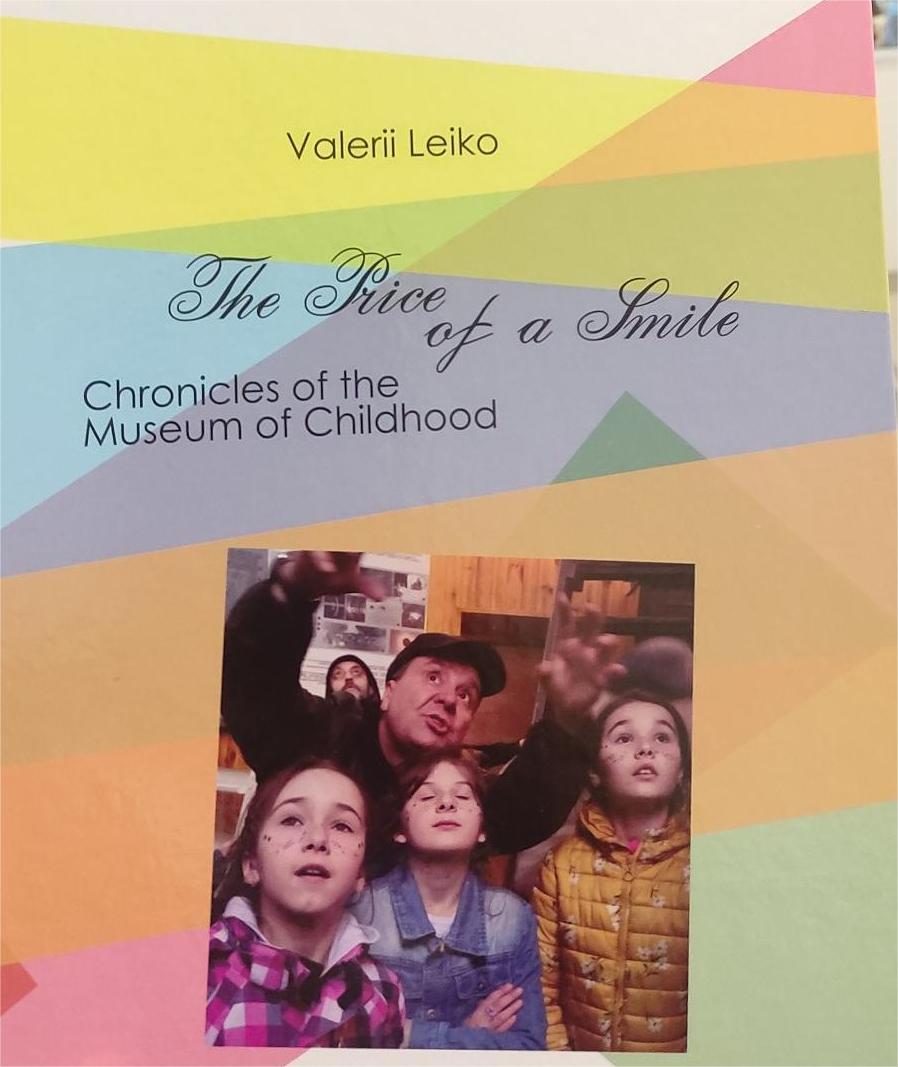
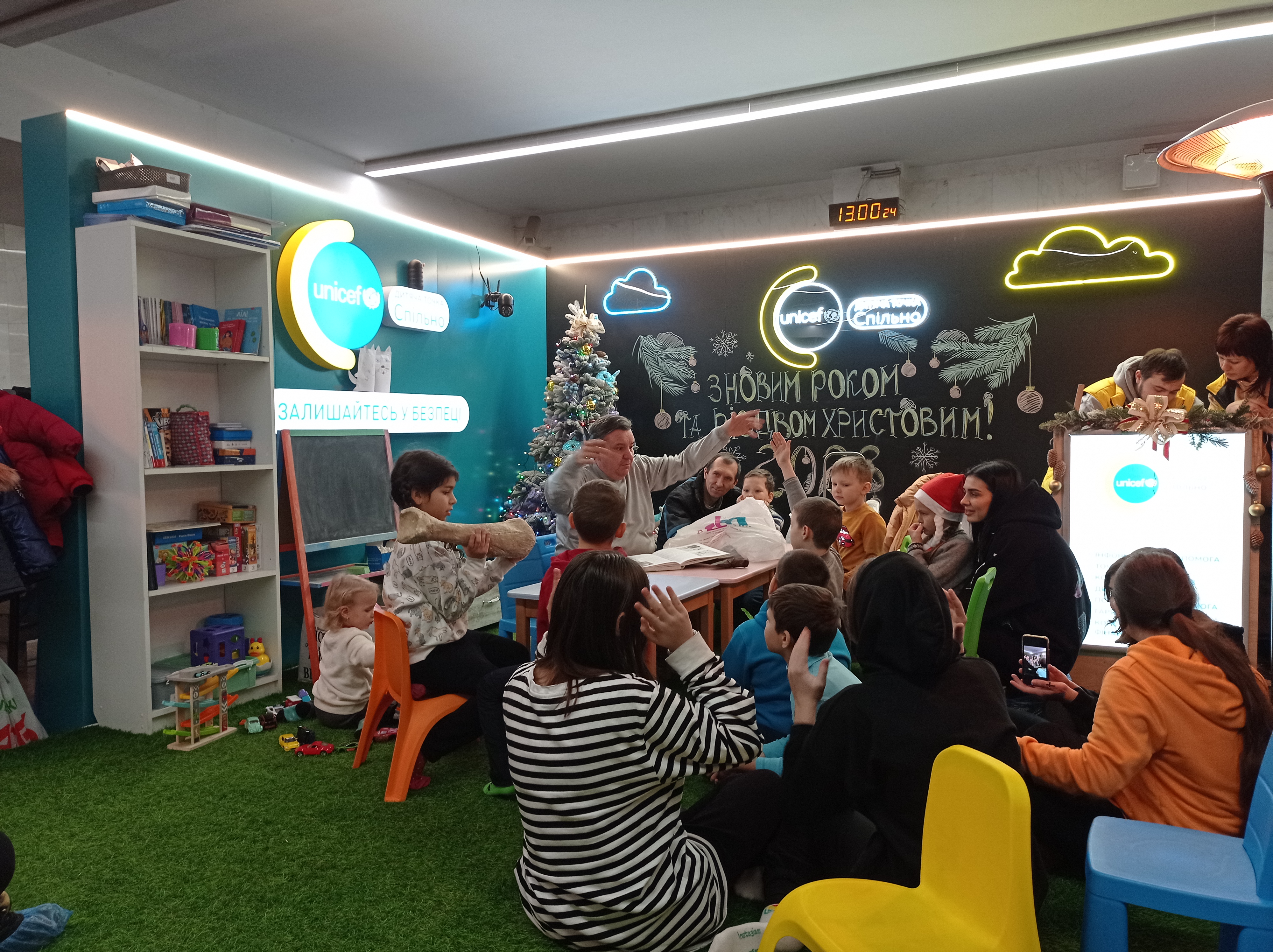
— Sometimes. And I even took photos wherever I could because back then there was a ban on photography… But I understood how many people were leaving Kharkiv… I had to do something. Around March 8, a bomb landed right in our yard. It shattered windows in many apartments. Then we decided that I would take my mother-in-law and my wife to the border; they would go to Poland to be with our son, and I would stay here in Ukraine. Afterward, I stopped by to visit some friends in the village of Sloboda near Kolomyia. The Marchuk family lives there—they’re also teachers. I stayed with them for a couple of weeks before realizing I couldn’t live without Kharkiv. I returned to Kharkiv, and by the 20s of March, I miraculously connected with people who had organized lectures at the metro stations, supported by UNICEF. And I started walking to three different locations each day. Some 20 people came to the metro and worked with the children there. Some taught math; some brought their dogs; our puppet theater came; some bards came; some magicians came. Thus, there were many people who just wanted to help. It was a self-organizing system. I really liked that. I worked in the metro for almost three months… This work continued until Trump came along. He either banned it all or said, “I won’t fund it.” You know, it’s a very pleasant milestone, so to speak, in my life. During that period, I published a book. It’s titled “The Price of a Smile: Chronicles of the Museum of Childhood.” It was published in two languages—Ukrainian and English. I described how everything happened. It’s nice that a representative of our city council presented this book to Mr. Zaluzhny in England. And this book made its way into the Library of Congress of the United States of America.
— Did you bring your exhibits anywhere other than the metro stations?
— I visited bomb shelters, those that they let me into. For example, once I went to my old school, where many children were in the shelter at the time. I said, “Listen, I’m a teacher; I can tell the kids something interesting, bring them something, or give them a gift.” It was the first week of the war; people were so scared that at first they thought I was a spy and checked my papers. I said, “But your children know me well!” I offered my help to this school twice, and they turned me down both times, so I never got there. But there was a shelter in a factory near me where about six families lived. I went to see them every day. The children were thrilled. After about a week and a half, they all departed. Where else did I go? When you don’t have a car, and the metro isn’t running, how far can you walk? Well, about five kilometers, no more than that. You have to get home before the curfew at 6 PM.
— How did you try to entertain the frightened children?
— …I remember there was a little girl at the Gagarin metro station; she was four years old, and we called her Sunshine. I brought her this big toy horse she could ride on. Then I brought a pony. A lot of them loved building sets, especially LEGO sets. It was a huge hit. I was bringing about five bags of LEGO pieces to each metro station. I said, “Take it and build whatever you want.” They really liked that... They also liked robots. They also really loved calligraphy! I once showed them calligraphy, wrote their names, and left them a few inkwells and quills. The next day, I came back, and they’d already written verses by Lina Kostenko and Shevchenko’s “Testament”! The girls, who were about 12 years old, did it gorgeously! And, of course, they really liked it when I came, for example, with coins. I’d hide these coins in the metro station, and they’d have to find them. Find one—the coin’s yours. Before the war, I had a couple of little bags like that, about five kilograms of coins each, but now they’re gone. I mean, they’ve all been taken by children! I entertained the children with activities that develop their minds, such as games that require thought. I always told them: the war will end sooner or later, but you should have your childhood. During that childhood, you should read an interesting book and draw something. For example, there was a girl who drew… Once, she drew Churchill very well. I said, “You should share interesting and useful information with one another.” I oriented them toward development, not just sitting around playing on their phones.
Once, a friend put gasoline in my car. I had a Volga. My friend, Volodya, obtained 10 liters of gasoline for me. So, he walks up to my Volga and starts pouring gasoline into it. And then my neighbor runs out with nunchucks! This neighbor was already 85 years old! He says, “Don’t touch it! That’s Valery’s car—it’s part of the Museum of Childhood!” He thought someone was stealing gas from the car. So I drove that car to the Defenders of Ukraine metro station and told the kids, “Let’s go. If your parents let you, I’ll take you for a drive around the city right now. We’ll take a loop and head back to the metro station.” They’d mostly been stuck at the metro station. Imagine these kids who’d spent a week underground, now they’re being put in a car! They loved it—they were in awe! Then we picked up the parents and drove to the Museum of Childhood. There were six children and two moms. And I gifted them a bunch of toys there. There were so many people who simply gave me toys from stores. The Toy-Toy company gave me about ten bags of modern, expensive toys. I have been handing out all of that to the children. There was one man whose garage was absolutely packed with modern, beautiful, boxed toys. His store had been bombed. And he told me, “Take them!” So, I hauled two carloads of his toys to the Museum. Once, about 30 kids came from Pokotilovka. I said, “You can pick out any toy you want.” I have a video of them leaving the Museum, each carrying two or three toys. They asked, “Did we take too many?” I answered, “Go ahead and take them—it’s fine!”
— Which are your most valuable exhibits? Maybe the oldest ones? Toys from World War II?
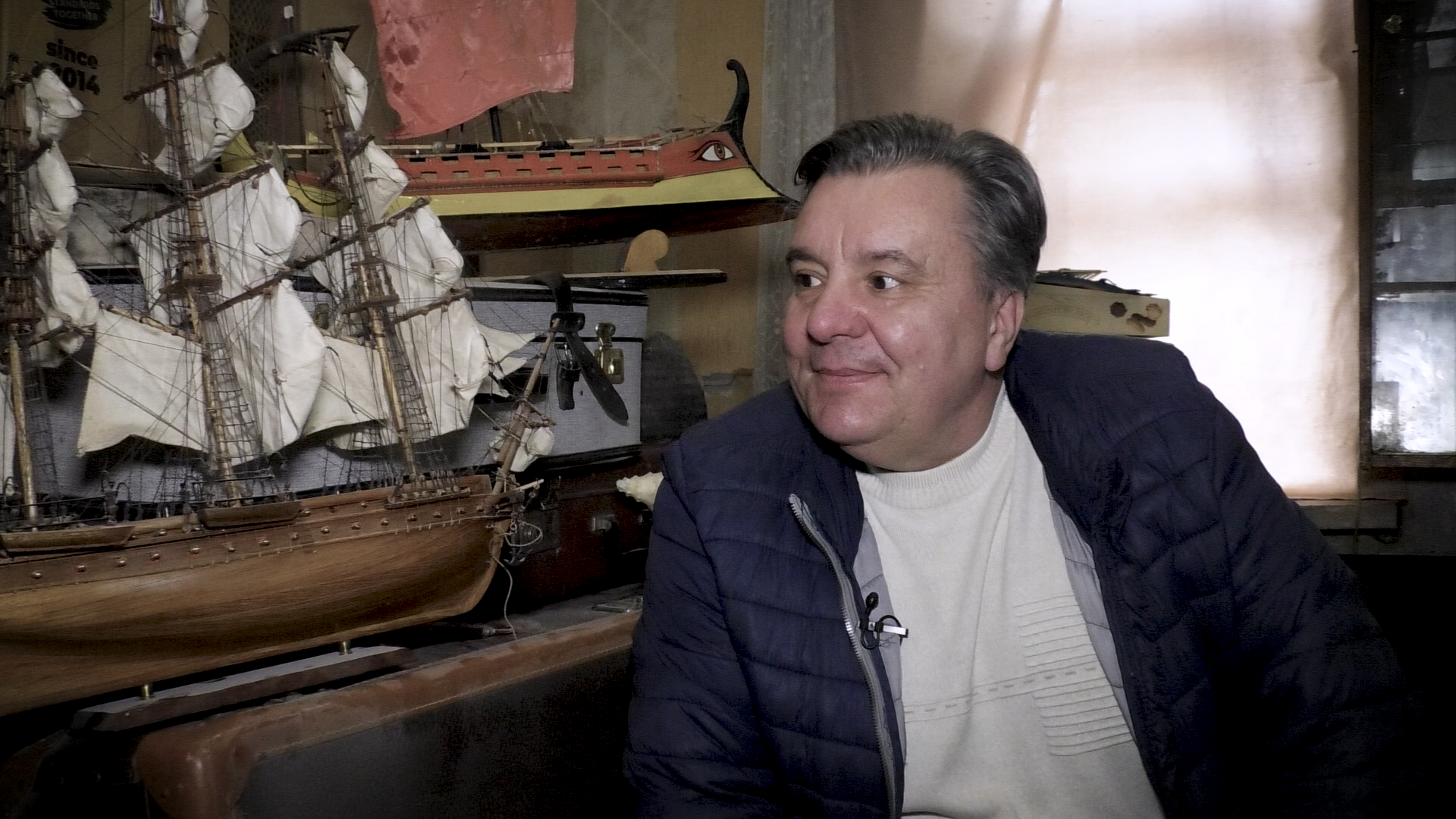
— There are a couple of toy guns... But you know, my goal isn’t to show what people played with, say, a hundred or two hundred years ago. I show these things because, for example, a toy ship like this can inspire a child to become a captain or a sailor one day, or maybe to study the ocean and the sea, becoming a sort of Ukrainian Cousteau. Every toy, every movie, cartoon, badge, coin, or stamp sparks certain dreams in a child, and the child wants to pursue them. I collect shrapnel from shells and rockets and show children how science can be used in different ways. You can make, for example, a metal that beautifully takes on a certain shape, or you can make a metal that kills. Like these shrapnel pieces, for example—they’re very sharp. It means some scientists specifically developed this type of metal so that when it exploded, its fragments would severely wound a person. What’s most valuable to me? When we were carrying things out of the rubble after shelling, my friend said, “Hey, you’ve got a nice modern toy in there.” I replied, “You know, let that one stay there for now, but I’m taking out the Trypillian pottery.” So what’s important? A modern toy is nice too, but our history comes first. That’s why, for me, the most important are Ukraine’s history and artifacts from its past. Well, then come books, coins…
— Are kids interested in toy weapons?
— Yes, I have many toy weapons—both modern and Soviet. And you know, during the war, I noticed that girls loved weapons. Sometimes I show them dummy weapons. I have a couple of dummies—they were once combat weapons but have since been disabled. And almost all the girls ask, “Can I hold it? Can I pull the trigger?” So they’re interested in it. But the boys aren’t. I don’t know why that is… Maybe the war had some influence.
— What values do toys like these instill?
— Well, you know, it depends on how you present it. You can be a good cop, for example, a good officer or a good defender of your homeland, or you can be a maniac. It all depends on how you frame it. This toy gun can motivate a child, for example, to learn the skills needed to shoot well and to defend their home, their country, and the world. While someone might become an invader. It depends on the games children play. If Russians are playing Zarnitsa (a Russian military game for children — ed.) and need to catch some “Ukr” (a Russian derogatory term for Ukrainians — ed.), that’s one thing. But if you go, for example, on a children’s hunting trip, that’s another matter. You can frame it so that we, like, don’t kill the bunny because it’s cute, and don’t kill the deer because it wants to live and has kids...
— Tell us about the latest shelling of the Museum...
![Фото: ДСНС України [Харків, удар по дитячому садку, 22 жовтня 2025] Photo by State Emergency Service of Ukraine [Kharkiv, shelling of a kindergarten, October 22, 2025] Фото: ГСЧС Украины [Харьков, удар по детскому саду, 22 октября 2025]](https://khpg.org/files/img/1608825015.jpg)